
Practical Camping Guide
What Sleeping Pad R-Value Do I Need?
For a practical starting point, consider R 1–2 for reliably warm summer ground, R 3–4 for many cool three-season trips, R 4–5.5 around freezing, and R 6 or higher for genuinely cold or snow-covered ground. These are planning bands, not temperature guarantees. Choose more margin if you sleep cold, expect wind or dampness, cannot retreat easily, or are unsure of the site's ground temperature.
By Danny WalkerUpdated 11 min read
For a practical starting point, consider R 1–2 for reliably warm summer ground, R 3–4 for many cool three-season trips, R 4–5.5 around freezing, and R 6 or higher for genuinely cold or snow-covered ground. These are planning bands, not temperature guarantees. Choose more margin if you sleep cold, expect wind or dampness, cannot retreat easily, or are unsure of the site's ground temperature.
R-value measures resistance to heat flow through the pad. It does not measure cushioning, thickness, or a person's warmth. The correct choice combines a tested value, complete body coverage, appropriate top insulation, and field experience. New campers should test conservatively rather than planning a first night at the lowest boundary of any chart.
Quick Planning Table
| Expected conditions | Starting range | Main caution |
|---|---|---|
| Warm summer, warm soil | R 1–2 | Cold valleys and high elevations can surprise you |
| Mild three-season nights | R 2–3 | Check the campsite low, not the nearest city |
| Cool spring and fall | R 3–4 | Cold sleepers often need more margin |
| Near-freezing ground | R 4–5.5 | Pair with suitable bag or quilt and dry layers |
| Frozen ground or intermittent snow | R 5–6+ | Carry redundancy where failure has consequences |
| Deep winter or prolonged snow | R 6+ | Use winter-specific guidance and tested systems |
These bands intentionally overlap. A humid 38°F night on wet ground can feel more demanding than a dry night with similar air temperature. Manufacturer season guidance and local experience refine the estimate.
Start With Tested R-Value
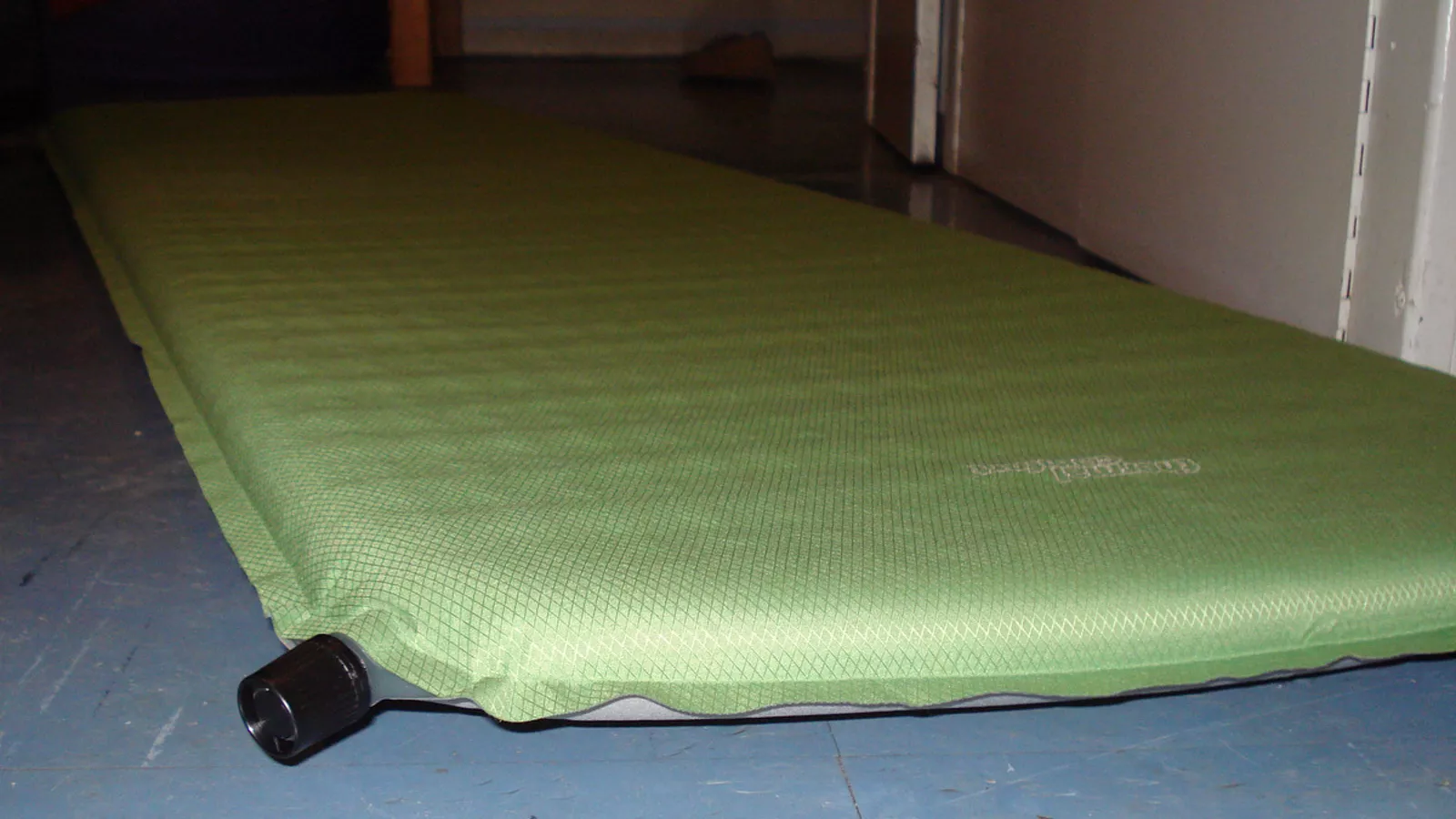
ASTM F3340 is the common standardized test for camping-mattress thermal resistance. It uses controlled plates and a defined load to measure how strongly the pad resists heat flow. Values produced with the same method are more useful for comparison than unexplained warmth scores.
Before using any chart, verify that the number is tested rather than estimated. Some older products predate standardized testing; household air mattresses may publish no thermal data. Do not assign a value from thickness. Large air chambers can circulate heat internally, while thin pads can use foam, fiber, or reflective structures to resist heat transfer.
Read what is R-value in a sleeping pad for the measurement's mechanics and limitations.
Why There Is No Exact Temperature Conversion
Air temperature is only one input. Ground temperature responds to recent weather, shade, moisture, snow, and season. Stone and compacted soil draw heat differently. Wind can reach pad edges or flow under a cot. A valley may collect cold air while a forecast station sits higher or in town.
People differ as well. Metabolism, body size, circulation, fatigue, food intake, sleep position, age, and acclimatization change warmth. A side sleeper concentrates contact at hips and shoulders; a broad sleeper may place arms beyond a narrow pad. Damp clothing or compressed insulation reduces the rest of the system.
Treat the table as a starting range. Add margin when uncertainty grows. The aim is not to discover the lowest number you can survive; it is to preserve restful sleep with a realistic backup.
Summer: Balance Warmth and Weight
On reliably warm soil at low elevation, a modest R-value can be sufficient. Backpackers may choose R 1–2 to minimize weight, while car campers might accept extra resistance because the cost in carried mass is unimportant. Confirm the overnight low at campsite elevation and watch for unseasonable cold fronts.
Warm air does not guarantee warm ground. Early-season soil, shaded forest, wet sites, and exposed alpine camps can remain cold. If one pad must serve spring through fall, choosing a moderate three-season value is often more economical than owning a summer-only model.
Extra bottom insulation does not overheat a sleeper as directly as a too-warm sleeping bag. Top layers can be vented. The drawbacks of additional R-value are usually weight, packed size, cost, and sometimes noise.
Three-Season Camping: Build Margin
R 3–4 is a useful starting band for many cool spring, summer, and fall trips, but route and sleeper still decide. Choose the upper end or beyond it for high elevations, damp climates, shoulder season, cold sensitivity, or uncertain forecasts.
Pair the pad with top insulation selected for the overnight low. A sleeping bag's underside compresses and cannot replace pad resistance. A quilt makes pad dependence particularly visible because it intentionally omits much of the bottom insulation. Compare sleeping bag vs quilt if choosing both components.
A three-season label without a test number is less useful. Ask what conditions and test method support it. The same marketing term can cover very different products.
Around Freezing: Avoid Planning at the Edge
As conditions approach freezing, use a conservative pad range, often R 4–5.5 or more, plus enough top insulation. Cold sleepers should move upward. Check whether the ground is already frozen from previous nights and whether the campsite sits in a cold-air drainage.
Do not compensate for a marginal pad by wearing every garment. Tight layers can compress sleeping-bag loft, perspiration can dampen insulation, and using all clothing leaves no dry reserve. Add resistance beneath the body with a warmer or second compatible pad.
If your existing pad is marginal, a closed-cell foam layer is a simple supplement and puncture backup. Confirm full overlap and keep every body part on the insulating area.
Snow and Winter: Use a System, Not a Threshold
Frozen ground and snow call for a winter-oriented setup, commonly R 6 or higher, depending on weather and manufacturer guidance. Many experienced campers combine an insulated air pad with closed-cell foam. The values are generally treated as additive, and the foam remains usable if the inflatable fails.
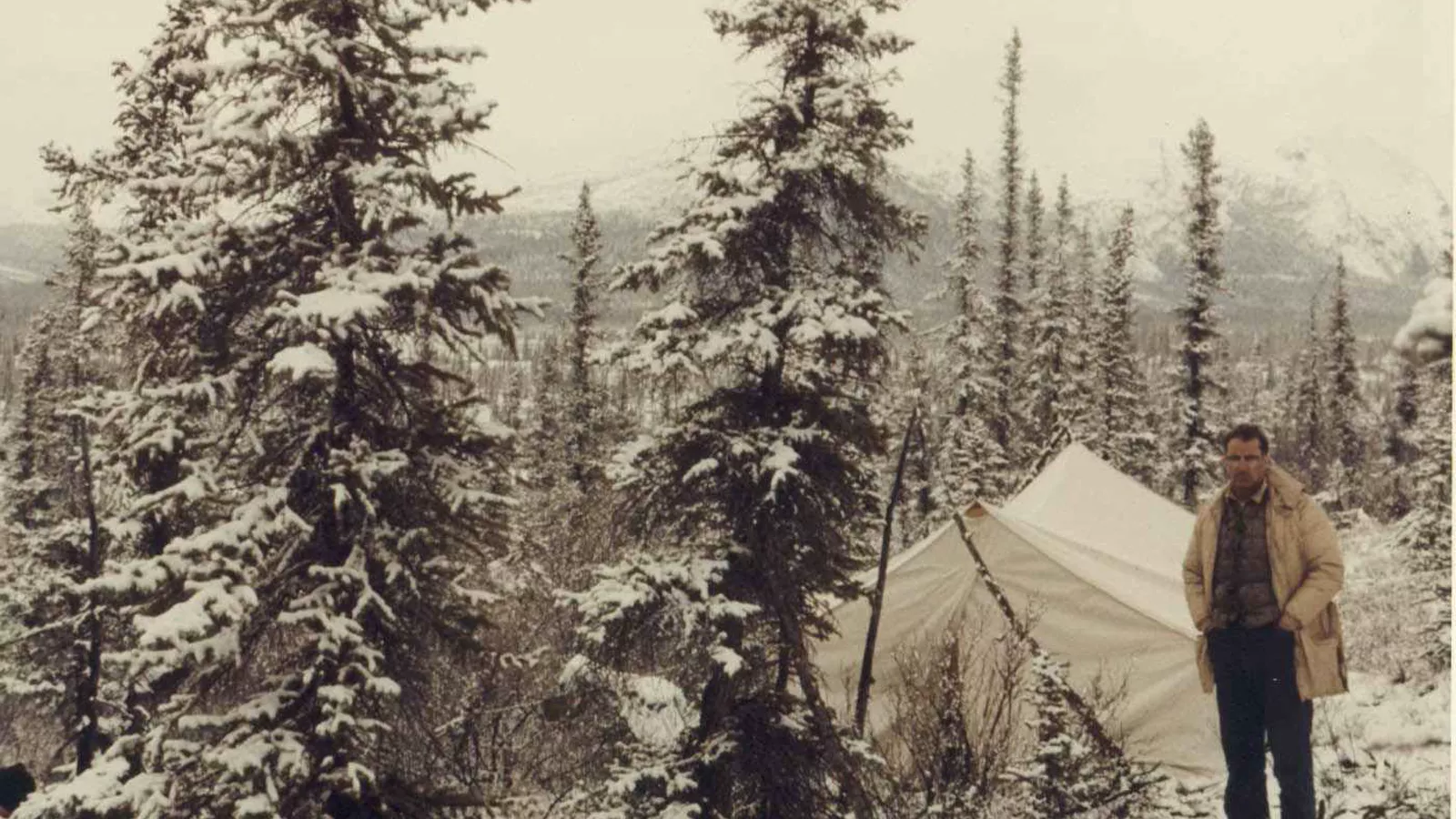
Winter consequences are higher. Practice repairs with gloves, keep inflation equipment accessible, and protect the air pad from crampons, tools, and stove equipment. Choose a shelter site clear of avalanche, falling-tree, and weather hazards; pad selection is not winter-skills training.
For prolonged snow camping, use gear guidance specific to the route and temperature range. Build experience in controlled conditions with a rapid retreat before committing remotely.

Adjust for Sleeping Position and Coverage
The printed value only helps where the pad supports you. A short pad may leave calves and feet on cold ground. A narrow pad may let elbows fall off. Bent knees and side sleeping require more usable width than lying straight.
Measure your normal posture. Side sleepers need sufficient thickness so the hip does not bottom out, but thickness is a comfort property rather than insulation proof. Inflate an air pad fully, lie down, and release small amounts until it supports you without feeling rigid.
Our guide to how to sleep comfortably while camping covers pad width, pressure, pillow height, noise, and organization.
Add R-Values When Stacking Pads
Compatible pad R-values are generally additive. Combining R 2 foam and R 3.5 inflatable layers gives a planning total near R 5.5. Both must overlap the body and remain in working condition.
Put foam beneath the inflatable for puncture protection unless product guidance or testing favors another arrangement. Foam on top may feel firmer and place its insulation close to the body. Test sliding, valve access, and stability before the trip.
Do not stack loosely in a way that blocks a tent exit or pushes bedding into damp walls. How big of a tent do I need helps calculate usable rather than nominal floor space.
Pads on Cots and in Hammocks
A cot does not eliminate the insulation requirement. Air circulates below its fabric, and the sleeping bag remains compressed beneath you. Put a suitable pad on top and ensure it cannot slide or contact rails. See camping cot vs sleeping pad for space and comfort tradeoffs.
In a hammock, wind and air beneath the sleeper increase the importance of under-insulation. A pad can work if it remains positioned; an underquilt uses loft outside the hammock. Underquilt ratings are not directly interchangeable with ASTM pad R-values.
Scenario: One Pad for Most Trips
Choose a moderate-to-warm three-season pad that covers the coldest conditions you commonly encounter, then add foam for occasional colder trips. This avoids owning several specialized pads while preserving redundancy. The compromise is carrying more weight than necessary on warm nights.
If most trips are hot and one annual trip is winter, separate systems may be safer and more efficient. Base the purchase on repeated conditions, not an aspirational extreme.
Scenario: Cold Sleeper With a Warm Bag
If cold seems to rise from below, increasing top insulation may not solve it. Check the pad's tested value, width, pressure, and condition. Ensure the bag is dry and not compressed by tent walls or tight clothing.
A home test on a cold but safe night can isolate variables. Change one element at a time. How to keep a tent warm explains safe, passive improvements; never use a stove or unapproved combustion heater inside a tent.
Scenario: Couple With Different Needs
Two separate pads let each person choose insulation and firmness. Their values need not match, although large differences in thickness can create an awkward seam. A double pad removes the gap but gives both sleepers the same R-value and pressure.
Measure total width and keep both sleepers away from tent walls. Couple sleep systems should be tested together because motion and edge loading affect comfort.
Common Mistakes
Using the air forecast alone
Ground can be colder or retain cold from previous weather. Consider elevation, shade, moisture, snow, and recent temperatures.
Buying exactly at a chart boundary
Charts are planning aids. Add margin for uncertainty and individual cold sensitivity.
Assuming thicker means higher R-value
Construction controls heat flow. Verify a standardized result.
Ignoring body coverage
Arms or legs on the ground bypass the insulation. Choose adequate length and width.
Forgetting the failure plan
A high-value air pad becomes poor insulation when flat. Carry repair supplies and foam redundancy where consequences are high.
Neglecting moisture and shelter ventilation
Damp bedding loses performance. Keep wet gear separate and use how to stop condensation in a tent.
Pre-Trip Checklist
- Verify the stated R-value and test method.
- Check forecast, campsite elevation, recent lows, ground moisture, and snow.
- Add a personal margin for cold sensitivity and trip remoteness.
- Confirm the pad covers your normal sleep posture.
- Inflate overnight at home and inspect valve, seams, and shell.
- Test all stacked layers for overlap and sliding.
- Pack manufacturer-compatible repair supplies.
- Carry foam backup when an inflatable failure would be serious.
- Match sleeping bag or quilt and dry clothing to the same conditions.
- Keep the entire sleep system waterproof during transport.
Frequently Asked Questions
Is R 4 enough for freezing temperatures?
It can be a starting point for some tested systems and warm sleepers, but it is not a guarantee. Many campers choose more margin near freezing, especially on cold ground or when they sleep cold.
What R-value should a cold sleeper choose?
Start above the generic range, use manufacturer guidance, and validate it in controlled conditions. Also check pad width, top insulation, clothing moisture, and food intake.
Can R-value be too high in summer?
Extra resistance below usually causes less overheating than too much top insulation, but higher-value pads may cost and weigh more. Vent the bag or quilt for temperature control.
Do two pads add together?
Their tested values are generally treated as additive when they fully overlap and function properly. Gaps and uncovered body parts reduce the real benefit.
What if my pad has no R-value?
Do not guess from thickness. Use it only in forgiving conditions after testing, contact the manufacturer for documented data, or choose a pad with standardized results.
Does an air mattress have an R-value?
Only if the manufacturer provides credible thermal testing. Many household-style air beds are uninsulated and may feel cold despite their height.
Final Takeaway
Use R 1–2 as a warm-summer starting point, R 3–4 for many three-season trips, R 4–5.5 around freezing, and R 6+ for cold or snow—but treat every range as a starting estimate. Verify standardized testing, add personal and weather margin, cover your whole body, and carry redundancy when failure matters. Field-tested confidence is more valuable than choosing the lowest number a chart appears to allow.
Sources and Further Reading
- ASTM International, ASTM F3340: Standard Test Method for Thermal Resistance of Camping Mattresses Using a Guarded Hot Plate Apparatus.
- ISO, ISO 23537-1: Requirements for sleeping bags — Thermal, mass and dimensional requirements.
- U.S. National Park Service, camping preparation and cold-weather safety guidance.
- Leave No Trace Center for Outdoor Ethics, Plan Ahead and Prepare.