
Practical Camping Guide
How to Sleep Comfortably While Camping
Sleeping comfortably while camping depends less on making a tent feel like a bedroom and more on controlling five things: ground insulation, pressure relief, warmth, moisture, and noise. Start with a level campsite, use a pad that fits your body and the expected temperature, keep tomorrow's clothing out of your sleep system, and adjust ventilation before condensation builds.
By Danny WalkerUpdated 13 min read
Sleeping comfortably while camping depends less on making a tent feel like a bedroom and more on controlling five things: ground insulation, pressure relief, warmth, moisture, and noise. Start with a level campsite, use a pad that fits your body and the expected temperature, keep tomorrow's clothing out of your sleep system, and adjust ventilation before condensation builds.
The right setup is personal. A side sleeper needs more cushioning than someone who sleeps on their back. A warm sleeper may need ventilation even on a cool night. A thick air mattress can feel luxurious in summer but cold in shoulder season because its large air chamber provides little insulation. This guide helps you diagnose what actually keeps you awake and fix that problem without packing an entire bedroom.
Build Comfort From the Ground Up
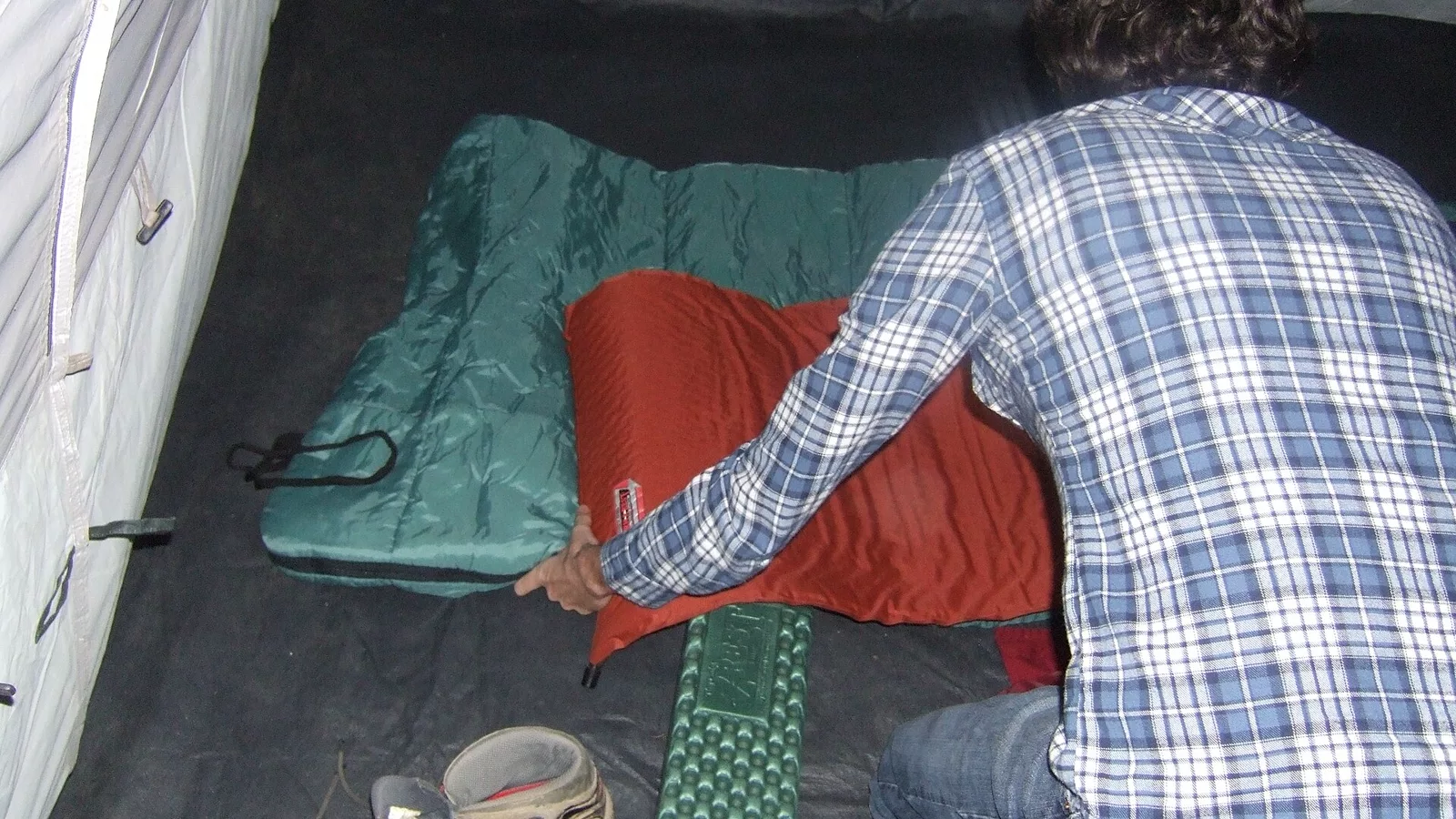
Your sleeping bag is only part of the system. Insulation beneath your body compresses under your weight, so it cannot trap as much warm air as the loft above you. The sleeping pad therefore has two separate jobs: reduce pressure on hips and shoulders, and slow heat loss into the ground.
Choose the pad by conditions first and softness second. ASTM F3340 provides a repeatable way to compare the thermal resistance of camping mattresses, commonly shown as an R-value. A higher value indicates greater resistance to heat flow, but the laboratory number does not promise that every person will feel equally warm. Wind, damp ground, exposed pad edges, sleep position, clothing, and metabolism all change the experience.
If two compatible pads are stacked, their insulation can generally be treated as additive for planning. A closed-cell foam pad beneath an inflatable pad also gives you a backup if the inflatable develops a leak. Place the tougher foam layer against the tent floor unless the manufacturer gives different instructions.
Choose the Right Surface for Your Sleep Style
Back sleepers often do well on a moderately firm pad because weight is spread across a broad area. Side sleepers concentrate weight at the shoulder and hip and usually need more usable thickness. Stomach sleepers may prefer a firmer surface that does not let the pelvis sink far below the chest.
Thickness alone is not comfort. Internal baffles, edge stability, inflation pressure, width, and the shape of the pad matter. A four-inch mattress can still feel unstable if air moves dramatically from one side to the other. A thinner self-inflating pad may feel steadier because foam distributes pressure.
Test a new pad at home for a full night, not for five minutes on a showroom floor. Inflate it, lie in your normal position, and let a small amount of air out until the surface supports you without feeling like a rigid board. If your hip touches the ground when you roll over, add air or choose a thicker pad.
Match Pad Width and Length to Your Body
A pad that is warm enough can still disturb sleep if your elbows fall onto cold ground or your feet hang over the end. Standard backpacking pads prioritize packed size, while wide and rectangular pads provide more room to change position.
Measure yourself in your normal sleep posture. Side sleepers should include the space used by bent knees and arms. Tall campers should check actual listed dimensions rather than trusting labels such as “long.” Couples should compare two separate pads with a double mattress. Separate pads isolate movement and let each person choose firmness, while a double pad removes the cold seam but transfers more motion.
Inside the tent, make sure the combined pad width fits the real floor dimensions. Tent capacity numbers describe how many people can lie down closely; they are not comfort ratings. Keep the pad away from wet tent walls where possible so bedding does not wick condensation.
Use an R-Value Appropriate for the Conditions
There is no universal temperature chart that turns one R-value into a guaranteed comfort temperature. Use manufacturer guidance as a starting point, consider the lowest ground and air temperatures you might face, and leave a margin if you sleep cold.
For mild summer camping, a lower-insulation pad may be adequate. Cool spring and fall nights usually call for more ground insulation. Frozen ground and snow demand a true cold-weather system, often combining an insulated inflatable pad with closed-cell foam. If a cold forecast would put the setup near its stated limit, adding a foam pad is more dependable than hoping extra clothing will compensate.
Do not confuse mattress thickness with insulation. A large uninsulated air bed contains plenty of air, but air circulates within the chamber and can carry heat away from your body. Read the listed R-value or insulation specification instead of assuming that “thicker” means “warmer.”
Select Bedding for the Overnight Low
Check the overnight low for the campsite, not the nearest warm city and not only the daytime high. Valleys can collect cold air, exposed sites can be windy, and clear nights can cool quickly.
Sleeping bags commonly show multiple temperature numbers. A comfort rating is more useful for planning a restful night than a lower-limit or survival-oriented number. Ratings are comparative tools rather than guarantees, so add margin for personal sensitivity, humidity, wind, fatigue, age, and whether you have eaten enough.
Use a bag that fits without large empty spaces but does not compress insulation at the shoulders, feet, or knees. A liner can help keep the bag clean and make the interior feel more familiar, but it is not a substitute for enough insulation. A camping blanket works well for warm nights and restless sleepers, while a quilt reduces weight but relies on an effective pad and good draft control.
Wear Dry, Simple Sleep Clothing
Change out of damp hiking or cooking clothes before bed. Moisture conducts heat and can make a suitable sleep system feel cold. A dry base layer, clean socks, and a soft hat are usually more useful than wearing every item you packed.
Avoid bulky layers that compress the sleeping bag or make you sweat. If you become too warm, vent the bag early rather than waiting until clothing and insulation are damp. Keep tomorrow's clothes in a dry bag or beside you instead of stuffing the footbox so tightly that the bag cannot loft.
Never take food-stained clothing into the tent where wildlife rules prohibit it. Follow the campground's food-storage requirements and treat scented items according to local guidance.
Control Condensation Before It Reaches Your Bedding
People release moisture through breathing and perspiration all night. Closing every vent may feel warmer initially, but trapped humidity can condense on a cool fly and dampen sleeping bags near the walls.
Pitch the rainfly with even tension and keep designed vents open unless conditions make that unsafe. Use mesh doors or upper vents to create airflow while maintaining rain protection. Avoid breathing deep inside the sleeping bag; exhaled moisture accumulates in the insulation.
Keep wet boots, rain shells, and towels in a vestibule or designated damp zone rather than beside the sleeping bag. If the inside of the fly is wet in the morning but rain did not enter, condensation is the likely cause. Read how to stop condensation in a tent before assuming the shelter leaks.
Pick a Sleep-Friendly Campsite
Look for established, level ground that is not in a depression or drainage path. Remove loose sticks and stones by hand, but do not dig trenches, cut vegetation, or remodel the site. Position your head slightly uphill if the ground has a gentle slope.
Consider what will happen after dark. A site beside the restroom may be convenient but noisy and bright. A spot near water may feel colder and attract insects. An exposed ridge may catch wind all night. Check overhead for dead limbs and other hazards before setting up.
Our guide to choosing a campsite explains drainage, shade, wind, privacy, and campground traffic in more detail.
Keep the Sleeping Area Organized
Place a headlamp, water bottle, glasses, medication, and footwear where you can reach them without searching. Keep sharp items away from inflatable pads. Use the same location every night so a dark wake-up does not become a gear hunt.
Separate the tent into dry and damp zones. Sleep gear belongs in the dry zone. Jackets, packs, and shoes belong near the door or in the vestibule when the shelter design allows it. Avoid blocking ventilation or the exit.
For two people, agree on a nighttime path to the door. Stepping across a partner or onto an inflatable valve creates unnecessary disturbance and can damage equipment.
Reduce Noise Without Blocking Important Sounds
A tightly pitched tent is quieter than a loose one. Tension the rainfly and guylines so fabric does not flap, but do not pull so hard that poles distort. Secure loose zipper pulls and move cookware away from places where wind can rattle it.
Soft earplugs can help in a busy developed campground, but complete isolation is not always desirable. You still need awareness of severe weather, wildlife instructions, children, and emergencies. If unfamiliar forest sounds cause anxiety, spend a few minutes listening before bed and identify steady sounds such as wind, water, insects, and neighboring campers.
Create a Repeatable Bedtime Routine
Finish cooking and cleanup early enough that you are not rushing in darkness. Store food and scented items according to local rules. Visit the restroom, refill water if permitted, and prepare clothing before entering the tent.
Eat enough for the conditions, but avoid an unusually heavy meal immediately before lying down. Limit late caffeine and alcohol if they normally disrupt your sleep. Do a short walk or gentle stretch, then cool down before getting into the bag; climbing in while overheated often leads to sweat and later chills.
Warm the system with your body rather than using fuel-burning heaters inside the tent. Never operate a stove, grill, or unapproved combustion heater in an enclosed sleeping space because of fire and carbon-monoxide risk.
Diagnose Common Sleep Problems
| Problem | Likely cause | First adjustment |
|---|---|---|
| Cold from below | Pad insulation is too low | Add a foam pad or use a higher R-value pad |
| Hip touches ground | Underinflation or insufficient thickness | Add air; if pressure becomes painful, use a thicker pad |
| Pad feels like a board | Overinflation | Release air in small amounts while lying on it |
| Damp bag near the wall | Condensation or contact with wet fabric | Increase ventilation and move bedding inward |
| Sliding downhill | Sloped site or slick pad surface | Reorient the tent or use compatible non-slip measures |
| Repeated waking | Noise, temperature swings, unfamiliar routine | Stabilize ventilation, organize essentials, and use a routine |
Change one variable at a time when testing at home. If you change the pad, pillow, clothing, and bag together, you will not know which adjustment solved the problem.
Comfort Adjustments for Different Campers
Side sleepers should prioritize usable thickness and width. A small pillow between the knees may reduce hip strain. Campers with limited mobility may find a stable cot easier to enter and exit, provided the tent has enough height and floor space and the cot feet will not damage the floor.
Couples who run at different temperatures usually sleep better with separate bags or quilts. Families should test children's systems carefully because adult temperature assumptions do not automatically transfer to children. Anyone managing pain, circulation issues, sleep apnea, allergies, or another medical condition should plan around professional advice and bring the equipment they normally require.
Car campers can carry more comfort, but every addition should solve a known problem. A proper pillow may help more than decorative bedding. A fitted sheet can reduce the plastic feel of an air mattress. A foam topper adds cushioning but takes space and should stay dry.
A Practical Pre-Trip Sleep Check
- Check the campsite's expected overnight low, wind, rain, and humidity.
- Confirm the pad's dimensions, condition, valve, and insulation specification.
- Inflate the pad overnight at home to check for slow leaks.
- Test the complete sleep system in the clothing you expect to wear.
- Pack a repair kit compatible with the pad material.
- Keep sleep clothing and bedding in waterproof storage during travel.
- Confirm that all pads fit inside the tent without pressing hard against the walls.
- Bring a backup insulation layer when the forecast approaches your system's limit.
Frequently Asked Questions
Why am I cold even in a warm sleeping bag?
The pad may not provide enough insulation from the ground, the bag may be damp or too large, or the temperature rating may not represent your personal comfort. Check ground insulation before adding more layers on top.
Is a cot more comfortable than a sleeping pad?
A cot is easier to enter and keeps you off uneven ground, but it still needs insulation beneath your body in cool weather. A pad is lighter, fits smaller tents, and can offer excellent pressure relief when properly sized.
Should I put a blanket under or over my sleeping bag?
If the problem is heat loss to the ground, insulation under you is most useful, but compressed blankets provide less insulation than a purpose-built pad. If the pad is adequate and you need more top insulation, place a dry blanket over the bag without compressing its loft.
Can I use a household air mattress for camping?
Yes for suitable car-camping conditions, but verify that it fits the tent and understand that many household air beds have no published R-value. They can feel cold when nights are cool and require a dependable inflation method.
How can I sleep on the first night at camp?
Practice with the equipment at home, arrive early, organize the tent before dark, limit late caffeine, and follow a familiar bedtime routine. A well-fitted pillow and a correctly adjusted pad often make the largest immediate difference.
Final Takeaway
Comfortable camp sleep comes from a balanced system, not one oversized piece of gear. Begin with safe, level ground; add a pad that provides both insulation and pressure relief; choose bedding for the overnight low; keep clothing dry; and ventilate the tent. Test the complete setup before the trip, then change only the part that corresponds to the problem you actually experienced.
Sources and Further Reading
- ASTM International, F3340 Standard Test Method for Thermal Resistance of Camping Mattresses.
- U.S. National Park Service, What to Bring — Camping.
- U.S. National Park Service, During Your Stay — Camping.