
Practical Camping Guide
Sleeping Bag vs Quilt: Which Sleep System Is Right for You?
Choose a sleeping bag if you want simple, enclosed draft protection, an integrated hood, or a more forgiving system near its temperature limit. Choose a backpacking quilt if lower weight, less packed bulk, and room to move matter most—and you are willing to use an insulated pad, configure straps, and manage openings as conditions change.
By Danny WalkerUpdated 16 min read
Choose a sleeping bag if you want simple, enclosed draft protection, an integrated hood, or a more forgiving system near its temperature limit. Choose a backpacking quilt if lower weight, less packed bulk, and room to move matter most—and you are willing to use an insulated pad, configure straps, and manage openings as conditions change.
Neither design is inherently best, and neither is warm without the rest of the sleep system. A quilt deliberately removes much of the insulation and fabric that would sit compressed beneath you. The sleeping pad replaces that bottom insulation. This can produce excellent warmth for the carried weight, but only when the quilt is wide enough and its edges remain controlled. A bag surrounds you, making it easier to preserve a stable pocket of warm air, though some of its underside contributes little when compressed.
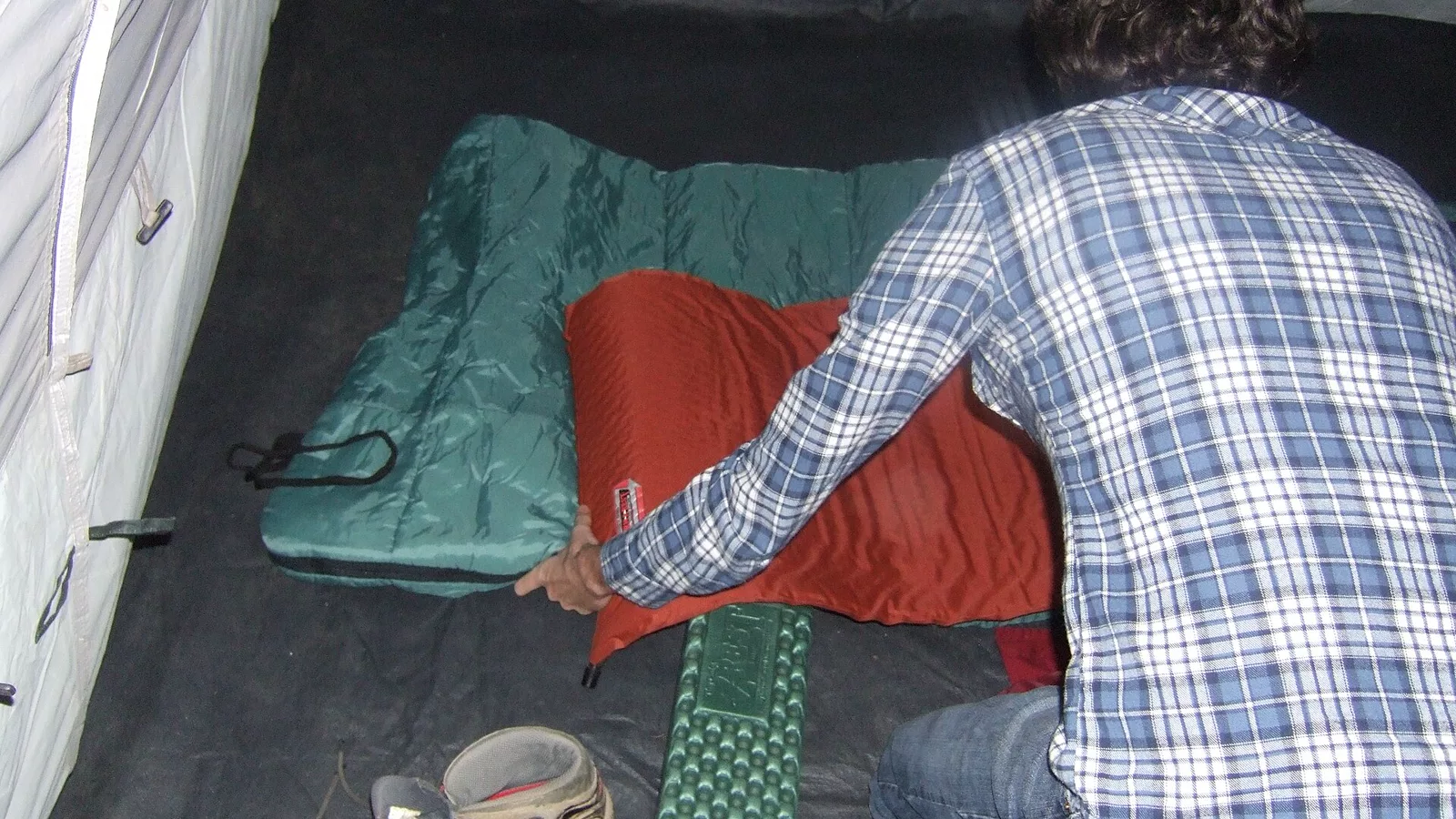
Sleeping Bag vs Quilt at a Glance
| Factor | Sleeping bag | Backpacking quilt |
|---|---|---|
| Draft control | Enclosed shell is forgiving | Depends on width, technique, and attachment |
| Head insulation | Often has an integrated hood | Usually requires a separate hat or insulated hood |
| Weight efficiency | Some fabric and fill lie beneath you | Removes most compressed underside material |
| Movement | Varies by cut; narrow bags can bind | Open back allows freer movement |
| Venting | Zipper or opening | Lift an edge, loosen straps, or open footbox |
| Setup | Zip, adjust hood and collar | Position quilt and tune pad straps |
| Pad dependence | Essential for ground insulation | Essential and also part of draft control |
| Best learning environment | Familiar to most campers | Rewards testing and adjustment before a trip |
This is a design comparison, not a fair substitute for product specifications. Compare systems in the same temperature class and size. A light summer bag should not be judged against a winter quilt, and an overfilled wide quilt will not weigh the same as a minimalist narrow model.
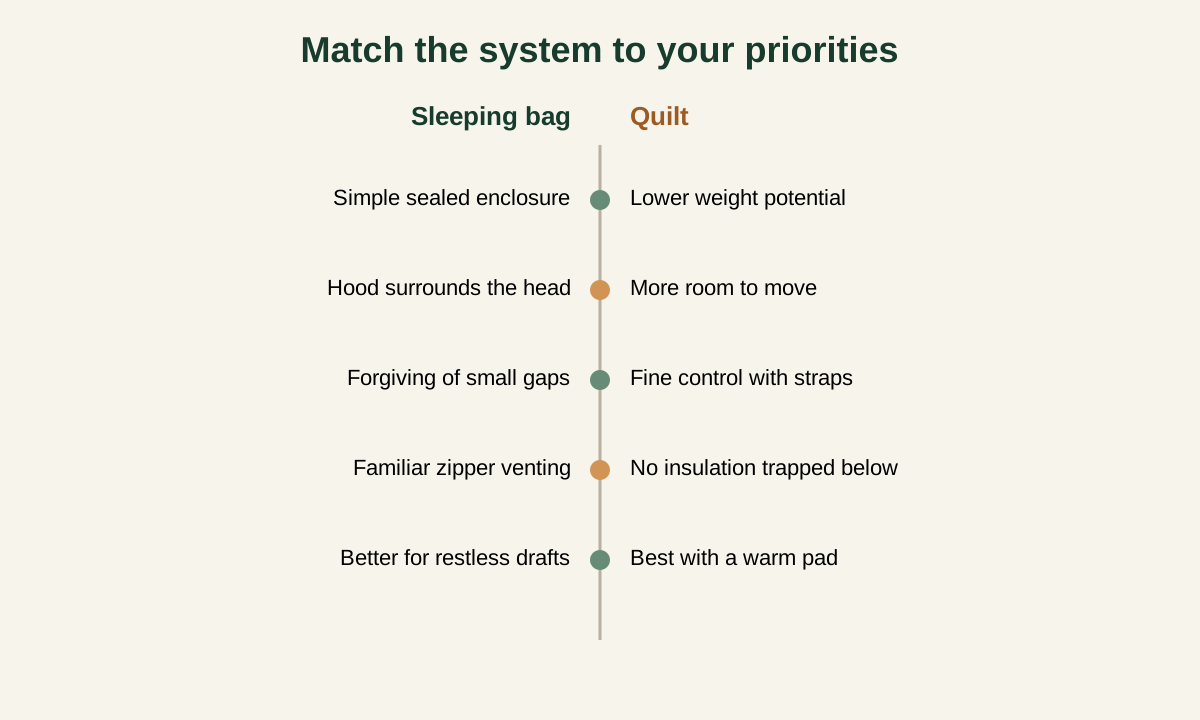
How a Backpacking Quilt Works
A backpacking quilt is not simply a household blanket. It normally has a shaped footbox, an insulated body section, and hardware that can connect the edges around the sleeper or to straps on the sleeping pad. Some footboxes are sewn closed. Others close with a zipper, drawcord, snaps, or a combination so the quilt can open flat in warm weather.
The open underside reflects a physical reality: insulation compressed between the body and pad cannot maintain full loft. Quilt designers remove that low-performing section and rely on the pad for insulation below. The quilt's side edges extend toward the pad to contain warm air. In cold conditions, straps prevent those edges from lifting when the sleeper rolls.
That architecture makes fit especially important. A quilt must be long enough to cover the shoulders without stretching the footbox. It must be wide enough to follow the body in a side-sleeping or curled posture while leaving material at both edges. A model optimized for a small back sleeper may be inadequate for a broad-shouldered, restless side sleeper even if both people are the same height.
How a Sleeping Bag Works Differently
A sleeping bag creates an insulated tube around the body. Mummy bags taper toward the feet to reduce unused volume and material. Rectangular models provide more room but usually weigh and pack more for similar materials. Semi-rectangular and spoon-shaped bags try to balance efficiency with knee and elbow room.
The zipper, draft tube, neck collar, hood, and footbox help close predictable heat-loss paths. These parts make the bag relatively intuitive: enter, zip, arrange the hood, and vent if necessary. When you roll, however, some bags roll with you. The hood opening can rotate away from the face, and the shell may tighten across bent knees. Other users learn to rotate inside the stationary bag.
The underside is not useless—it completes the enclosure and helps block drafts—but its fill is compressed. A sleeping bag still requires an insulated pad selected for the expected conditions. If you have struggled despite a seemingly warm bag, how to sleep comfortably while camping helps isolate pad, pressure, moisture, and campsite causes.
Warmth and Temperature Ratings
Many adult sleeping bags are tested to standardized methods that report performance under controlled laboratory conditions. Depending on the label and region, you may see comfort, limit, and extreme values. The comfort value is the more conservative planning reference; an extreme value is not a target for normal sleep. Test results compare equipment, not individual physiology.
Quilt ratings are less standardized across the market. One manufacturer may describe a comfort-oriented value, another a limit, and another may infer warmth from fill and field experience. Read the methodology and fine print. Ask whether the published temperature assumes a certain pad R-value, base layers, a hood, a specific sleeping position, and a fully closed footbox.
For either design, create a margin above the predicted low. Cold-air pooling can make a campsite cooler than a nearby town. Wind, humidity, fatigue, insufficient food, damp insulation, fit, and individual metabolism alter comfort. A label cannot account for illness or circulation concerns; plan those with qualified medical guidance.
The Pad Is Non-Negotiable
A quilt exposes the importance of the pad because its opening faces downward. If the pad's insulation is insufficient, adding more quilt fill on top does not directly stop conductive heat loss into the ground. Select a pad by thermal resistance and expected ground conditions, not thickness alone. An uninsulated air mattress can be thick yet cold because air circulates within its chamber.
The ASTM camping-mattress test produces an R-value: higher numbers represent greater resistance to heat flow in the test. Values can generally be added when compatible pads are stacked, so a closed-cell foam layer can increase warmth and add puncture backup. Still, there is no single R-value that guarantees comfort for every person at a specific air temperature.
Pad shape also affects quilt use. A tapered quilt may pair neatly with a mummy pad; a restless sleeper may prefer a rectangular pad and wider quilt. Confirm that attachment straps are compatible with the pad width and do not interfere with its valve. Never route hardware where it can abrade or puncture the pad.
Drafts: The Deciding Skill
The biggest functional difference appears when you move. A sleeping bag keeps a continuous shell beneath the body, so a small roll seldom opens the entire system. A quilt edge can lift from the pad and exchange the warmed interior air with colder outside air. Campers call this a draft, but the actual problem is often fit or setup rather than the quilt concept.
Start with loose straps in mild weather. Attach them where the quilt maker specifies, lie in your normal posture, then tighten only enough that the edges follow your sides. Over-tightening pulls down the quilt, reduces interior space, and may compress loft. In colder conditions, bring the edges closer beneath the body or use the inner strap positions if the system provides them.
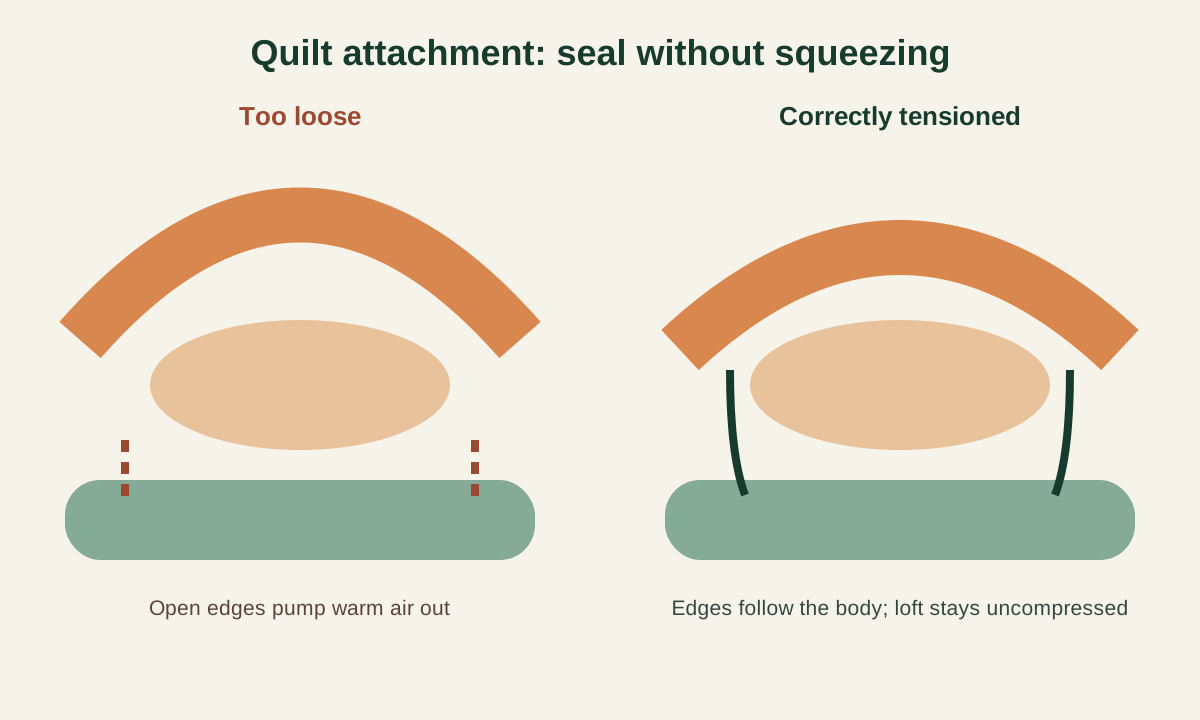
A draft collar or neck snap helps seal the shoulder opening. If the quilt is too short, drawing it to the neck can compress the footbox. If it is too narrow, tensioning the straps can flatten the sides. Sizing up is often a better solution for an active or broad sleeper than applying more tension.
Weight and Packed Volume
Quilts can be lighter because they omit the full-length zipper, hood, and much of the underside shell and fill. The advantage is most meaningful when comparing equal dimensions, materials, construction quality, and claimed warmth. A wide, long quilt with generous overfill might weigh more than a narrow premium bag. Include a separate insulated hood, strap hardware, and stuff sack in the system weight if you need them.
Down usually offers more loft per unit of packed weight than common synthetic fills and compresses well. It also requires careful moisture management. Synthetic insulation may retain more useful structure when damp and often costs less, but equivalent products tend to occupy more pack volume. Neither material excuses poor storage: keep insulation dry during travel and store it loose rather than continuously compressed.
For vehicle camping, a few ounces rarely decide the trip. Simplicity, room, durability, and price deserve more weight in the decision. The broader sleeping bag vs camping blanket comparison may be more relevant if you want something for both the bed and the picnic table.
Sleep Style and Fit
Back sleepers who remain relatively still are strong quilt candidates because they create a stable shape and place little demand on edge coverage. Side sleepers also benefit from freedom around knees and hips, but their body profile uses more of the quilt's width. Stomach sleepers may need extra length because pointed feet extend the effective body length.
Measure in your sleep posture. Wear expected layers, lie on the actual pad, bend your knees, and simulate turning both directions. Check whether the edge stays beside the pad and whether the footbox constricts your feet. For a bag, ensure shoulders and knees do not press so hard that they flatten insulation. The hood should align with your face without pulling the footbox upward.
Restless sleepers face a nuanced choice. A quilt does not twist around them, but each roll can challenge the seal. A bag maintains enclosure, but a narrow cut may feel restrictive. A wider quilt with a dependable strap system or a roomier spoon-shaped bag can solve the respective weakness.
Hoods and Head Insulation
A cold-weather sleeping bag integrates a hood that moves with the system and can reduce heat loss around the head and neck. It also helps block shoulder drafts when combined with a collar. Avoid burying your face inside; exhaled moisture can collect in insulation.
Most quilts stop near the neck. In mild weather, a dry beanie may be enough. In colder conditions, quilt users often add a dedicated insulated hood or hooded garment. Count that piece when comparing cost, weight, and complexity. A jacket hood may work, but confirm that it turns with your head and does not restrict breathing or vision.
Headwear does not correct a quilt that is undersized or a pad that is too cold. Treat it as one element in the system, alongside dry base layers and shelter. If cold air is entering around the shoulders, adjust the neck closure and straps before adding more clothing.
Moisture and Shelter Conditions
Both systems depend on loft, so both must stay dry. A quilt can be easier to vent before perspiration builds. A bag's zipper offers graduated ventilation, and some models have foot vents or dual sliders. Make small adjustments early; waiting until you are sweating makes moisture management harder.
Keep wet clothing, boots, and rain gear out of the sleep area. Maintain designed shelter ventilation even on cool nights. Condensation forms when humid interior air meets cold fabric; a fully sealed tent does not eliminate the moisture you exhale. Use how to stop condensation in a tent to improve airflow and site selection, and how to keep a tent dry in the rain to separate rain-management problems.
A narrow tent can bring lofty side panels into contact with wet walls. Bags keep their shape contained, while an oversized quilt may spill toward the perimeter. Before buying more sleep gear, verify the usable floor width with how big of a tent do I need.
Scenario 1: Summer Backpacking
For a stable warm forecast, the quilt's strengths are easy to use. Leave the straps loose, open a convertible footbox, and lift an edge whenever heat builds. The reduced bulk can free pack volume for water or weather layers. Bring at least one strap anyway; a breezy campsite or cooler-than-expected valley may make edge control useful.
A lightweight bag remains a sound choice if you already own one and sleep well in it. Replacing functional equipment merely to save a small amount of weight may offer poor value. First examine the heaviest or least reliable parts of the full kit.
Scenario 2: Shoulder-Season Backpacking
When nighttime lows move toward freezing, both systems require more deliberate planning. A suitably rated quilt can work extremely well, but use a wide model, secure footbox, insulated headwear, reliable straps, and sufficient pad R-value. Practice entry and adjustment with cold fingers before the trip.
A bag offers a wider tolerance for imperfect positioning. The hood and collar consolidate critical closures in one item. For a new camper, a cold sleeper, or a route with uncertain microclimates, that lower setup burden may outweigh the extra grams.
Scenario 3: Car Camping
Weight efficiency matters little beside a vehicle. Choose based on sleep quality, cost, and versatility. A roomy bag is easy to contain on a cot or mattress. A quilt provides freedom without the excess material of a household comforter and can be shared briefly around camp, although its pad straps may be unnecessary on a broad mattress.
Do not assume a tall air bed is warm. Look for a tested R-value or add an appropriate insulated pad. Cots likewise allow cold air beneath the sleeper and need insulation on top in cool conditions.
Scenario 4: Hammock Camping
In a hammock, compressed insulation below the body performs poorly and cold air circulates underneath. A top quilt can be convenient because the open back simplifies entry in a confined hammock. It must be paired with an appropriate underquilt or pad selected for conditions. A sleeping bag can work but may be awkward to enter and zip without standing support.
The underquilt hangs outside the hammock and should loft rather than be crushed. It is a separate product from the top quilt. Test suspension, coverage, and clearances at home, and follow the hammock and insulation manufacturers' directions.
Common Mistakes
Treating every rating as equivalent
Identify whether a number is standardized, whether it represents comfort or limit, and what assumptions the manufacturer makes. Build a margin rather than planning directly at a claimed boundary.
Choosing a quilt that is too narrow
The lightest listed size may save weight on paper while losing warmth every time you turn. Choose width for shoulder circumference, pad width, and sleeping position—not height alone.
Over-tightening pad straps
Straps should guide edges, not crush the quilt into the body. Start loose and make symmetric, incremental adjustments while lying down.
Ignoring head insulation
A hoodless system needs a deliberate head-and-neck plan in cold conditions. A thin cap is not automatically equivalent to a shaped insulated hood.
Spending on top insulation while neglecting the pad
Cold from below is not solved efficiently by adding more fill above. Check pad insulation and prevent exposed body parts from falling off its edges.
Testing for only five minutes indoors
A brief lie-down reveals room but not overnight drafts, pressure points, or moisture. Conduct a full controlled overnight test with an easy indoor fallback.
Pre-Trip Checklist
- Check the forecast at campsite elevation, including wind and precipitation.
- Confirm the bag or quilt rating basis and leave a personal safety margin.
- Match the pad's R-value and dimensions to expected ground conditions.
- Test length and width in every normal sleep position.
- Inspect baffles for uneven fill and allow down time to loft.
- Practice quilt strap placement and adjustments in darkness.
- Pack a separate hood or hat if the system lacks one.
- Keep sleep clothing and insulation in waterproof storage.
- Inspect zippers, snaps, cords, and pad valves.
- Carry manufacturer-compatible field repair materials.
- Air the system after each night and dry it fully before storage.
Frequently Asked Questions
Is a quilt as warm as a sleeping bag?
It can provide comparable top warmth when insulation, coverage, pad, and conditions are comparable. A bag controls drafts more automatically, while a quilt's performance depends more on width and edge management.
Do I need pad straps with a quilt?
Not always in warm, calm conditions. Straps become more useful as temperatures fall, wind increases, or movement creates gaps. Carry them until repeated tests show you do not need them for a particular trip.
Can I use a quilt below freezing?
Experienced campers use properly designed quilts in freezing and colder conditions, but success requires adequate insulation, conservative sizing, a warm pad, head insulation, good draft control, and tested personal margins. Do not treat the category itself as proof of suitability.
Is a quilt better for side sleepers?
It can be, because the open back permits free knee and hip movement. Select extra width so turning does not lift an edge. Draft-sensitive side sleepers may prefer a roomy bag.
Why does a quilt need a sleeping pad?
Your body compresses insulation beneath it, reducing loft. The pad provides both cushioning and meaningful resistance to heat loss into the ground; it also anchors many quilt strap systems.
Can I turn my sleeping bag into a quilt?
A fully unzipped rectangular bag can act like a blanket in mild weather. It will generally be heavier and less shaped than a purpose-built quilt, and a mummy bag may not open flat. Do not cut or alter insulated gear unless the manufacturer supports it.
Final Takeaway
A quilt is an efficient, adjustable top layer for campers who understand their pad and will manage drafts. A sleeping bag is an integrated enclosure that asks less of the sleeper when the night turns cold. Compare complete systems—not isolated ounces—and choose the shape that fits your body, movement, and tolerance for setup. Test it for a full night with a safe fallback before trusting any new system near its stated limit.
Sources and Further Reading
- ISO, ISO 23537-1: Requirements for sleeping bags — Thermal, mass and dimensional requirements.
- ASTM International, ASTM F3340: Standard Test Method for Thermal Resistance of Camping Mattresses Using a Guarded Hot Plate Apparatus.
- U.S. National Park Service, What to Bring — Camping and trip-planning guidance.
- Leave No Trace Center for Outdoor Ethics, Plan Ahead and Prepare.