
Practical Camping Guide
Sleeping Bag vs Camping Blanket: Which Should You Pack?
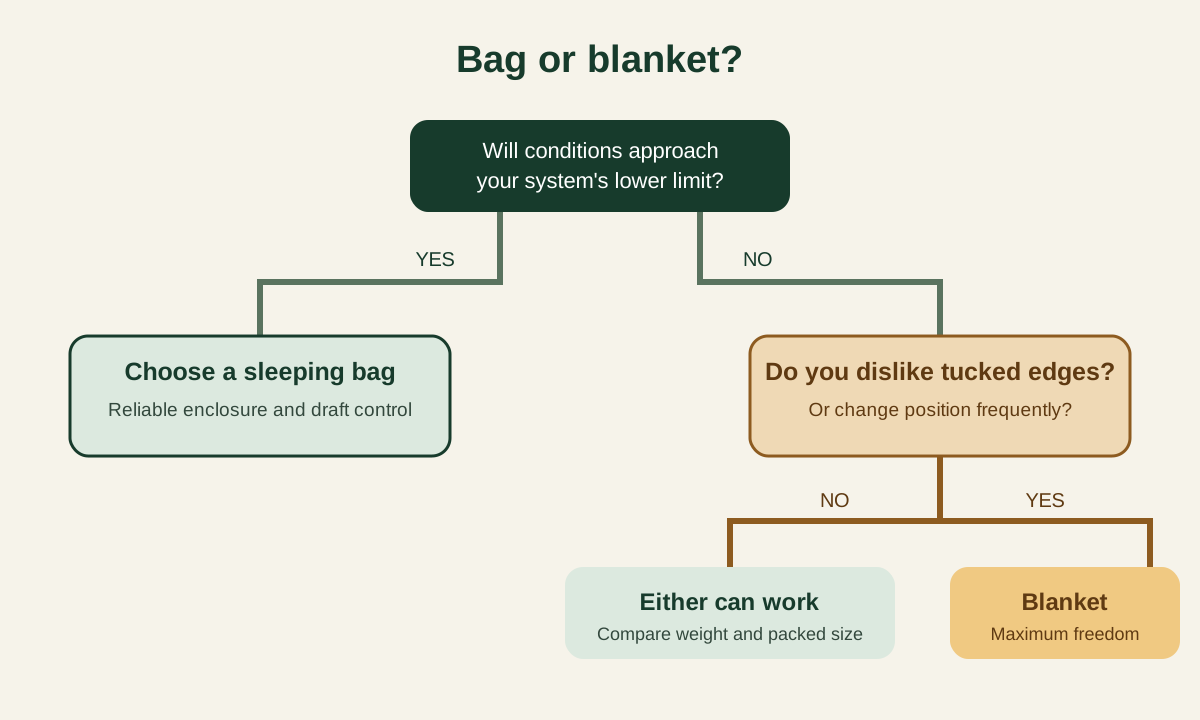
Choose a sleeping bag when the night may be cold, windy, or close to your insulation's limit: its enclosed shape controls drafts with less effort. Choose a camping blanket for mild, predictable conditions when freedom of movement, easy venting, and use around camp matter more than maximum thermal efficiency. In either case, the sleeping pad—not the top cover—provides most of the insulation below you.
By Danny WalkerUpdated 15 min read
Choose a sleeping bag when the night may be cold, windy, or close to your insulation's limit: its enclosed shape controls drafts with less effort. Choose a camping blanket for mild, predictable conditions when freedom of movement, easy venting, and use around camp matter more than maximum thermal efficiency. In either case, the sleeping pad—not the top cover—provides most of the insulation below you.
That direct answer is more useful than declaring one design universally warmer. A lofty blanket can contain more insulation than a light bag, while a poorly fitted bag can leave cold space around a small sleeper. The meaningful comparison is between products with similar insulation, used on the same pad, in the same shelter. Fit, edge control, moisture, wind, and the sleeper's habits then decide which performs better.
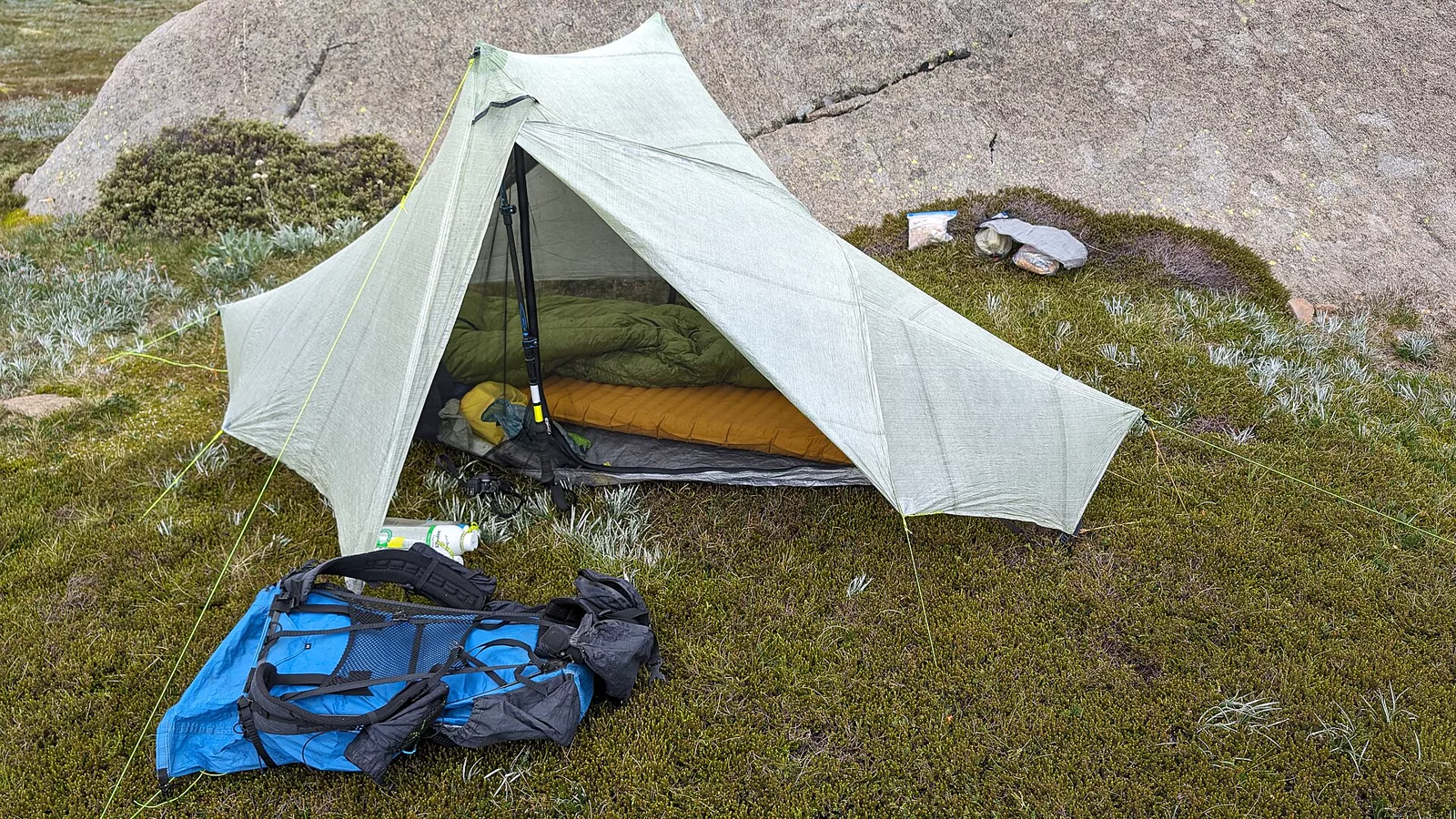
Quick Decision Table
| Situation or priority | Better starting choice | Why |
|---|---|---|
| Forecast near the sleep system's lower limit | Sleeping bag | Zipper, hood, and shaped footbox reduce uncontrolled openings |
| Warm summer car camping | Camping blanket | Easy to throw off, share, dry, and use outside the tent |
| Active side sleeper | Blanket, if wide enough | It moves independently and does not twist around the body |
| Cold sleeper or draft-sensitive sleeper | Sleeping bag | Enclosed coverage is more forgiving when you change position |
| Minimal gear for camp and bedtime | Camping blanket | One item can cover chairs, picnics, and sleep |
| Narrow backpacking tent | Sleeping bag | The contained shape is less likely to touch damp tent walls |
| Two sleepers with different warmth needs | Separate bags or blankets | Independent systems prevent a shared cover from exposing one person |
| Young child | Properly sized sleeping bag | A suitable fit is easier to keep in place; follow child-specific safety guidance |
Treat this table as a filter, not a temperature promise. Check the product's construction and the overnight low, then leave a margin for wind, humidity, fatigue, dampness, and your personal cold tolerance.
The Functional Difference Is Draft Control
A sleeping bag wraps insulation around the sleeper and limits the routes through which warm air can escape. Mummy and semi-rectangular bags may add a hood, draft collar, insulated zipper baffle, and shaped footbox. When these features fit correctly, the sleeper can roll or bend without opening a large gap to outside air.
A camping blanket is an insulated rectangle with open edges. It offers more ways to position the body but asks the sleeper to manage those edges. Tucking the sides under a shoulder or pad can work on a calm, mild night. A turn that pulls one side upward can also exchange a pocket of warm air for cold air. This is not a defect; it is the tradeoff that produces unrestricted movement and instant ventilation.
Do not confuse a camping blanket with a backpacking quilt. Many quilts have a closed or closable footbox and a strap system designed to hold the edges beside a sleeping pad. A simple blanket normally has neither. If you want the weight logic of a quilt, read sleeping bag vs quilt; if you want an unfussy multipurpose cover, compare true blankets here.
Warmth Depends on More Than the Label
Temperature ratings are not equally available or comparable across these products. Many adult sleeping bags are tested under standardized laboratory methods and display comfort and lower-limit values. Those numbers enable comparisons under controlled conditions, but they do not guarantee that a particular camper will be comfortable at the printed temperature. A blanket may provide only a brand-specific estimate, fill weight, or no temperature claim at all.
Examine the whole construction:
- Insulation type and amount: Down offers high loft for its packed weight but needs moisture-aware handling. Synthetic insulation usually tolerates damp conditions better and may cost less, though an equivalent system is often bulkier.
- Baffle design: Sewn-through seams can create thin paths. Boxed baffles allow insulation to loft more continuously but add complexity and cost.
- Dimensions: A blanket must be wide enough to cover both sides of your body after your shoulders and knees create depth. Flat width is not the same as usable tucked width.
- Fit: Excess bag volume requires your body to warm more air, but a bag that is too tight compresses loft. The useful fit permits natural posture without pushing hard against the shell.
- Draft features: A hood, neck collar, zipper baffle, footbox, snaps, or edge clips can make the same amount of insulation work more effectively.
If a manufacturer publishes a standardized sleeping-bag rating, use the comfort figure as the more conservative planning reference, not a survival-oriented extreme value. If the blanket has no credible test value, test it in controlled conditions well above the expected low before relying on it in remote country.
Your Pad Is Part of Either Choice
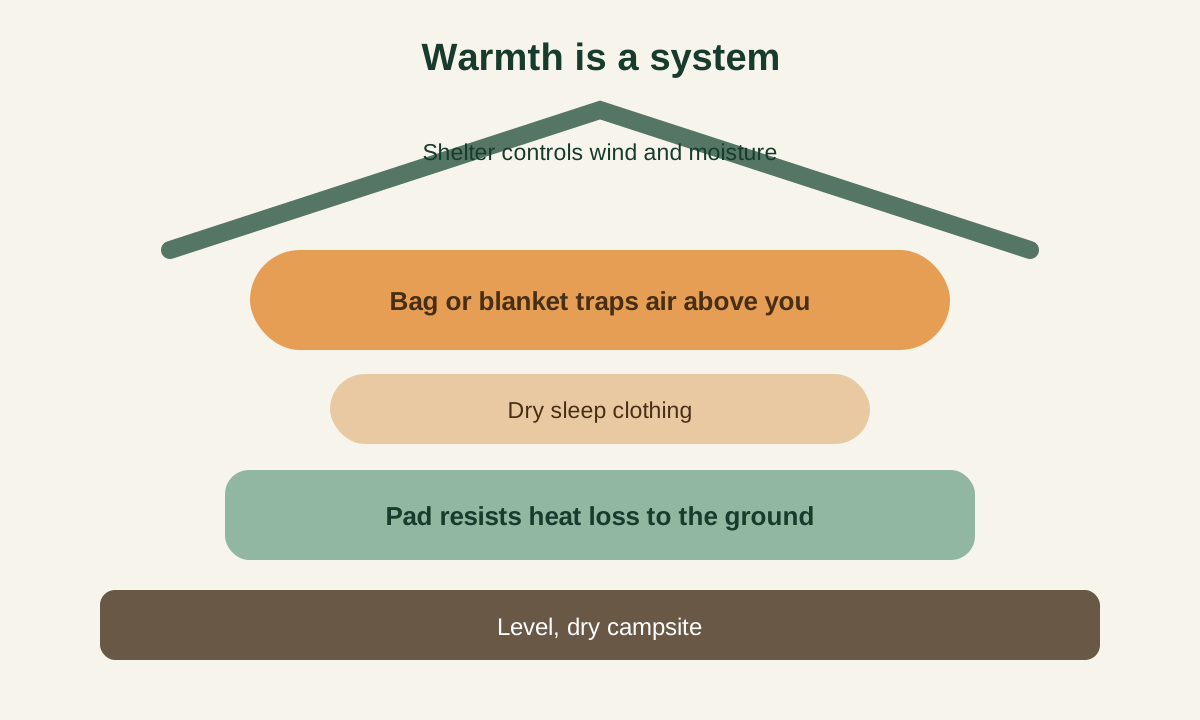
The insulation beneath a body is compressed and therefore traps much less air. Neither a thick blanket folded under you nor the bottom of a sleeping bag replaces a proper camping mattress. A pad supplies pressure relief and resistance to heat flow from your body into the ground. Its R-value is the relevant thermal measure when tested to the applicable camping-mattress standard.
An excellent top layer over an uninsulated air bed can feel surprisingly cold. Large chambers allow internal air movement, while the ground continuously draws heat from the system. Select the pad for the expected conditions first, then choose the bag or blanket for top insulation. Our guide to how to sleep comfortably while camping explains how pad firmness, dimensions, campsite, and ventilation interact.
Movement and Sleep Position
Restless sleepers often dislike turning inside a narrow mummy bag. The fabric can follow the body, the hood may rotate away from the face, and a bent knee may press into the insulation. A roomy rectangular bag reduces those problems, but it is still an enclosure. A blanket lets a side sleeper draw up one knee, extend a foot, or switch sides without winding fabric around the torso.
Freedom has a coverage cost. Side sleeping increases the distance the blanket must span from one edge of the pad, over the hip and shoulder, to the other edge. Pulling a knee upward uses additional width. A blanket that looks generous when laid flat may leave an open channel behind the back in a curled posture. Test it in the position you actually use, not while lying straight and still.
For couples, one large blanket sounds efficient but movement becomes shared. When one person rolls away, the other may lose coverage. Two separate blankets let each sleeper vent independently. A double sleeping bag also transfers motion and assumes both people prefer similar temperatures, although its enclosed perimeter may manage drafts better than an untucked shared blanket.
Packed Size, Weight, and Versatility
A blanket's simple shape does not automatically make it lighter. It may require more fabric and insulation to achieve enough width for tucking. A tapered sleeping bag can remove unused material around the legs and shoulders. Compare actual product weights in an equivalent size, insulation type, and claimed warmth class rather than comparing categories.
For vehicle camping, bulk may matter less than versatility. A blanket can warm someone at a picnic table, protect a lap beside the fire, cover a dog bed where permitted, or serve as an extra layer over another sleep system. It opens completely for airing and can be easier to share briefly. Keep it away from sparks: modern shell fabrics and synthetic fills can melt, while any textile can burn.
For human-powered travel, packed volume affects backpack space as much as scale weight. A highly compressible down blanket may pack small, but it might need to be wider than a fitted bag. Count any accessories needed to make the system work: straps, warm hood, draft plug, or extra clothing are part of the real comparison.
Moisture, Condensation, and Drying
An open blanket is easy to peel back when you start to overheat. Early venting matters because perspiration can dampen sleep clothing and insulation, causing a chill later. It is also straightforward to spread a blanket in sun or moving air during camp, provided it is secured against wind.
A bag gives controlled ventilation through the zipper but can accumulate moisture around the face if you breathe inside it. Keep your mouth and nose outside. Open the tent's designed vents; sealing a shelter to retain a little warmth often raises humidity and wets the fly. Learn the difference between leakage and condensation in why is my tent wet inside, then use the practical fixes in how to stop condensation in a tent.
Never assume synthetic means waterproof. Shell treatments may shed a small spill, but seams, openings, and prolonged contact transmit moisture. Pack either item in waterproof storage. At camp, keep it away from wet walls, shoes, rainwear, and the vestibule's drip line.
Scenario 1: Warm, Developed Campground
Suppose the forecast is stable, the overnight low is comfortably mild, your vehicle is beside the site, and you have tested the same pad. A camping blanket is attractive here. You can use it while reading outside, move it into the tent, and push it aside as the night warms. Pack a dry base layer and a backup top layer if the forecast shifts.
The blanket still must be large enough for your posture. Set up before the trip and lie on your pad. Pull the blanket to the shoulder, bend both knees, then roll to either side. If an edge rises above the pad, size up or plan a reliable tuck. A fitted sheet or less slippery pad surface may help edges stay positioned, but never puncture or permanently modify an inflatable pad to attach a cover.
Scenario 2: Cool and Windy Shoulder Season
When temperatures approach the limit of your system, choose predictability. A sleeping bag with a suitable comfort range, hood, draft collar, and correctly sized footbox usually requires fewer nighttime adjustments. Wind should be controlled primarily by the tent, yet moving air through mesh, under a loose fly, or through an open shelter can exploit every gap in a blanket.
Pitch the shelter taut and oriented for the conditions. Ensure your pad has sufficient insulation, wear dry sleep clothing, and avoid compressing the bag with too many tight layers. If you need more warmth, a dry blanket over the sleeping bag can add insulation, but it should not be so heavy that it crushes loft. Review how to keep a tent warm for safe system-level adjustments; never use a stove or unapproved fuel-burning heater inside a tent.
Scenario 3: Hot and Humid Camping
In hot weather, easy venting becomes a strength. A light blanket can begin over the torso, move to the legs, or come off entirely. A rectangular sleeping bag that unzips flat can provide similar flexibility and may be the best hybrid if you already own one.
Humidity changes the experience even when the air temperature remains high. Choose breathable sleep clothing, increase shelter ventilation, and prevent direct contact with condensation-coated walls. Insect pressure may tempt you to close every panel, but use intact mesh while retaining airflow. See how to keep bugs away while camping for campsite and behavior controls that do not require wrapping yourself in an overly warm layer.
Scenario 4: Backpacking With an Uncertain Forecast
A multipurpose blanket can save apparent complexity, but uncertainty favors a system with measurable performance. If route elevation, cold-air drainage, or exposed camps could push temperatures down, a properly rated bag gives a clearer planning baseline. Inspect the complete forecast, including the campsite elevation rather than the nearest town.
Carry a dry sack and keep sleep insulation protected during the day. Do not plan to compensate for an inadequate top layer by wearing every garment: perspiration, compressed insulation, and a lack of reserve clothing make that strategy fragile. If low weight is the priority and you are comfortable managing edges, a purpose-built backpacking quilt may be more appropriate than a rectangular blanket.
Common Mistakes
Assuming the bag rating applies to the whole system
A warm bag does not insulate you from the ground. Use a suitable pad and understand which rating the label presents. Personal response can differ substantially from a laboratory mannequin.
Comparing fill weight alone
Fill power, fill weight, baffle construction, coverage, and draft design work together. A larger blanket may need more fill simply because it covers more area. Synthetic and down fill weights are not directly comparable measures of warmth.
Buying a blanket by bed dimensions
A home-bed size does not tell you its usable width over a moving body on a narrow pad. Measure and test. Also check whether the shell slides off the pad and whether the foot end can remain covered.
Tucking so tightly that insulation is compressed
Trapped still air provides much of the warmth. Crushing the blanket under your body or cinching a bag against the shoulders reduces loft. Secure edges gently while allowing the insulation to expand.
Letting bedding touch the tent wall
Contact transfers condensation and can compress insulation. Choose a tent whose real sleeping area accommodates your pad and bedding. The capacity number is not a comfort guarantee; how big of a tent do I need offers a more practical sizing method.
Skipping a home test
Discovering a zipper snag, cold seam, slippery shell, or inadequate width at midnight is avoidable. Sleep outside at home or in another controlled setting where you can go indoors. Test above the expected limit, not at it.
Buying and Packing Checklist
- Verify the forecast low, elevation, exposure, rain, and wind.
- Compare like-for-like insulation and credible rating information.
- Confirm length and usable width in your normal sleeping posture.
- Check for a hood, collar, zipper baffle, footbox, snaps, or attachment points.
- Pair the cover with an appropriately insulated pad.
- Inspect seams, zipper, shell, and insulation distribution before leaving.
- Test the full system overnight in dry clothing.
- Pack the insulation in a waterproof liner or dry bag.
- Carry only manufacturer-compatible repair supplies.
- Air and dry the item completely before long-term storage.
- Store lofty insulation uncompressed according to its care instructions.
Frequently Asked Questions
Is a camping blanket warmer than a sleeping bag?
Not by category alone. A thick blanket can be warmer than a light bag, but a comparable sleeping bag usually retains heat more efficiently because it controls drafts and encloses the feet, torso, and sometimes the head. Compare insulation, construction, dimensions, and test information.
Can I use a regular blanket for camping?
Yes in mild, dry, vehicle-accessible conditions if you have tested it and can keep it dry. Household cotton blankets are bulky, absorb moisture, and dry slowly, so they are a poor primary choice for cold, wet, or remote trips.
What temperature is too cold for a camping blanket?
There is no universal cutoff. It depends on the exact blanket, pad, shelter, clothing, wind, moisture, and sleeper. Without credible performance information, use it only in forgiving conditions and test with a safe margin and an immediate indoor fallback.
Should the blanket go under or over the sleeping bag?
For additional top warmth, place a light, dry blanket over the bag without flattening its loft. For cold coming from below, use a properly insulated sleeping pad; a compressed blanket underneath is an inefficient substitute.
Which option is better for side sleepers?
A sufficiently wide blanket offers excellent movement, but it can open behind the back as the sleeper rolls. A roomy rectangular or spoon-shaped bag may provide a better balance for a side sleeper who is sensitive to drafts.
Can two people share one camping blanket?
They can in mild conditions, but the blanket must cover the combined width and body contours with room to spare. Separate covers are more reliable when sleepers move often or prefer different temperatures.
Final Takeaway
A sleeping bag buys draft control and predictable coverage; a camping blanket buys movement, quick venting, and usefulness beyond bedtime. Start with the coldest credible conditions and your pad, then account for how you actually sleep. Choose a bag when the margin is small or drafts wake you. Choose a blanket when conditions are mild and flexibility is the feature you value. Whichever you pack, test the complete system before the trip and protect it from moisture.
Sources and Further Reading
- ISO, ISO 23537-1: Requirements for sleeping bags — Thermal, mass and dimensional requirements.
- ASTM International, ASTM F3340: Standard Test Method for Thermal Resistance of Camping Mattresses Using a Guarded Hot Plate Apparatus.
- U.S. National Park Service, What to Bring — Camping and campground trip-planning guidance.
- Leave No Trace Center for Outdoor Ethics, Plan Ahead and Prepare.