
Practical Camping Guide
How Thick Should a Camping Mattress Be?
Most adults are comfortable on a 2.5- to 4-inch camping mattress, but thickness is not the same as warmth or support. Side sleepers and heavier campers often benefit from 3.5 to 4 inches of usable thickness. Back sleepers may be comfortable around 2 to 3 inches. Backpackers may accept a thinner pad to save weight, while car campers can choose a thicker mattress if it fits the tent and stays stable.
By Danny WalkerUpdated 11 min read
Most adults are comfortable on a 2.5- to 4-inch camping mattress, but thickness is not the same as warmth or support. Side sleepers and heavier campers often benefit from 3.5 to 4 inches of usable thickness. Back sleepers may be comfortable around 2 to 3 inches. Backpackers may accept a thinner pad to save weight, while car campers can choose a thicker mattress if it fits the tent and stays stable.
The correct mattress is thick enough to keep your hip and shoulder off the ground in your normal sleep position without becoming unstable, too cold, or too large for the shelter.
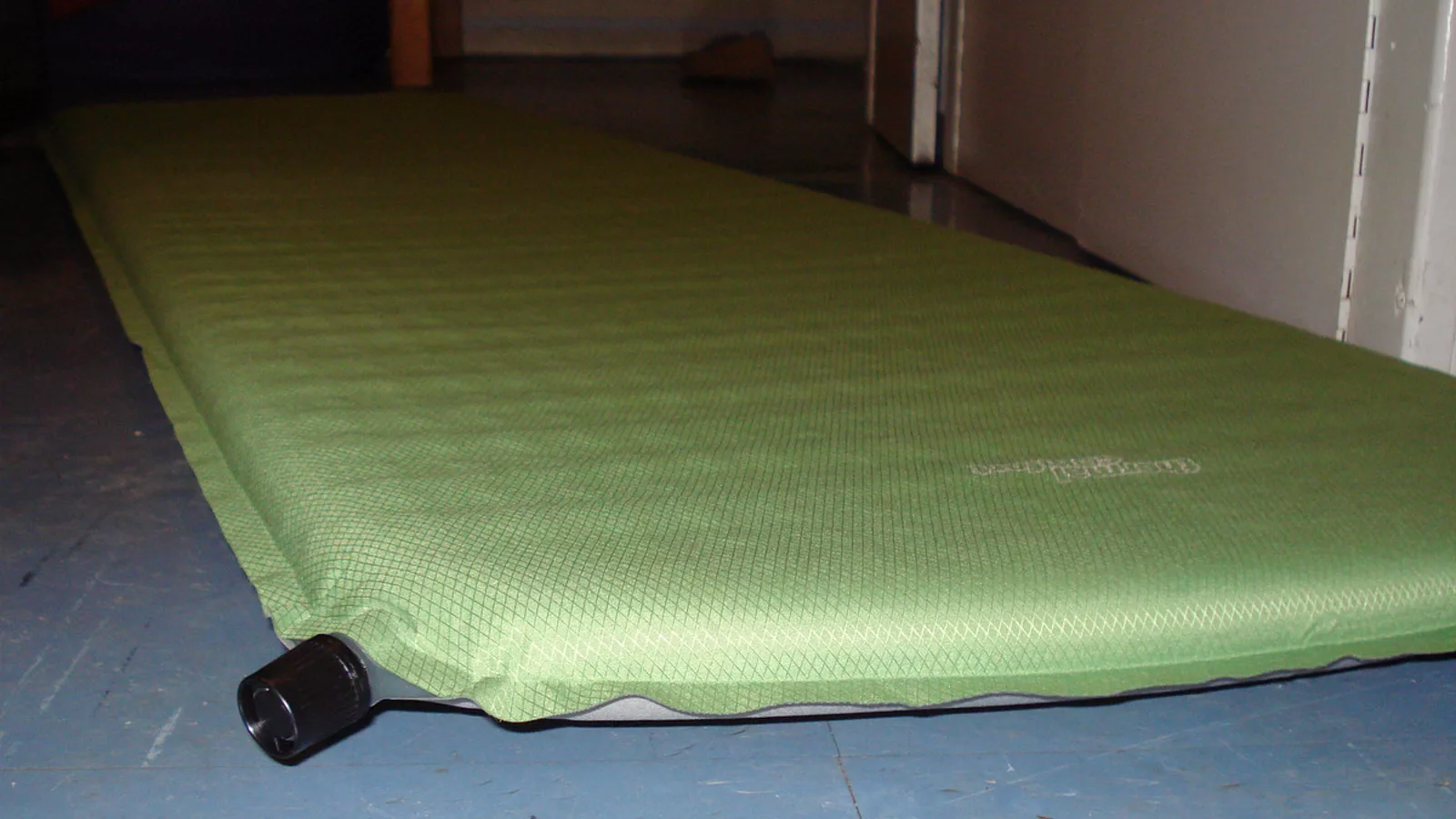
Quick Thickness Guide
| Sleeper or trip | Useful starting range | Main reason |
|---|---|---|
| Ultralight backpacker | 1–2.5 inches | Low packed weight and volume |
| Average back sleeper | 2–3 inches | Weight spreads across a broad area |
| Side sleeper | 3–4 inches | More room for shoulder and hip compression |
| Heavier camper | 3.5–4.5 inches | More usable travel before touching ground |
| Car camper seeking bed-like comfort | 4–8 inches | Transport weight matters less |
| Child | 1.5–3 inches | Lower body weight, with adult supervision |
These are starting points rather than guarantees. Baffle design, firmness, width, foam density, body shape, and R-value can matter more than an extra half inch.
Thickness Solves Pressure, Not Every Sleep Problem
Mattress thickness mainly creates distance between your body and the ground. That distance lets the surface deform around the shoulder and hip while leaving enough material or air beneath them. If you wake because your hip presses into the tent floor, more usable thickness can help.
Thickness does not automatically provide good spinal alignment. A tall air bed that sags in the middle can be less supportive than a thinner self-inflating pad. It also does not guarantee insulation. A deep chamber of uninsulated air may circulate internally and feel cold even though the mattress looks substantial.
Before buying a thicker model, identify the problem:
- Ground contact points suggest insufficient thickness or inflation.
- Lower-back discomfort suggests poor firmness or support distribution.
- Cold from below suggests inadequate R-value.
- Rolling toward a partner suggests weak edge or center stability.
- Sliding or bouncing suggests surface and baffle design issues.
Side Sleepers Usually Need More Usable Depth
Side sleeping concentrates much of your weight at the shoulder and hip. A thin pad may feel acceptable for a few minutes but bottom out after you relax. For many adults, 3 inches is a practical minimum starting point; 3.5 to 4 inches gives more adjustment room.
Inflate the mattress firmly, lie on your side, and slowly release air until the surface cradles the body. Ask another person to check whether the spine looks roughly neutral and whether the hip remains above the ground. If the hip touches before the mattress becomes comfortable, the pad is too thin or its internal structure is unsuitable.
Width matters too. Side sleepers often bend a knee or place an arm forward. A thicker narrow pad does not fix elbows and knees falling onto the tent floor.
Back and Stomach Sleepers May Prefer Firmer, Thinner Pads
Back sleepers spread weight over the shoulders, back, pelvis, and legs. Many can use a 2- to 3-inch pad comfortably if the baffles distribute pressure evenly. Too much softness may let the pelvis sink and create lower-back strain.
Stomach sleepers generally need a stable surface that prevents the middle of the body from dropping deeply. A very plush mattress may feel luxurious initially but bend the lower back through the night. Firmness and baffle stability are more important than maximum height.
Test the mattress with the pillow you plan to use. Mattress depth changes the relationship between head, neck, and torso, so a pillow that works at home may be too tall on a firm camping pad.
Body Weight Changes Usable Thickness
Two people can lie on the same four-inch pad and experience different remaining clearance. Higher concentrated load compresses foam and increases air pressure beneath the body. Manufacturer weight limits, chamber design, and inflation pressure therefore matter.
Heavier campers should look for explicit capacity information, strong seams, stable edges, and a valve that allows fine adjustment. A wider pad often improves stability, while vertical or multi-directional baffles may limit the feeling of rolling off.
Do not solve bottoming out only by overinflating. A rock-hard surface reduces pressure relief and places more stress on seams. If comfortable pressure causes ground contact, select a design with more depth or better internal support.
Camping Pads and Air Beds Use Thickness Differently
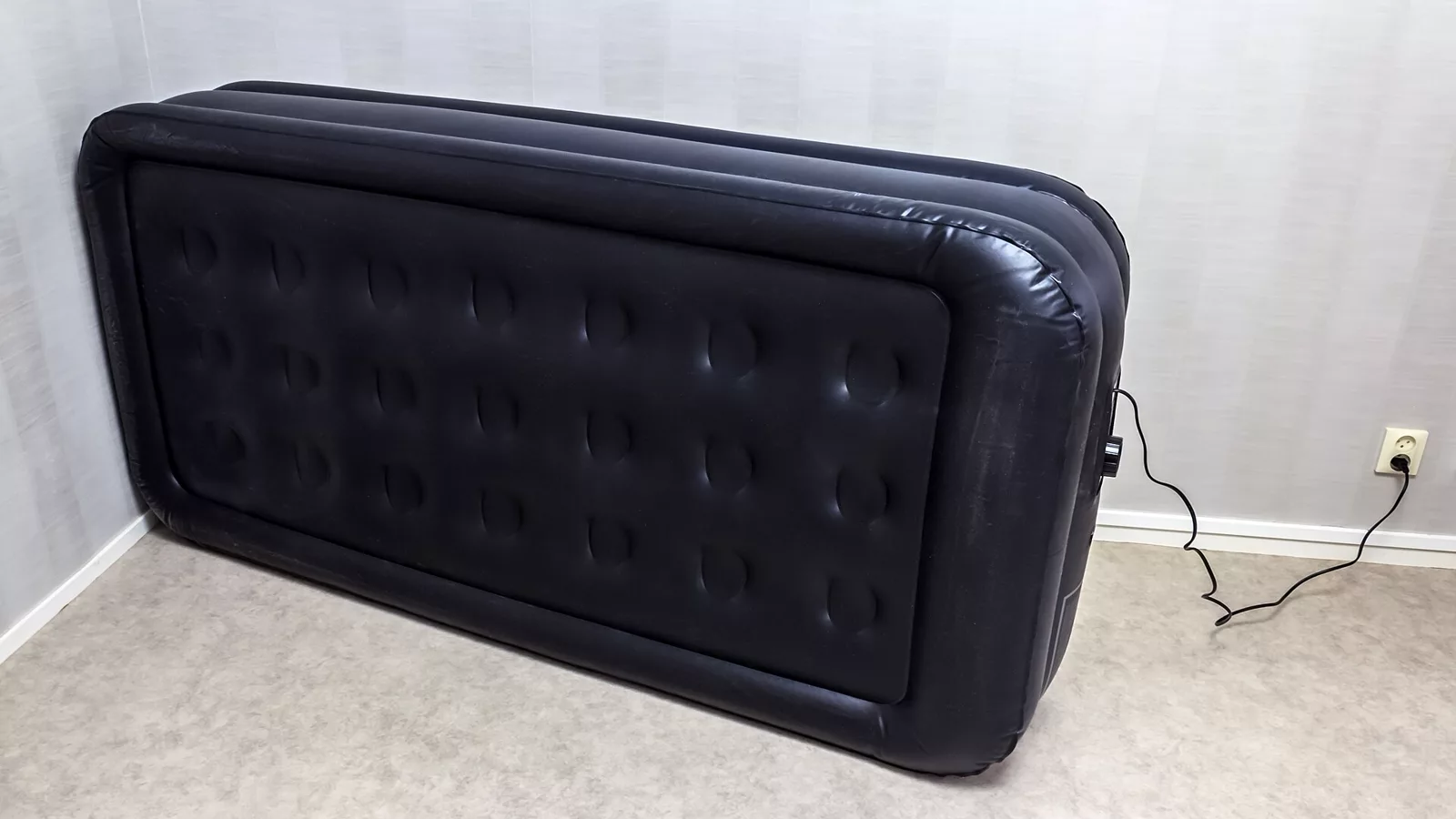
A backpacking air pad may be 2.5 to 4 inches thick yet weigh well under two pounds. Internal baffles control air movement and can include insulation or reflective layers. It is designed around compact packing.
A self-inflating pad combines open-cell foam and air. It is often thinner but feels stable because foam spreads the load. Foam also contributes insulation and prevents unrestricted air circulation.
A car-camping air bed may stand 6 to 18 inches high. Height makes entry easier and creates a bed-like profile, but these mattresses can be heavy, require a pump, transfer motion, and offer no meaningful cold-weather rating. Read sleeping pad vs air mattress before treating the two as interchangeable.
Closed-cell foam pads are often less than an inch thick. They are not plush, but they are durable, dependable insulation and can supplement another pad.
R-Value Matters More Than Inches in Cold Weather
ASTM F3340 provides a standardized method for comparing thermal resistance in camping mattresses. The R-value measures resistance to heat flow; it does not measure height or softness. Two pads of equal thickness can have very different R-values because of foam, reflective films, internal insulation, and chamber design.
Use what is R-value in a sleeping pad? to understand the number, then choose based on expected conditions. On frozen ground or snow, a thick uninsulated air bed can still feel colder than a much thinner insulated pad.
If the mattress is comfortable but cold, stack a compatible closed-cell foam pad beneath it rather than buying height alone. Keep the whole system dry and avoid exposed pad edges where practical.
Tent Size Sets a Real Limit
A tall mattress lifts your body into the narrower upper portion of a dome tent. At floor level the bed may fit, while your face or sleeping bag touches a sloping wall several inches higher. This increases condensation contact and reduces usable headroom.
Measure the tent at mattress height, not only across the floor. Check door height, wall slope, roof clearance, and whether the inflated mattress blocks the entrance. In low backpacking tents, a 4-inch pad can noticeably reduce elbow and head space. In cabin tents, a raised air bed may work well but still consume walking room.
For couples, compare the actual mattress width with the tent's inner dimensions. “Queen” air beds and tent capacity labels are not always standardized closely enough to assume a fit.
Packed Size and Setup Effort
Every inch has a transport cost. Backpackers must carry the rolled pad, pump sack, repair kit, and any backup foam. A slightly thinner pad that reliably fits inside the pack may be better than a plush pad strapped outside where it catches branches or gets wet.
Car campers have more room but should still consider storage at home, vehicle cargo, inflation time, and power. A tall air bed with an electric pump is inconvenient when the pump battery fails. Confirm a manual backup method and test the valve before leaving.
Self-inflating pads need time to expand and usually require a few finishing breaths or pumps. Thick foam toppers take substantial space and must remain dry.
How to Test Mattress Thickness at Home
Set up the actual tent if possible. Inflate the mattress and leave it for several hours to check slow leakage. Use your normal sleep clothing, bag or quilt, and pillow.
- Lie in your primary sleep position for at least 20 minutes.
- Release air gradually until pressure points ease.
- Check hip and shoulder clearance.
- Roll over and note bouncing, noise, and edge stability.
- Sit on the edge as you would when entering the bed.
- Confirm that bedding does not press against tent walls.
- Leave it inflated overnight and measure firmness again.
Cold air reduces pressure inside inflatable pads. A mattress inflated in warm afternoon air may soften overnight without having a leak. Top it up if necessary, but do not exceed manufacturer guidance.
Thickness for Couples
One double mattress eliminates the gap between pads, but partners share firmness and movement. Two individual pads let each person choose thickness and pressure. Coupler straps or compatible sheets can reduce separation.
If partners differ greatly in body weight or sleep position, separate pads are usually easier to tune. Keep total width within the tent and try to match surface heights so one person is not sleeping beside a tall ledge.
Thickness for Cots
A cot already suspends the sleeper above uneven ground, so the pad on top mainly adds pressure relief and insulation. A 1- to 3-inch pad may be enough for many cot users. Thick mattresses can slide, raise the sleeper too close to the tent roof, or reduce cot stability.
Cold air circulates under a cot. Add insulation even when ground contact is not a problem. Our camping cot vs sleeping pad comparison explains the different roles.
Common Mistakes
Buying the thickest mattress available
Extra height may reduce stability, tent clearance, and packed convenience without improving support.
Ignoring R-value
Thickness cannot replace measured insulation in cold conditions.
Testing only while sitting
Sitting concentrates weight more than lying down. Evaluate the mattress in your normal sleep position.
Overinflating to avoid the ground
If comfortable pressure causes bottoming out, the design is not providing enough usable depth.
Forgetting the tent walls
Measure usable space at the height where your body will lie.
Mattress Selection Checklist
- Primary sleep position and pressure points identified.
- Hip and shoulder remain off the ground at comfortable pressure.
- Published R-value suits the expected conditions.
- Width and length fit the body and sleep posture.
- Mattress fits the tent at its inflated height.
- Packed size and pump needs fit the trip style.
- Weight capacity and edge stability are adequate.
- Repair kit matches the fabric and valve system.
- Setup tested overnight before the trip.
Frequently Asked Questions
Is a four-inch camping mattress thick enough?
For most adults, four inches provides ample pressure-relief range when the internal support is good. It may be more than necessary for back sleepers and still inadequate if poorly baffled or overinflated.
Is a six-inch air mattress warmer than a three-inch pad?
Not necessarily. Compare R-values or insulation specifications. A thinner insulated camping pad can be much warmer than a deep uninsulated air bed.
What thickness is best for a side sleeper?
Start around 3 to 4 inches and prioritize stable baffles, sufficient width, and adjustable pressure. Body weight and shoulder width can move the ideal outside that range.
Can I put two pads together?
Yes, if they stack securely without sliding. A foam pad beneath an inflatable pad adds insulation, protection, and backup.
Does a child need a thick camping mattress?
Children often need less pressure-relief depth because they weigh less, but they still need appropriate insulation and a safe sleep setup. Follow age-appropriate safety guidance and supervise young children.
Final Takeaway
Choose mattress thickness by usable support, not the largest number on the package. Most campers can begin in the 2.5- to 4-inch range, with side sleepers and heavier campers toward the upper end. Then verify R-value, firmness, width, tent clearance, packed size, and setup method. The best mattress is the thinnest one that keeps you comfortably supported and insulated in your real sleep position.
Sources and Further Reading
- ASTM International, F3340 Standard Test Method for Thermal Resistance of Camping Mattresses.
- U.S. National Park Service, What to Bring — Camping.
- U.S. National Park Service, Wilderness Camping Planning Checklist.