
Practical Camping Guide
Sleeping Pad vs Air Mattress: Which Is Better for Camping?
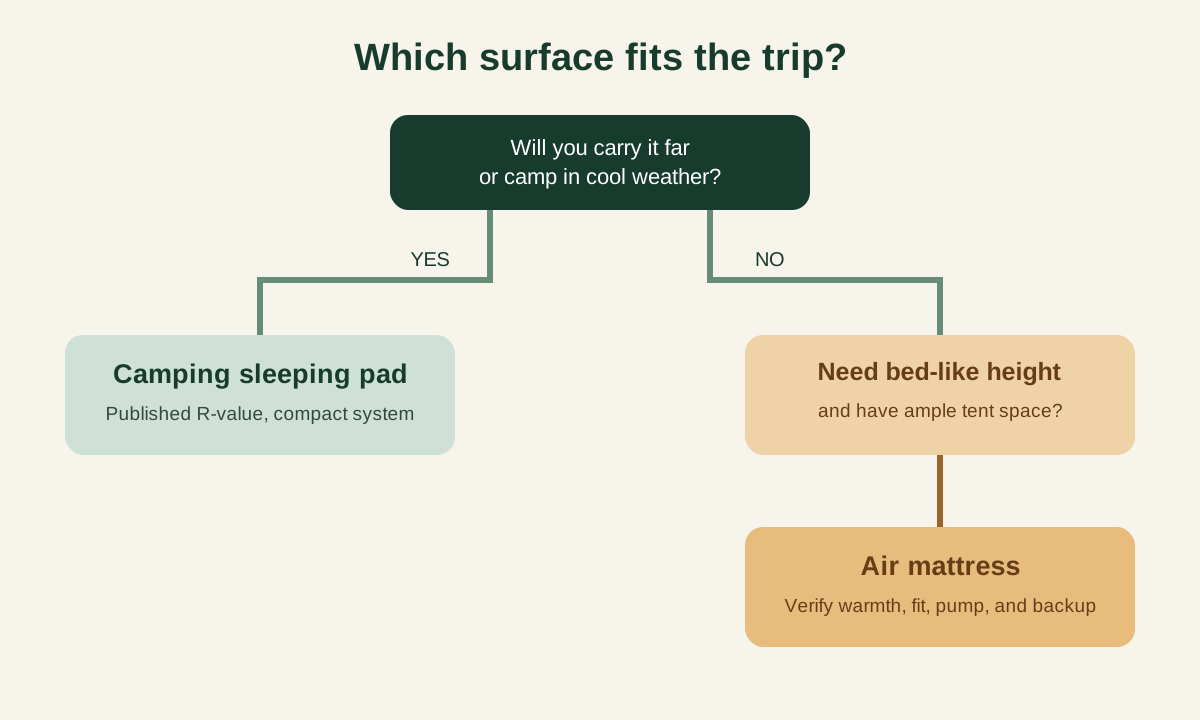
Choose a camping sleeping pad when insulation, compact packing, durability in the field, or human-powered travel matters. Choose a full-size air mattress for mild-weather car camping when bed-like width and height matter more than packed size, and when you have enough tent floor area plus a reliable way to inflate it. Do not assume the thicker air mattress is warmer: unless it has a credible insulation specification, its large moving air chamber can feel cold.
By Danny WalkerUpdated 13 min read
Choose a camping sleeping pad when insulation, compact packing, durability in the field, or human-powered travel matters. Choose a full-size air mattress for mild-weather car camping when bed-like width and height matter more than packed size, and when you have enough tent floor area plus a reliable way to inflate it. Do not assume the thicker air mattress is warmer: unless it has a credible insulation specification, its large moving air chamber can feel cold.
The useful question is not which surface looks more comfortable in a store. It is which complete system supports your body, limits heat loss, fits the real tent, survives the campsite, and can still function if a valve, pump, or fabric panel fails. A five-minute test cannot reveal overnight deflation, cold ground, edge instability, or pressure at the hip.
Quick Decision Table
| Situation or priority | Better starting choice | Reason |
|---|---|---|
| Backpacking or walk-in camping | Sleeping pad | Much smaller and lighter |
| Cool or cold ground | Insulated sleeping pad | Published R-value supports thermal planning |
| Warm-weather car camping | Air mattress | Broad, bed-like surface is practical near a vehicle |
| Small backpacking tent | Sleeping pad | Low profile and narrow dimensions fit sloping walls |
| Couple wanting one surface | Air mattress | Double sizes remove the seam between two pads |
| Different firmness preferences | Two sleeping pads | Each person adjusts a separate chamber |
| High puncture consequence | Foam pad or pad-plus-backup | Closed-cell foam cannot deflate |
| Difficulty getting down to floor level | Raised air mattress may help | Height can ease entry, if stable and medically appropriate |
What Counts as a Sleeping Pad?
Camping sleeping pads are purpose-built portable mattresses. Closed-cell foam pads use no air and cannot suffer a valve leak. Self-inflating pads combine open-cell foam with an airtight shell; opening the valve lets foam expand and draw in air, though final inflation commonly needs a few breaths or pump strokes. Air pads use internal baffles plus air, often with reflective films or synthetic insulation to reduce heat transfer.
Their defining advantages are not merely low height. Reputable models publish dimensions, packed size, weight, and a tested thermal resistance or R-value. Shapes include rectangular, tapered, mummy, and double-wide. Thickness can range from a thin foam sheet to a plush insulated chamber, but thickness and R-value are separate properties.
A camping pad supports both backpacking quilts and sleeping bags. The compressed insulation below your body contributes little, so even a warm top layer needs an appropriate pad. Compare sleeping bag vs quilt if you are building the whole sleep system.
What Counts as an Air Mattress?
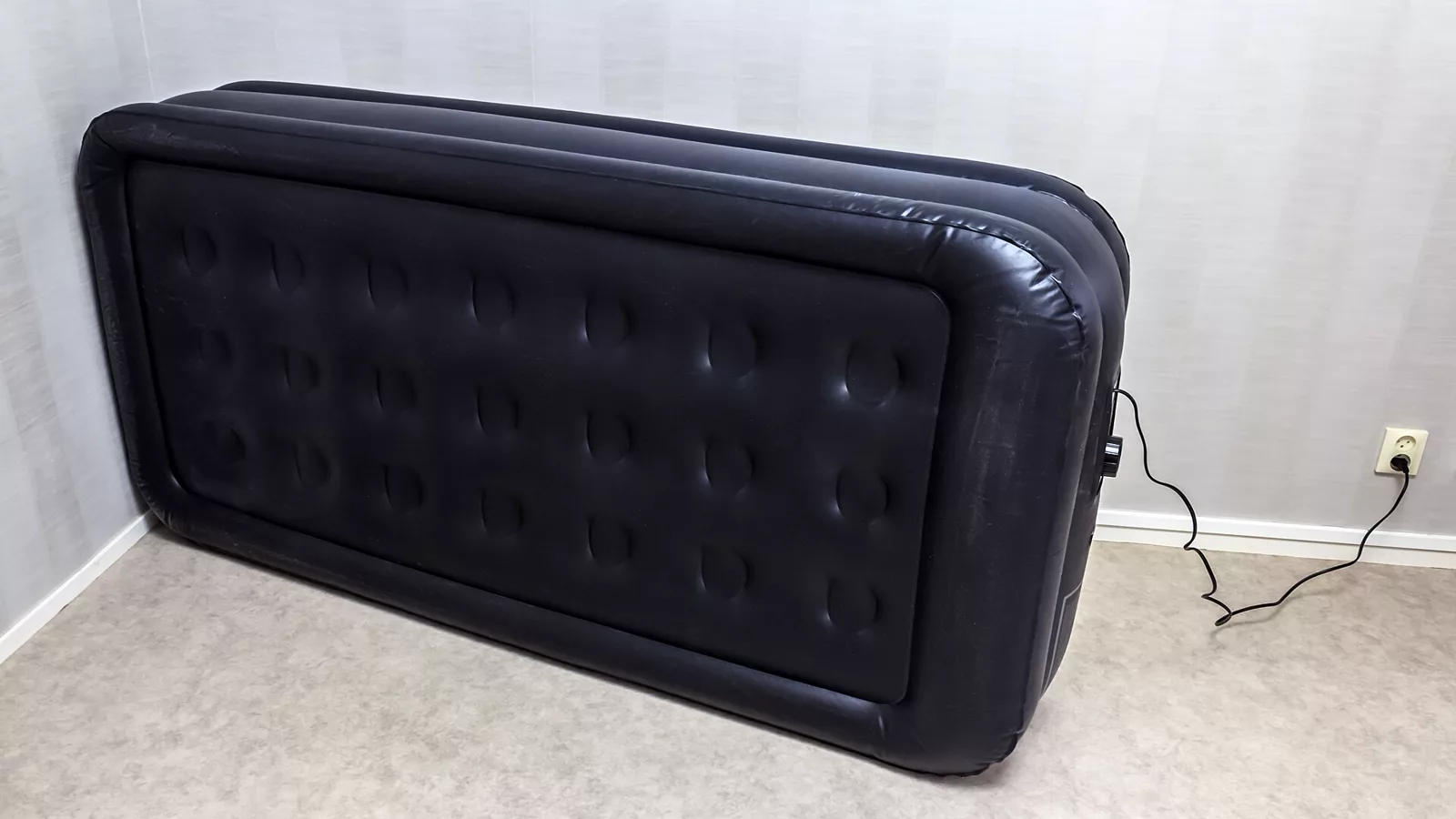
Here, “air mattress” means the broad, often tall vinyl or textile air bed commonly used as a guest bed or for vehicle camping. It may have an internal electric pump, a separate rechargeable pump, a battery pump, or a manual valve. Some camping-oriented models add reinforcement or insulation, but many household-style products publish no R-value.
Air mattresses emphasize width, height, and familiar bed-like proportions. They can be comfortable for campers who want room to spread out and can simplify a couple's bedding. In exchange, they occupy substantial tent and vehicle space, depend on a pump, and contain a large air volume that responds noticeably to temperature changes.
Read the actual specification rather than relying on the category. A low-profile insulated double camping mat may behave more like a sleeping pad; a 20-inch guest bed behaves like furniture. Product construction decides the result.
Warmth: Why Thickness Can Mislead
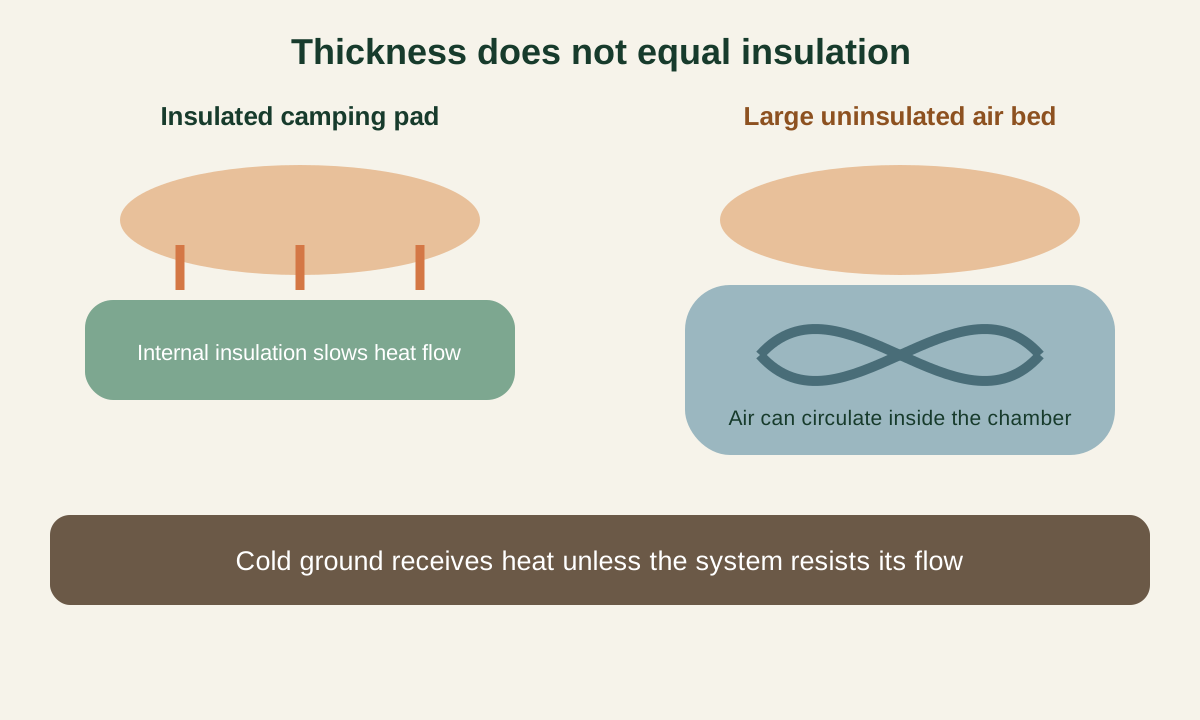
Thermal resistance, not visual thickness, determines how strongly a mattress slows heat flow. ASTM F3340 provides a repeatable laboratory method for camping mattresses, reported as an R-value. A higher value means more resistance under the test conditions. The number enables useful comparisons, although it cannot promise identical comfort for every sleeper or climate.
An uninsulated air mattress may contain eight or more inches of air, yet air can circulate within its large chamber. Your body warms the air at the top; cooler air sinks and establishes convective movement, carrying energy toward the cold ground. A camping air pad can interrupt this circulation with baffles, films, foam, or fiber insulation.
Never invent an R-value from mattress height. If a manufacturer provides no credible thermal data, treat the product conservatively and test it in mild, controlled conditions. Placing a suitable closed-cell foam or insulated pad on top of a large mattress can improve the layer directly beneath you, but stability and sliding must be tested. Follow both manufacturers' instructions.
Pressure Relief and Spinal Support
Comfort begins with keeping hips and shoulders from bottoming out, but maximum softness is not always supportive. A very firm air mattress can feel like a stretched drum and push the spine out of a neutral posture. An underinflated one lets the pelvis sag or allows partners to roll toward the center. Cold overnight air contracts, which may make a correctly inflated bed feel softer by dawn even without a leak.
A sleeping pad has less air volume and is designed for a body-sized load. Modern baffle patterns can keep elbows and hips supported without excessive pressure. Side sleepers generally need more usable thickness and width than back sleepers. Inflate the pad fully, lie in your normal posture, then release air in small increments until the surface conforms without allowing a hip to touch the ground.
Couples should compare a double mattress with two independent pads. A double removes the cold seam but transfers motion and forces a shared firmness. Separate pads isolate motion and let each sleeper choose support, though they may drift apart unless the sleep system includes compatible couplers.
Packed Size, Weight, and Transport
For backpacking, the choice is straightforward: household-style air mattresses are too heavy and bulky, and their pump adds more weight. Select a camping pad suited to the route. Closed-cell foam is bulky outside a pack but light and robust. Insulated air pads pack small. Self-inflating models can offer stable comfort at a moderate bulk penalty.
For car camping, measure cargo volume rather than declaring weight irrelevant. A queen mattress, pump, bedding, extension arrangement, repair kit, and backup surface can consume a meaningful part of a small car. A pair of compact pads leaves room for food storage and shelter gear.
Carry distance inside the campground matters too. “Drive-in” sometimes means parking several hundred feet from the tent pad. Check the site description before choosing equipment. Our guide to how to choose a campsite covers access, drainage, exposure, and nighttime activity.
Tent Fit and Usable Space
Compare mattress dimensions with actual floor dimensions, not only the tent's person rating. Sloping walls reduce usable area above floor level. A tall mattress can contact a damp wall even when its footprint technically fits. It may also block the door, vents, or the path needed for a nighttime exit.
Lay out the proposed footprint at home with painter's tape. Include the mattress after inflation, bedding overhang, pump access, bags, footwear, and clearance from the wall. If two pads or a double bed fill the shelter, read how big of a tent do I need before upgrading the sleep surface.
Never force a mattress against tent poles or fabric. Contact transfers condensation and can abrade both surfaces. A crowded setup also reduces airflow, so review how to stop condensation in a tent rather than closing every vent to feel warmer.
Inflation, Pumps, and Overnight Pressure
A sleeping pad may use a pump sack, compact pump, self-inflating foam, or careful breath inflation if the manufacturer permits it. A pump sack reduces moisture introduced by breath and can double as storage. Learn the valve before dark; some valves have separate inflate and deflate positions.
A large mattress needs a high-volume pump. Confirm power requirements before the trip. A built-in AC pump is useless at a non-electric site unless the mattress also accepts an appropriate manual pump. Do not assume a vehicle outlet can power every household pump. Follow voltage and inverter guidance from the manufacturers and never idle a vehicle where prohibited or where exhaust could endanger people.
Pressure changes with air temperature. A mattress filled in warm afternoon air can soften as night cools. This does not prove a puncture. Top it up after temperatures stabilize, but stay within the stated pressure and do not stretch seams. If it repeatedly loses substantial firmness under stable conditions, inspect for a leak.
Durability and Repairability
All inflatables deserve a clean tent floor. Remove loose stones and sticks by hand without digging or altering the campsite. Use the tent footprint specified by its maker where appropriate, and keep knives, pet claws, buckles, and hot equipment away.
Small camping pads have less surface area exposed and often include field repair patches designed for their fabric. Large vinyl mattresses may accept vinyl cement and patches, but flocked tops and seam failures can be difficult to repair at camp. A built-in pump adds another failure point.
Closed-cell foam is the reliability benchmark. It can tear or compress but cannot suddenly become flat. On remote trips, many campers pair an inflatable pad with a thin foam pad for added warmth and a usable backup. For car camping, a spare foam mat can prevent one leak from ending everyone's sleep.
Scenario: Warm Family Car Camping
A large air mattress can work well when the forecast is mild, the vehicle is close, and a family tent has generous vertical walls. Inflate it at home first, leave it overnight to reveal slow leaks, and confirm bedding does not touch the tent. Bring the correct pump and an independent backup.
If children share the space, keep the exit clear and follow product age and safety instructions. Never place infants on an adult air mattress; use a sleep surface that follows current pediatric safe-sleep guidance. Keep power cords and pump parts secured.
Scenario: Cool Spring or Fall Campground
Choose a pad with a suitable published R-value or an insulated double camping mat. A tall uninsulated bed may feel cold despite thick bedding above. Add insulation beneath the sleeper based on tested equipment, wear dry sleep clothing, and choose a sleeping bag for the expected low.
Do not use combustion heaters, stoves, or grills inside a tent. Warmth should come from insulation, dry layers, food, and site selection. How to keep a tent warm explains safe adjustments.
Scenario: Backpacking or Walk-In Site
A camping pad wins on mass and volume. Choose foam for maximum simplicity, an insulated air pad for compact comfort, or self-inflating foam for stable support. Test the full system at home and carry the manufacturer's patch method. Protect it inside the pack rather than strapping an exposed inflatable where branches can damage it.
If the route includes rain, waterproof the sleep system independently of the pack cover. Learn how to set up a tent in the rain so the pad and bedding enter a protected shelter.
Common Mistakes
Assuming a thicker bed is warmer
Height describes geometry, not thermal performance. Look for a tested R-value or insulation specification.
Inflating as hard as possible
Excess pressure creates a rigid surface and stresses seams. Adjust while lying down and remain within manufacturer directions.
Buying by tent capacity
A “four-person” label does not guarantee queen-bed clearance, especially at mattress height. Compare exact measurements.
Forgetting the pump ecosystem
Check the valve adapter, power source, charging cable, runtime, and manual fallback before departure.
Treating morning softness as proof of a leak
Cooling air contracts. Test under stable temperature, then use soapy water or the manufacturer's process to locate leaks.
Packing no backup
A foam pad, second independent pad, or immediate access to home creates resilience. A patch needs clean, dry material and curing time.
Pre-Trip Checklist
- Check overnight lows, ground conditions, wind, and precipitation.
- Verify exact inflated dimensions and height against the tent interior.
- Confirm the camping pad's R-value or treat an unrated mattress conservatively.
- Inflate overnight at home and inspect valve and seams.
- Test normal sleep positions and partner motion.
- Pack the correct pump, charged battery, adapter, and manual fallback.
- Carry compatible patches and cleaning material.
- Clear sharp personal items from the sleep area.
- Keep a reliable backup surface appropriate to trip remoteness.
- Store the dry mattress with valves and folds arranged as directed.
Frequently Asked Questions
Is an air mattress more comfortable than a sleeping pad?
It can offer more width and height, but comfort depends on support, motion, temperature, and fit. A well-designed thick camping pad may be more stable and warmer than a soft guest mattress.
Can I use a regular air mattress in a tent?
Yes for suitable car-camping conditions if it fits without touching walls, has a safe inflation method, and provides adequate warmth. Test it and bring a backup.
Why is my air mattress cold?
A large uninsulated air chamber can circulate heat toward the ground. Use a surface with a credible thermal specification or place an appropriate insulated camping pad directly beneath the sleeper.
What R-value do I need?
No single value guarantees comfort at a given temperature. Use manufacturer season guidance, expected ground conditions, and your tested personal margin. Increase insulation for cold or frozen ground.
Can I put a sleeping pad on an air mattress?
Often yes, and placing the insulated pad on top puts it closer to your body. Test stability and sliding, protect both surfaces, and follow manufacturer instructions.
Which lasts longer?
Closed-cell foam cannot deflate and is the most failure-tolerant. Longevity among inflatables depends on materials, seams, valves, care, storage, and repairability rather than size alone.
Final Takeaway
A camping sleeping pad is the more dependable all-around choice because it can combine tested insulation, compact size, and field repairability. A full-size air mattress is a comfort-focused option for mild car camping with abundant tent and cargo space. Choose by thermal performance and real dimensions, not height; test the complete setup overnight; and bring a fallback that matches the consequences of failure.
Sources and Further Reading
- ASTM International, ASTM F3340: Standard Test Method for Thermal Resistance of Camping Mattresses Using a Guarded Hot Plate Apparatus.
- U.S. National Park Service, camping preparation and equipment guidance.
- Leave No Trace Center for Outdoor Ethics, Plan Ahead and Prepare and durable-surface guidance.
- U.S. Consumer Product Safety Commission, product and portable-generator safety guidance.