
Buying Guide
Our Guide to the Best Quiet Generators for Camping in 2026
Compare quiet camping generators by dBA claim, inverter output, weight, runtime, CO safety, RV outlets, fuel use and campsite fit.
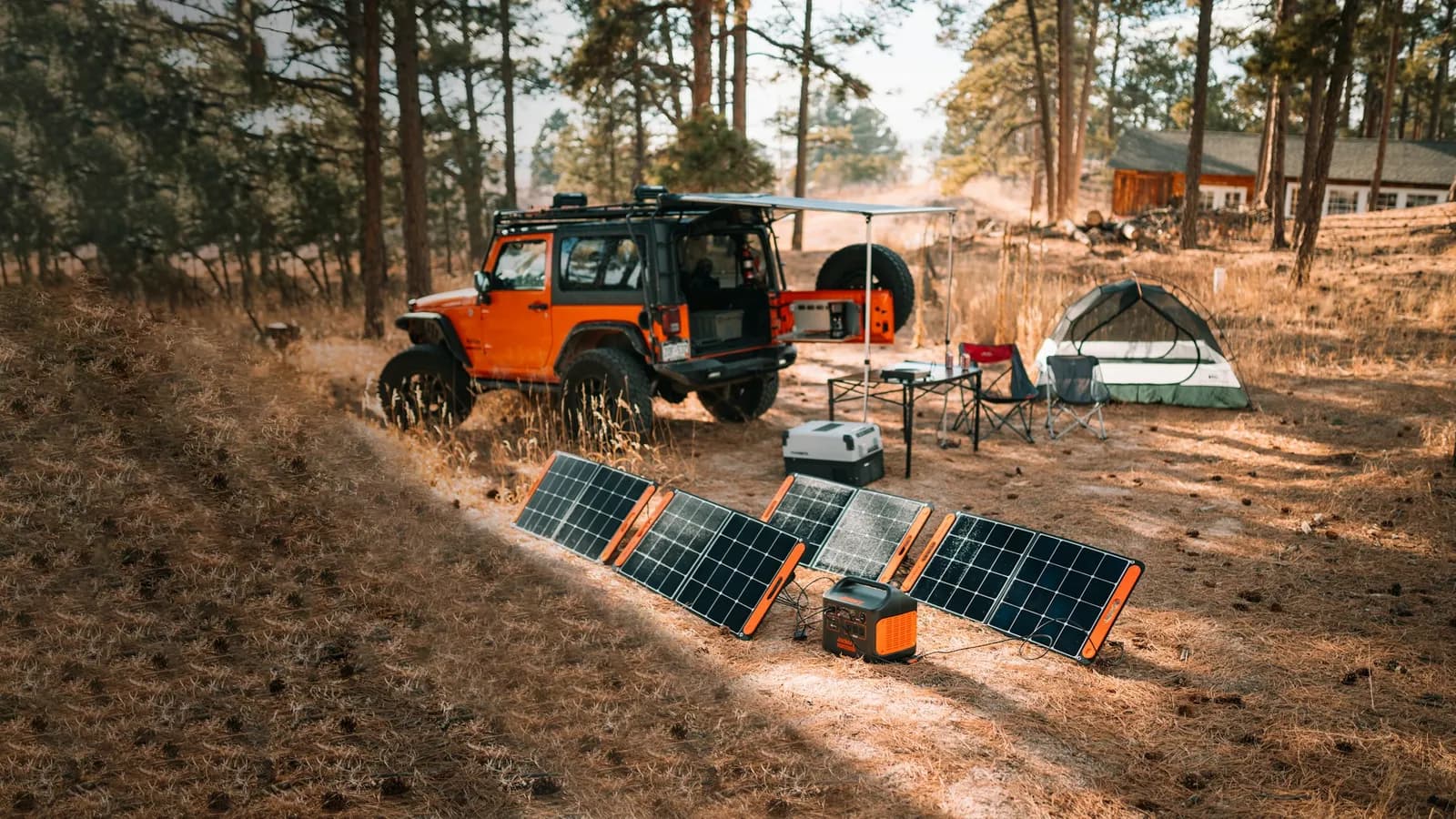
A quiet camping generator should be judged by more than a low dBA claim. Weight, runtime at partial load, CO shutdown, inverter output, campsite etiquette and the loads you actually run all matter.
This guide uses current product pages, published specifications and product images for real generator picks. The recommendations separate ultralight tent-camping power from RV-ready inverter generators so you can avoid buying either too little or far too much generator.
Danny’s Camping field notes
The Campsite Fit Check
A quick way to connect the shortlist to the space, workload and ownership details that matter after the box arrives.
- Start with the job
- SIOKIUU 2500W Portable Inverter Generator leads this shortlist for Tent campers and car campers who want quiet, clean power for light to moderate loads.. Use that fit as a reference point, then compare the alternatives against your own space and workload.
- Specs that separate the picks
- The first details to compare are 1,900W running, 1,260W running, 3,300W gas. Confirm the exact model and included components before ordering.
- Trade-off to plan for
- Limited heavy-load output
The Practical Shortlist
A practical look at 5 options, organized around the job each one suits best.

Best overall quiet camping pick
SIOKIUU 2500W Portable Inverter Generator
Tent campers and car campers who want quiet, clean power for light to moderate loads.
Our take Check price for SIOKIUU 2500W Portable Inverter Generator (opens in a new tab)
Best ultralight pick
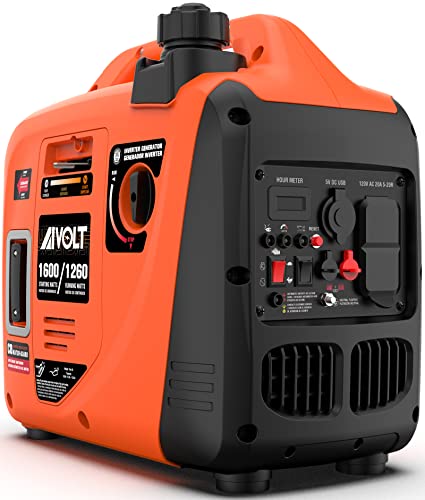
AIVOLT 1600W Super Quiet Inverter
Light campsite electronics, small fans, charging and minimalist car camping.
Our take Check price for AIVOLT 1600W Super Quiet Inverter (opens in a new tab)

Best quiet dual fuel
PowerSmart 3800W Dual Fuel Inverter
Campers who want quiet-ish inverter power plus propane runtime flexibility.
Our take Check price for PowerSmart 3800W Dual Fuel Inverter (opens in a new tab)

Best RV AC capable claim
Pulsar PGD40ISCO
Campers who need more output for RV loads but still want a quiet inverter class.
Our take Check price for Pulsar PGD40ISCO (opens in a new tab)

Best RV-ready lightweight
WEN 56360i
Small RVs, travel trailers and campers that need a TT-30R outlet in a portable inverter.
Why You Can Trust Danny’s Camping
At Danny’s Camping, we compare products based on campsite fit, verified specifications, usability, setup requirements, weight, durability, and real-world trade-offs. We do not rank products purely on marketing claims or commission rates.
We have not personally tested every product listed. Where hands-on testing is not available, recommendations are based on verified manufacturer specifications, product documentation, use-case fit, and comparative research.
Why Each Pick Made the Cut
Best overall quiet camping pick· 1 of 5
SIOKIUU 2500W Portable Inverter Generator
Danny’s Take
Best for tent and car campers who want quiet power for light to moderate loads. It claims under 59 dBA, 1,900W running and has a CO sensor.
Best for
- Tent campers and car campers who want quiet, clean power for light to moderate loads.
Why it made the shortlist
The SIOKIUU 2500W is the best overall quiet camping pick because it balances light weight, low noise positioning and enough output for common campsite electronics. The listed specifications include 1,900 running watts, less than 3 percent THD, ECO mode, parallel capability and CO sensor shutdown. That is a practical mix for lights, fans, laptops, chargers, a small fridge and light emergency loads.
Its runtime claim is strong for a compact inverter, with up to 17 hours at 25 percent load from a 1.06-gallon tank. The sub-40-pound weight claim makes it more realistic for campsite movement than 80-pound RV generators.
Do not buy it for a 15,000 BTU RV air conditioner or broad home backup. It is a quiet camping generator first. If your camping style includes heavy RV loads, step up to a larger RV-ready inverter and accept more weight.
Key dimensions & specs
- 1,900W running
- Under 59 dBA
- 39.46 lb
- CO sensor
Pros
- Lightweight class
- Low dBA claim
- CO sensor
- Long partial-load runtime claim
Cons
- Limited heavy-load output
- Gasoline only
- Needs outdoor placement
The Catch
It is gasoline only, needs outdoor placement and has limited heavy-load output.
Best ultralight pick· 2 of 5
AIVOLT 1600W Super Quiet Inverter
Danny’s Take
Best for minimalist car campers who want the lightest gas inverter here. 1,260W, a 57 dBA claim and 28 lb with a CO alert.
Best for
- Light campsite electronics, small fans, charging and minimalist car camping.
Why it made the shortlist
The AIVOLT 1600W is the ultralight pick because it keeps the generator role narrow and portable. The listed specifications include 1,260 running watts, clean inverter output under 3 percent THD, 57 dBA at 23 feet and a 28-pound weight claim. That makes it easier to pack for small campsites than larger RV-oriented generators.
This is the kind of generator that fits phones, laptops, lights, a small fan, camera batteries and modest tools. The two 120V outlets and USB ports cover basic campsite use, while parallel capability gives a path to more output if the buyer stays in the same platform. CO Alert, low-oil shutdown and overload protection help round out the safety side.
Buy it when quiet portability matters more than powering every comfort device at camp.
Key dimensions & specs
- 1,260W running
- 57 dBA claim
- 28 lb
- CO alert
Pros
- Very light
- 57 dBA claim
- Clean inverter output
- CO protection
Cons
- Small output class
- Shorter runtime at full load
- Not RV AC friendly
The Catch
It is a small output class and will not run RV air conditioning.
Best quiet dual fuel· 3 of 5
PowerSmart 3800W Dual Fuel Inverter
Danny’s Take
Best for campers who want propane as a fuel option. 3,300W on gas or 3,100W on propane at a 59 dBA claim.
Best for
- Campers who want quiet-ish inverter power plus propane runtime flexibility.
Why it made the shortlist
The listed specifications include 3,300 running watts on gasoline, 3,100 running watts on propane and a 59 dBA claim at 25 percent load. That output class is more comfortable for RV-adjacent camping loads than tiny inverters.
Propane is the reason to consider it. A 20-pound cylinder can be easier to store and transport cleanly than gasoline, and the listing claims up to 24 hours at 25 percent load on propane. The control panel includes a 120V 30A twist-lock outlet, household outlet, DC port and USB ports, which gives it useful flexibility around camp.
It also remains a combustion generator that must run outdoors away from openings. Choose it when dual fuel and extra wattage justify the larger footprint.
Key dimensions & specs
- 3,300W gas
- 3,100W propane
- 59 dBA
- Dual fuel
Pros
- Dual fuel
- Higher running wattage
- 59 dBA claim
- CO and low-oil protection
Cons
- Larger than ultralight picks
- Noise rises with load
- 120V only class
The Catch
It is larger than the ultralight picks, and noise rises with load.
Best RV AC capable claim· 4 of 5
Pulsar PGD40ISCO
Danny’s Take
Best for RV campers who need more output. 3,200W rated, 4,000W peak, and it claims to start a 13,500 BTU AC.
Best for
- Campers who need more output for RV loads but still want a quiet inverter class.
Why it made the shortlist
The Pulsar PGD40ISCO earns a spot because its listing directly targets quiet portable power, RV use and air conditioners up to 13,500 BTU. The listed specifications include 4,000 peak watts, 3,200 rated watts and a 59 dB noise claim. That puts it between lightweight camping inverters and larger RV-ready machines.
Its value is output density. This Pulsar class gives more headroom while still marketing quiet operation and inverter output for sensitive electronics.
A 1-gallon tank and 4-hour half-load claim mean fuel planning matters if the generator will carry a meaningful load. If long runtime matters more than compactness, compare a larger tank or dual fuel option.
Key dimensions & specs
- 3,200W rated
- 4,000W peak
- 59 dB claim
- 13,500 BTU AC
Pros
- Higher rated output
- 59 dB claim
- RV and electronics positioning
- Compact inverter role
Cons
- Shorter runtime claim
- Gasoline only
- AC startup still needs verification
The Catch
Gasoline only, with a shorter runtime claim, so confirm AC startup on your own unit.
Best RV-ready lightweight· 5 of 5
WEN 56360i
Danny’s Take
Best for small RVs and travel trailers that need a TT-30R outlet. 2,900W rated and 3,600W surge at 46 lb.
Best for
- Small RVs, travel trailers and campers that need a TT-30R outlet in a portable inverter.
Why it made the shortlist
The WEN 56360i is the RV-ready lightweight pick for campers who want a TT-30R outlet without jumping to a large machine. The listed specifications include 2,900 rated watts, 3,600 surge watts, clean power for electronics and a 46-pound weight claim. It sits in a useful middle ground for small trailers and campsite essentials.
The TT-30R outlet is the key feature. Fuel shutoff also helps reduce carburetor storage problems between trips, which matters for seasonal campers.
It is a practical compromise for buyers who want manageable weight, inverter output and RV connection convenience.
Key dimensions & specs
- 2,900W rated
- 3,600W surge
- 46 lb
- TT-30R
Pros
- RV-ready TT-30R
- 46 lb claim
- Clean inverter output
- Fuel shutoff
Cons
- Gasoline only
- Not the highest output
- RV AC startup must be checked
The Catch
Gasoline only, and RV AC startup needs checking.
How We Built This Shortlist
Each pick was assessed across 4 criteria weighted for real-world use.
- Noise and load fit
- We looked for low published dBA claims, but we also considered the load each generator can realistically handle. A quiet generator that cannot run the intended camping load is not useful. Output and noise were evaluated together.
- Campsite practicality
- Weight, handles, fuel tank size, runtime claims and outlet layout shaped the rankings. The best generator for a tent camper is not always the best for a travel trailer. We ranked by role clarity.
- Electronics and safety
- Inverter output, low THD claims, CO sensors, low-oil protection and overload protection all mattered. Camping often mixes electronics, sleeping areas and limited space, so safety features were weighted heavily.
- RV overlap
- Some quiet generators include TT-30R outlets or AC capability claims. We rewarded those features when they matched real RV use, but we still treated air conditioner startup as something buyers must verify.
What Matters Before You Choose a Quiet Generator for Camping
Key buying criteria so you get the right fit the first time.
Read dBA claims carefully
Noise claims depend on distance, load and test conditions. A 57 to 59 dBA claim is useful for comparison, but the generator will sound louder at higher load or in a quiet campground. Plan placement and load, not just the number.
Match output to camping loads
Phones and lights can use a 1,600W class generator, while RV air conditioners may need 3,000W or more plus favorable startup conditions. Buy for the largest load that must start, not the average charging load.
Prefer inverter output for electronics
Inverter generators are better suited to laptops, cameras, routers and battery chargers than many conventional open-frame units. Clean output is especially important when camping gear includes remote-work electronics.
Do not ignore CO safety
Quiet does not mean safe. CO sensors are valuable, but every generator here still runs outdoors, away from tents, RV openings, doors and windows. Bring separate CO alarms for enclosed sleeping areas.
Balance weight against runtime
The AIVOLT is very light, while larger RV-ready models offer more output. A small tank may be fine for charging, but annoying for long appliance runtime. Pick the compromise that matches your campsite.
Match a Quiet Generator for Camping to Your Camp Setup
Choose by campsite style
| Camping style | Better class | Example |
|---|---|---|
| Tent and car camping | Light 1,600W to 2,500W inverter | AIVOLT 1600W or SIOKIUU 2500W |
| RV with moderate loads | 3,000W to 4,000W inverter | WEN 56360i or Pulsar PGD40ISCO |
| Propane-friendly camping | Dual fuel inverter | PowerSmart 3800W |
Scroll sideways to see every column.
Place the generator like safety gear
Put the generator outdoors, downwind where possible, and away from tents, RV windows and doors. Keep cords routed safely and never use a quiet generator as an excuse to run it close to sleeping areas.
Test the loudest realistic load
Before a trip, run the generator with the appliance or RV load you care about most. Listen at campground-like distance, note fuel use and confirm that eco mode does not stumble during startup.
Before You Bring One Home
What dBA is quiet for a camping generator?
Many quiet camping generators advertise around 52 to 60 dBA at partial load and a set distance. That can still be noticeable in a quiet campground. Compare dBA claims, but also consider placement and load.
Can a quiet generator run an RV air conditioner?
Some can, especially 3,000W to 4,000W inverter models, but startup surge matters. A soft start can help, but compatibility should be confirmed with the AC and generator.
Are inverter generators better for camping?
Usually yes. Inverter generators tend to be quieter, more efficient at light loads and better for sensitive electronics. They cost more per watt than basic open-frame units.
Can I run a camping generator overnight?
Only if campground rules allow it and the generator is placed safely outdoors. Consider neighbors, fuel, weather, theft and CO safety. Battery power stations are often better for overnight quiet hours.
Is propane quieter than gasoline?
Fuel type does not automatically make a generator quiet. Engine speed, muffler design, load and enclosure matter more. Propane may be cleaner to store, but noise still depends on the unit.
How far should a generator be from a tent?
Follow the generator manual and keep exhaust far from tents, RVs, doors and windows. Use CO alarms inside sleeping spaces. Never place a generator under an awning or inside a vestibule.
Bottom Line
Best overall: SIOKIUU 2500W Portable Inverter Generator — best overall quiet camping pick pick in this roundup. See the full verdicts above for every pick, with pros, cons and who each one suits.
Browse all quiet generators for camping on Amazon — Prime-eligible options with current pricing.
Related Guides

About the author
Danny Walker
Founder & Lead Editor at Danny’s Camping
Danny covers camping gear, campsite setup, outdoor power, sleep systems, and practical camping advice, with a focus on helping campers make better gear decisions.