Buying Guide
3 Best Quiet Tent Fans in 2026: A Practical Camping Guide
Best quiet tent fans compared: three fans with listed noise levels or low-noise motor claims for sleeping, from a corded USB model to rechargeables.


A tent fan has two jobs at night: move air and not keep you awake. Noise is the whole angle here, and the three picks differ in how they claim it, from a stated decibel number to a motor and grille description.
I kept only fans whose listings say something concrete about noise, then compared the numbers, the motor types and the speed settings. Fans that never mention noise did not make this list.
Danny’s Camping field notes
The Campsite Fit Check
A quick way to connect the shortlist to the space, workload and ownership details that matter after the box arrives.
- Start with the job
- FRIZCOL 3-in-1 Camping Fan leads this shortlist for Light sleepers. Use that fit as a reference point, then compare the alternatives against your own space and workload.
- Specs that separate the picks
- The first details to compare are Under 30 dB claim, 36 dB, 330 RPM, 5 to 17 hours per charge. Confirm the exact model and included components before ordering.
- Trade-off to plan for
- Noise figure applies at low speed
The Practical Shortlist
A practical look at 3 options, organized around the job each one suits best.

Best Stated Low Noise
FRIZCOL 3-in-1 Camping Fan
Light sleepers
Our take Check price for FRIZCOL 3-in-1 Camping Fan (opens in a new tab)

Best Corded Ceiling Fan
Roodike 17" Portable USB Ceiling Fan for Camping Tent Gazebo RV Cruise
Powered campsites
Our take Check price for Roodike 17" Portable USB Ceiling Fan for Camping Tent Gazebo RV Cruise (opens in a new tab)
Best Quiet Lantern Fan
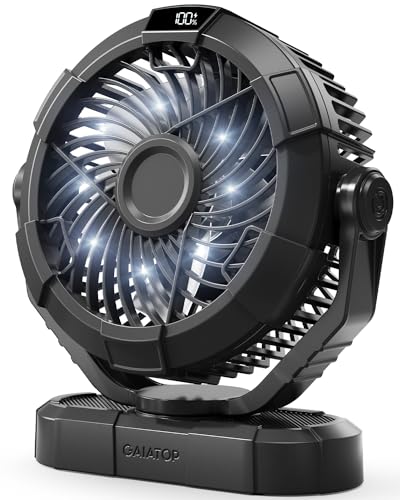
Gaiatop Portable Camping Fan with LED Lantern
Solo campers wanting a lantern
Our take Check price for Gaiatop Portable Camping Fan with LED Lantern (opens in a new tab)
| Pick | Best for | Key spec | Price |
|---|---|---|---|
| Light sleepers | Under 30 dB claim | Check price for FRIZCOL 3-in-1 Camping Fan (opens in a new tab) |
| Powered campsites | 36 dB, 330 RPM | Check price for Roodike 17" Portable USB Ceiling Fan for Camping Tent Gazebo RV Cruise (opens in a new tab) |
| Solo campers wanting a lantern | 5 to 17 hours per charge | Check price for Gaiatop Portable Camping Fan with LED Lantern (opens in a new tab) |
Why You Can Trust Danny’s Camping
At Danny’s Camping, we compare products based on campsite fit, verified specifications, usability, setup requirements, weight, durability, and real-world trade-offs. We do not rank products purely on marketing claims or commission rates.
We have not personally tested every product listed. Where hands-on testing is not available, recommendations are based on verified manufacturer specifications, product documentation, use-case fit, and comparative research.
Why Each Pick Made the Cut
Best Stated Low Noise· 1 of 3
FRIZCOL 3-in-1 Camping Fan
Danny’s Take
The quietest claim on paper, with a remote for the 2 a.m. adjustments.
Best for
- Light sleepers
Why it made the shortlist
Its 24000mAh battery gives a stated 11 to 60 hours, and a remote, three timers and a two-level light come with it.
The Roodike lists a higher noise number and the Gaiatop gives no number at all.
It suits a light sleeper who wants a remote and a timer so the fan can stop on its own. Run it on a low speed overnight and it stays closest to that listed figure.
Key dimensions & specs
- Under 30 dB claim
- 24000mAh, 11 to 60 hours
- Remote, timers, light
Pros
- Decibel figure given on the listing
- Large battery for long nights
- Remote and three timer settings
- Non-slip pads and sturdy ABS body
Cons
- Noise figure applies at low speed
- No oscillation listed
The Catch
At the top of its four speeds the 3950 r/min motor may sound very different from the low-speed figure.
Best Corded Ceiling Fan· 2 of 3
Roodike 17" Portable USB Ceiling Fan for Camping Tent Gazebo RV Cruise
Danny’s Take
A slow, corded ceiling fan for a night with USB power on hand.
Best for
- Powered campsites
Why it made the shortlist
The Roodike is a 17-inch USB ceiling fan with five blades, 330 RPM rotation and a listed 36 dB. A 13.2 ft UL-listed cord with an on/off button runs it from a power bank, car charger or wall adapter at 5W.
Slow rotation is its quiet mechanism, and the long cord means no battery to drain. Compared with the FRIZCOL it has no runtime limit, and compared with the Gaiatop it gives a decibel number.
It suits a car camper or RV-adjacent camper who has USB power all night and wants a slow, steady breeze. Hang it from the tent ceiling and run the cord out the door vent.
Key dimensions & specs
- 36 dB, 330 RPM
- 17-inch, five blades
- 13.2 ft cord, UL listed cord
Pros
- Stated 36 dB at a slow 330 RPM
- No battery to run flat
- Long UL-listed cord
- Low 5W power draw
Cons
- Needs USB power all night
- Listing calls it small for big spaces
The Catch
No built-in battery, so it is only as portable as your power bank.
Best Quiet Lantern Fan· 3 of 3
Gaiatop Portable Camping Fan with LED Lantern
Danny’s Take
A hang-it-and-forget-it fan with a lantern, for small tents.
Best for
- Solo campers wanting a lantern
Why it made the shortlist
The Gaiatop is a rechargeable camping fan with an upgraded motor and aerodynamic grille aimed at lower noise. It offers three speeds, 360 degree manual adjustment, a foldable hook and a lantern with eight LED beads, with 5 to 17 hours per charge.
It gives no decibel figure, so it ranks under the FRIZCOL and Roodike. It does the lantern job in the same body, which neither of them does.
It suits a solo camper who wants a hanging fan and light in one unit and values low-noise design over a stated number. The USB desk-fan mode lets it run while charging.
Key dimensions & specs
- 5 to 17 hours per charge
- Three speeds, 360 degree head
- Eight-bead LED lantern
Pros
- Lantern and fan in one body
- Hook folds away for packing
- Runs while charging
- Aerodynamic grille aimed at lower noise
Cons
- No noise figure on the listing
- Shortest listed runtime of the two battery fans
The Catch
The noise claim is wording, not a measured number.
How We Built This Shortlist
Each pick was assessed across 5 criteria weighted for real-world use.
- Stated noise
- I looked for decibel numbers on each listing and ranked picks with a figure above those that only describe a quiet design.
- Motor and blade design
- RPM, motor type and blade or grille descriptions were compared as the reason behind each noise claim.
- Speed range
- A fan that is quiet only at its lowest speed is less useful than one with several usable steps, so I compared speed counts.
- Power source
- Battery fans and a corded USB fan were separated, since a battery fan has no cord and the corded fan has no runtime limit.
- Night features
- Remotes, timers and lights were noted because they let you change settings without waking up.
What Matters Before You Choose a Quiet Tent Fan
Key buying criteria so you get the right fit the first time.
Decibel figures on a listing
A decibel number describes how loud a fan is at a stated speed and distance, and it is usually measured at the lowest setting. A 30 dB fan sounds like a whisper, while 60 dB is closer to conversation. Look for the figure and for which speed it applies to, since the high-speed noise is rarely listed.
RPM and blade count
Fewer rotations per minute usually means less blade noise, and more blades at slow RPM give a smoother breeze. A fan listing 330 RPM will sound very different from one at 3950 r/min. Check the RPM figure, not just the quiet claim in the title.
Corded versus battery
A battery fan has a motor that works to deliver high airflow, which can hum on high speed. A corded fan runs steady and can be slow without worrying about runtime. Pick based on whether your site has USB power overnight.
Remote and timer
The quietest moment is the one you do not have to get up for. A remote lets you drop the speed from your bag, and a timer ends the fan when you are asleep. Look for timers and a remote listed on the product page.
Mounting and vibration
A fan that rattles against a pole is louder than the decibel claim, so how it mounts matters. Non-slip pads, a hook and a stable base reduce rattle. Look for those details and hang the fan clear of the tent walls.
Match a Quiet Tent Fan to Your Camp Setup
By Noise Evidence
| Your situation | Recommended pick | Why |
|---|---|---|
| Wants a stated decibel number and a big battery | FRIZCOL 24000mAh Fan | Under 30 dB claim with a 24000mAh battery. |
| Wants the slowest rotation | Roodike 17-Inch USB Fan | 330 RPM with a 36 dB figure. |
| Wants a lantern too | Gaiatop Lantern Fan | Lantern and fan share one body. |
| Sleeps with a remote nearby | FRIZCOL 24000mAh Fan | Remote and three timers. |
Scroll sideways to see every column.
By Budget
| Budget | Recommended pick |
|---|---|
| $10 to $20 | Roodike 17-Inch USB Fan |
| $10 to $20 | Gaiatop Lantern Fan |
| $20 to $30 | FRIZCOL 24000mAh Fan |
Corded vs battery
- Corded fan
- The Roodike 17-Inch USB Fan runs from USB power and can turn slowly all night with no runtime limit, which suits sites with a power bank or car charger.
- Battery fans
- The FRIZCOL 24000mAh Fan and Gaiatop Lantern Fan carry their own cells and go anywhere, with the quietest claims at low speed only.
Most light sleepers should default to the FRIZCOL 24000mAh Fan unless they have all-night USB power, where the Roodike is quieter at its slow speed.
By Extras
| Preference | Recommended pick |
|---|---|
| Remote and timers | FRIZCOL 24000mAh Fan |
| Long cord, no battery | Roodike 17-Inch USB Fan |
| Built-in lantern | Gaiatop Lantern Fan |
For Light Sleepers Specifically
- Look for
- A decibel figure, a low RPM or a quiet motor description, plus a timer.
- In this comparison
- The FRIZCOL 24000mAh Fan is the strongest match: a stated figure under 30 dB, a remote and three timers so it can shut off after you drift off.
When to Spend More
- Spend more if
- Spend more on the FRIZCOL 24000mAh Fan if sleep matters, since it gives a decibel figure, a big battery and a remote in one unit.
- Save if
- Save with the Roodike 17-Inch USB Fan if you already own a power bank, as it lists 36 dB at a slow 330 RPM with no battery to pay for.
Before You Bring One Home
What decibel level counts as quiet for a tent fan?
Under about 40 dB is whisper-quiet, and anything near 60 dB is roughly conversation level. The FRIZCOL lists under 30 dB and the Roodike lists 36 dB. Check which speed the number applies to.
Are quiet fans weaker?
Usually, yes, at the same size. Low RPM means less airflow. The Roodike runs at 330 RPM for soft air, while the FRIZCOL can spin faster for more breeze at the cost of noise.
Is a corded fan worth it over a battery fan?
If you have USB power all night, yes. The Roodike has no battery to run flat and its cord is 13.2 ft. A battery fan is the better choice for walk-in sites.
How do I stop a fan rattling in a tent?
Hang it clear of fabric, use the non-slip pads or a flat hook, and avoid hanging it on a flexing pole. A loose hook can add more noise than the motor. Test it on low speed before you sleep.
Does a lantern light change how loud a fan is?
No, but sharing a battery shortens runtime. The Gaiatop runs its lantern from the same cell, giving 5 to 17 hours depending on use. Turn off the light at bedtime if you want maximum airflow time.
Bottom Line
Best overall: FRIZCOL 3-in-1 Camping Fan — best stated low noise pick in this roundup. See the full verdicts above for every pick, with pros, cons and who each one suits.
Browse all quiet tent fans on Amazon — Prime-eligible options with current pricing.
Related Guides

About the author
Danny Walker
Founder & Lead Editor at Danny’s Camping
Danny covers camping gear, campsite setup, outdoor power, sleep systems, and practical camping advice, with a focus on helping campers make better gear decisions.