
Buying Guide
5 Best Power Station For Home Backup in 2026: A Practical Camping Guide
Best power stations for home backup: five stations from 292Wh to 3,584Wh, compared on capacity, output watts, UPS switchover and recharge speed.
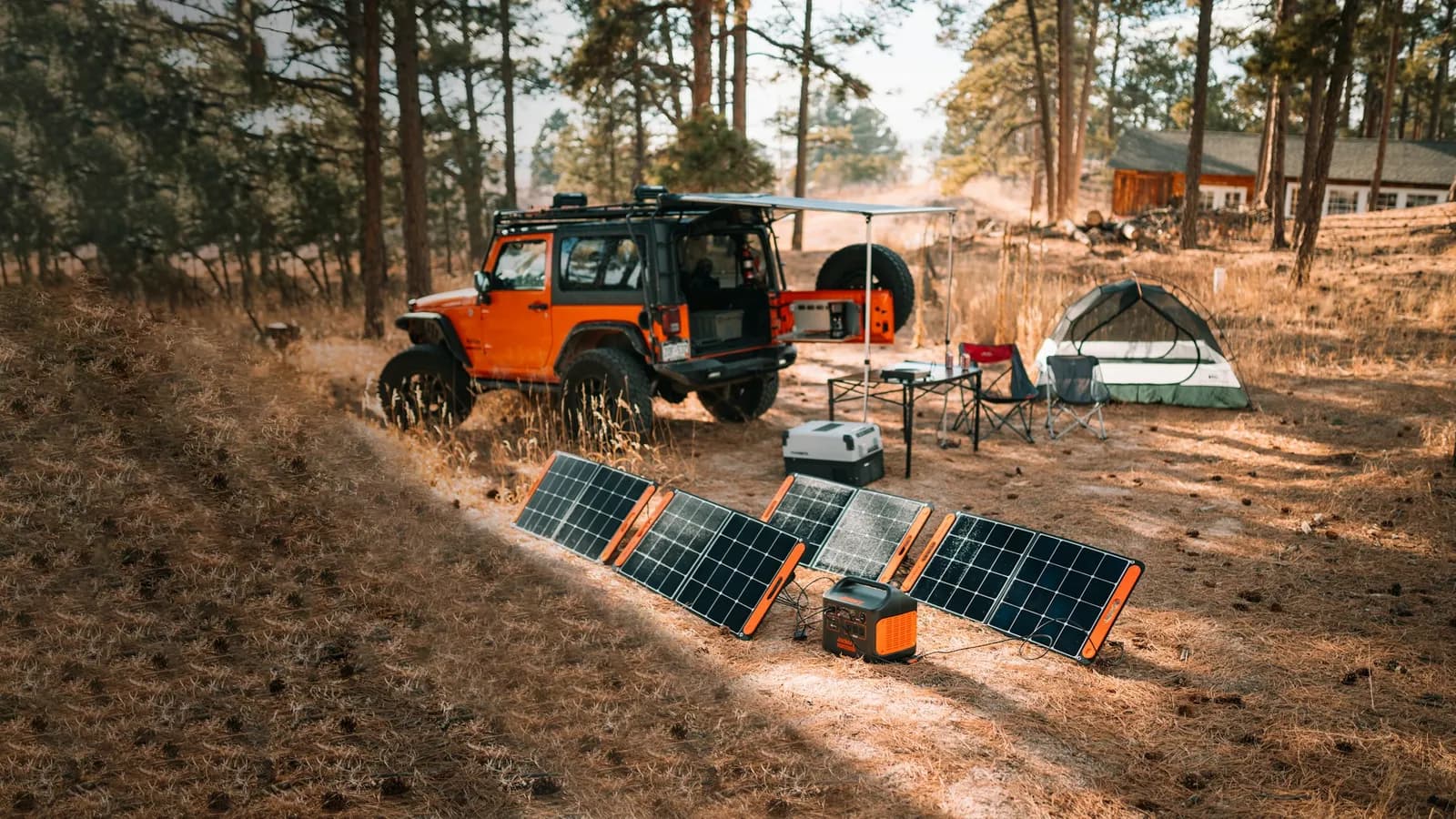
Home backup asks a different question than camping does. You need to know how many hours the fridge, router and a few lights will run when the grid is down, and whether the station can start a sump pump or a well pump.
The five stations here span a 292Wh grab-and-go unit to a 3,584Wh whole-room system. They are ordered by how much of a home they can realistically cover, with output, capacity and recharge notes for each.
Danny’s Camping field notes
The Campsite Fit Check
A quick way to connect the shortlist to the space, workload and ownership details that matter after the box arrives.
- Start with the job
- Jackery HomePower 3600 Plus Power Station leads this shortlist for Whole-home backup. Use that fit as a reference point, then compare the alternatives against your own space and workload.
- Specs that separate the picks
- The first details to compare are 3,584Wh, 3,600W AC output, 1,024Wh, 2,000W (3,000W peak), 1,843.2Wh, 2,400W, 4 AC ports. Confirm the exact model and included components before ordering.
- Trade-off to plan for
- Heavy and not a camp carry
The Practical Shortlist
A practical look at 5 options, organized around the job each one suits best.
Best Whole-Home Capacity
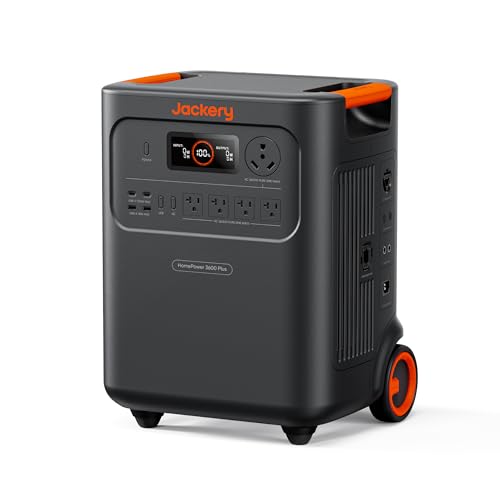
Jackery HomePower 3600 Plus Power Station
Whole-home backup
Our take Check price for Jackery HomePower 3600 Plus Power Station (opens in a new tab)

Best Fast Recharge
Anker SOLIX C1000 Gen 2 Portable Power Station
Fast turnaround between outages
Our take Check price for Anker SOLIX C1000 Gen 2 Portable Power Station (opens in a new tab)
Best Big Capacity Value
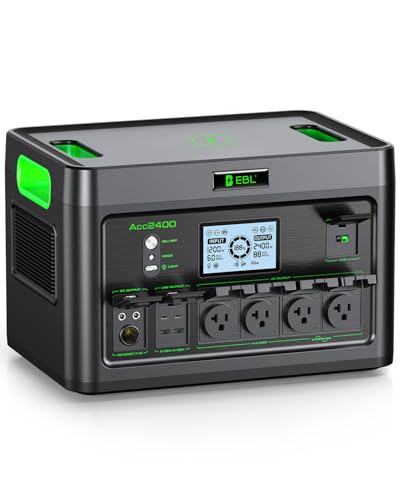
EBL 2400W Portable Power Station LiFePO4 Battery for Home Use
Fridge and router backup
Our take Check price for EBL 2400W Portable Power Station LiFePO4 Battery for Home Use (opens in a new tab)

Best Mid-Price Option
STARYLINE 1000W Portable Power Station 1024Wh LiFePO4 for Outdoor & Home
Router, lights and mini fridge
Our take Check price for STARYLINE 1000W Portable Power Station 1024Wh LiFePO4 for Outdoor & Home (opens in a new tab)

Best Grab-and-Go
Jackery Explorer 300 Portable Power Station
Phones, router and lights
Our take Check price for Jackery Explorer 300 Portable Power Station (opens in a new tab)
Why You Can Trust Danny’s Camping
At Danny’s Camping, we compare products based on campsite fit, verified specifications, usability, setup requirements, weight, durability, and real-world trade-offs. We do not rank products purely on marketing claims or commission rates.
We have not personally tested every product listed. Where hands-on testing is not available, recommendations are based on verified manufacturer specifications, product documentation, use-case fit, and comparative research.
Why Each Pick Made the Cut
Best Whole-Home Capacity· 1 of 5
Jackery HomePower 3600 Plus Power Station
Danny’s Take
The only one here that can carry a real household load. Buy it for a pump or furnace.
Best for
- Whole-home backup
Why it made the shortlist
The Jackery HomePower 3600 Plus is a 3,584Wh station with 3,600W of AC output, 7,200W in parallel and dual 120V and 240V voltage. Its ceramic membrane LFP cells are listed as tested at 302F and it recharges in about 2 hours through hybrid AC plus DC input.
It suits homeowners with well pumps, sump pumps or an electric furnace blower to protect.
Key dimensions & specs
- 3,584Wh, 3,600W AC output
- 120V and 240V, 7,200W parallel
- Full recharge in about 2 hours
Pros
- 3,600W output runs pumps and heaters
- Dual 120V and 240V voltage
- Fast hybrid recharge in about 2 hours
- Ceramic membrane LFP cells
Cons
- Heavy and not a camp carry
The Catch
It costs far more than the other four combined.
Best Fast Recharge· 2 of 5
Anker SOLIX C1000 Gen 2 Portable Power Station
Danny’s Take
It refills faster than anything else here. A strong all-round backup.
Best for
- Fast turnaround between outages
Why it made the shortlist
The Anker SOLIX C1000 Gen 2 holds 1,024Wh and delivers 2,000W with 3,000W peak across 10 ports. HyperFlash recharging reaches full in 49 minutes at 1,600W, and 600W of solar input recharges it in about 1.8 hours.
It recharges far faster than the EBL or STARYLINE, which matters when outages come in waves. The battery is rated to hold at least 80% capacity after 4,000 cycles.
It fits households that want to refill between outages and run a fridge, a space heater at low setting or a sump pump. It also works for RV and camping.
Key dimensions & specs
- 1,024Wh, 2,000W (3,000W peak)
- 49 minute full recharge at 1,600W
- 4,000 cycles to 80% capacity
Pros
- Full recharge in 49 minutes
- 2,000W output across 10 ports
- 4,000 cycles to 80% capacity
- 600W solar input
Cons
- 1,024Wh is not whole-home
- Fast charging needs the app enabled
The Catch
Capacity runs a fridge, not a whole house.
Best Big Capacity Value· 3 of 5
EBL 2400W Portable Power Station LiFePO4 Battery for Home Use
Danny’s Take
The best capacity per dollar here. Great for a fridge during a long outage.
Best for
- Fridge and router backup
Why it made the shortlist
The EBL 2400W station holds 1,843.2Wh with 2,400W output and four AC ports, plus a full set of other ports for 12 devices at once. It switches to backup in 0.1 seconds during a blackout and uses LiFePO4 cells rated for over 3,500 cycles.
At 55 lbs it is the heaviest of the mid-size picks, with a clear display for remaining power.
It fits families that want a fridge, router and lights to run for many hours. The 0.1 second switchover protects computers during a blackout.
Key dimensions & specs
- 1,843.2Wh, 2,400W, 4 AC ports
- 0.1 second backup switchover
- LiFePO4, 3,500+ cycles
Pros
- 0.1 second switchover to backup
- Four AC ports, 12 devices at once
- LiFePO4 cells, 3,500+ cycles
Cons
- 55 lbs is hard to carry far
- Slower recharge than the Anker
The Catch
It weighs 55 lbs.
Best Mid-Price Option· 4 of 5
STARYLINE 1000W Portable Power Station 1024Wh LiFePO4 for Outdoor & Home
Danny’s Take
An easy-to-carry 1kWh station at a fair price. Good for a few days of basic backup.
Best for
- Router, lights and mini fridge
Why it made the shortlist
The STARYLINE has 1,000W continuous output and 1,024Wh of LiFePO4 capacity, with two AC outlets, a 60W PD USB-C port and two USB-A ports. The listing says it powers lights, routers and mini fridges for two to three days, and it supports up to 300W of solar input.
It weighs 27.73 lbs and has an integrated non-slip handle. Compared with the Anker, it gives up the 49 minute recharge and 2,000W output.
It suits campers and home backup buyers who want an affordable 1kWh station. It is listed as compatible with Starlink.
Key dimensions & specs
- 1,000W, 1,024Wh LiFePO4
- 27.73 lbs, 3,000+ cycles
- 300W max solar input
Pros
- One person can carry 27.73 lbs
- Starlink-compatible per the listing
- 300W solar input
Cons
- 1,000W cap limits bigger appliances
- Slower recharge than the Anker
The Catch
It will not start a well pump.
Best Grab-and-Go· 5 of 5
Jackery Explorer 300 Portable Power Station
Danny’s Take
A small station that fits any closet. Great for light outages.
Best for
- Phones, router and lights
Why it made the shortlist
The Jackery Explorer 300 holds 292Wh in LiFePO4 cells rated for over 4,000 cycles, weighs 7.5 lbs and has two AC outlets, a 100W USB-C PD port, two USB-A ports and a 120W car port. Output is 300W with a 600W peak.
It is the smallest and lightest here, with a handle and an easy carry between rooms. It reaches 80% capacity in about 2.8 hours with a 100W Jackery panel.
It suits renters, apartment dwellers and anyone who just needs phones, a router and a lamp running. The 120W car port also helps on road trips.
Key dimensions & specs
- 292Wh, 300W (600W peak)
- LiFePO4, 4,000+ cycles
- 7.5 lbs, 6 ports
Pros
- Only 7.5 lbs
- LiFePO4 cells for 4,000+ cycles
- 100W USB-C PD port
- Pairs with Jackery panels
Cons
- 292Wh runs out fast
- 300W cannot run larger appliances
The Catch
It will not run a fridge for long.
How We Built This Shortlist
Each pick was assessed across 5 criteria weighted for real-world use.
- Capacity
- Watt-hours.
- Output
- Watts.
- Switchover
- UPS speed.
- Recharge
- Hours.
- Weight
- Pounds.
What Matters Before You Choose a Power Station For Home Backup
Key buying criteria so you get the right fit the first time.
Match capacity to your load
List what you want to run, add the watts and multiply by hours. A 150W fridge plus a 20W router and 30W of lights is about 200W, so a 1,024Wh station runs it for roughly four to five hours. Check capacity in Wh.
Output watts and starting surge
Motors such as sump pumps and well pumps draw several times their running watts for a second when they start. A 1,000W station may stall where a 2,000W station starts. Check the manual for your pump's start load.
UPS switchover
A switchover of 10 milliseconds or less keeps computers on. A slower transfer may reboot some devices. Check for a stated switchover time.
Recharge speed
A station that takes six hours to refill is weak between storms. A 49 minute refill at 1,600W is a big advantage. Check recharge time and the maximum solar input.
Transfer switch and 240V
Plugging a station into a house circuit requires a proper transfer switch and a licensed electrician. A 240V output is needed for some well pumps and furnaces. Check what the listing says about 120V and 240V outputs.
Battery chemistry and cycles
LiFePO4 cells last for thousands of cycles, which suits a unit used for years. A station used a few times a year will not wear its cells out, but one used often will. Check the cycle count and the capacity retention.
Match a Power Station For Home Backup to Your Camp Setup
By What You Need to Run
| Your situation | Recommended pick | Why |
|---|---|---|
| Pumps, heaters, 240V | Jackery HomePower 3600 Plus | 3,600W with 240V |
| Fridge for a day or two | EBL 2400W Station | 1,843Wh at a fair price |
| Fast refills between outages | Anker SOLIX C1000 Gen 2 | 49 minute recharge |
| Router, lights, mini fridge | STARYLINE 1000W | 1,024Wh in 27.73 lbs |
| Phones, router, lamp | Jackery Explorer 300 | 292Wh, 7.5 lbs |
Scroll sideways to see every column.
By Budget
| Budget | Recommended pick |
|---|---|
| $250 to $300 | Jackery Explorer 300 or STARYLINE 1000W |
| $490 to $500 | EBL 2400W Station or Anker SOLIX C1000 Gen 2 |
| $1700 to $1710 | Jackery HomePower 3600 Plus |
Whole-Home Station vs Mid-Size Station
- Whole-Home
- 3,000W-plus output, 240V and multi-kWh capacity. Jackery HomePower 3600 Plus.
- Mid-Size
- 1kWh-class and 2kWh-class stations for essentials. Anker SOLIX C1000 Gen 2, EBL 2400W Station, STARYLINE 1000W and Jackery Explorer 300.
Most households should choose EBL 2400W Station or Anker SOLIX C1000 Gen 2 for essentials.
By Budget
| Preference | Recommended pick |
|---|---|
| Lowest outlay | Jackery Explorer 300 |
| Mid price, 1kWh | STARYLINE 1000W |
| Best value capacity | EBL 2400W Station |
| Premium | Jackery HomePower 3600 Plus |
For Power Outage Preparedness Specifically
- Look for
- Enough Wh for your fridge, a UPS switchover and a way to recharge from solar.
- In this comparison
- EBL 2400W Station lists a 0.1 second switchover, and Anker SOLIX C1000 Gen 2 accepts 600W of solar.
When to Spend More
- Spend more if
- Spend more on Jackery HomePower 3600 Plus if you must run pumps, a furnace blower or 240V loads.
- Save if
- Save with Jackery Explorer 300 or STARYLINE 1000W if you only need phones, a router and lights.
Before You Bring One Home
How long will a power station run my fridge?
Divide the station's Wh by the fridge's average draw. A fridge that averages about 100W runs for roughly ten hours on a 1,024Wh unit, with real-world losses lowering that.
Can a power station run my whole house?
Only a large system such as Jackery HomePower 3600 Plus with a transfer switch can carry major loads. Small stations cover essentials.
Is a bigger station worth it over a mid-size station?
If you must run well pumps or a furnace, yes. If you only need fridge and router backup, EBL 2400W Station or Anker SOLIX C1000 Gen 2 is enough.
How do I connect a power station to my home?
The simplest way is plugging appliances directly into the station with extension cords. Connecting to house wiring needs a proper transfer switch installed by a licensed electrician.
How do I keep a backup station ready?
Store it indoors, keep it near 50% to 80% charged and top it up every few months. Test it under load once a year.
Bottom Line
Best overall: Jackery HomePower 3600 Plus Power Station — best whole-home capacity pick in this roundup. See the full verdicts above for every pick, with pros, cons and who each one suits.
Browse all power station for home backup on Amazon — Prime-eligible options with current pricing.
Related Guides

About the author
Danny Walker
Founder & Lead Editor at Danny’s Camping
Danny covers camping gear, campsite setup, outdoor power, sleep systems, and practical camping advice, with a focus on helping campers make better gear decisions.