
Buying Guide
6 Best Portable Solar Panels For Rvs in 2026: A Practical Camping Guide
Best portable solar panels for RVs compared on wattage, bifacial design, weight and connectors for power stations and 12V house batteries.

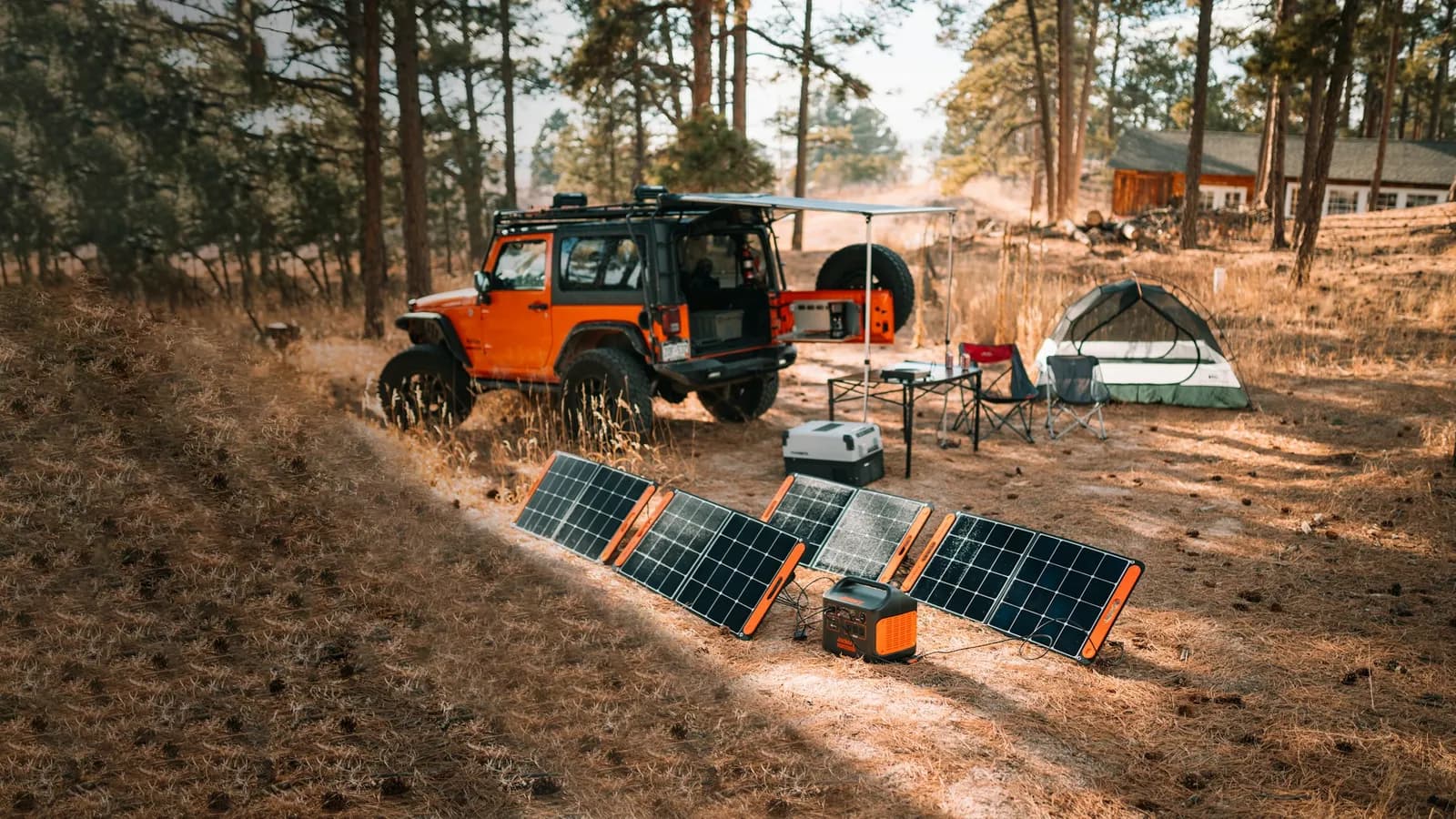
RV owners reach for portable panels when the roof is shaded, when a power station needs more charge than a roof array provides, or when the rig is parked in the trees. The panel that suits you depends on the wattage you need and whether the battery bank is a power station or a 12V house battery.
Six picks made the list, from a 480W bifacial panel to a 5W battery maintainer. They were sorted by listed wattage, bifacial design, folded weight, connector and cable set.
Danny’s Camping field notes
The Campsite Fit Check
A quick way to connect the shortlist to the space, workload and ownership details that matter after the box arrives.
- Start with the job
- Anker SOLIX PS400 Bifacial Portable Solar Panel leads this shortlist for Large power station recharging. Use that fit as a reference point, then compare the alternatives against your own space and workload.
- Specs that separate the picks
- The first details to compare are 400W bifacial, N-type 25%+, 480W bifacial, N-type 16BB, 200W, 25% N-type. Confirm the exact model and included components before ordering.
- Trade-off to plan for
- Priciest tier of this list
The Practical Shortlist
A practical look at 6 options, organized around the job each one suits best.

Best Overall
Anker SOLIX PS400 Bifacial Portable Solar Panel
Large power station recharging
Our take Check price for Anker SOLIX PS400 Bifacial Portable Solar Panel (opens in a new tab)

Best Maximum Output
ZOUPW 480W Bifacial Portable Solar Panel N-Type 16BB for Power Station
High-output RV setups
Our take Check price for ZOUPW 480W Bifacial Portable Solar Panel N-Type 16BB for Power Station (opens in a new tab)

Best Mid-Size
Renogy 200W Portable Solar Panel for Power Stations
Midsize station and device charging
Our take Check price for Renogy 200W Portable Solar Panel for Power Stations (opens in a new tab)

Best 12V House Battery
DOKIO 150W Portable Foldable Solar Panel Kit with Charge Controller
12V house battery charging
Our take Check price for DOKIO 150W Portable Foldable Solar Panel Kit with Charge Controller (opens in a new tab)
Best Small Station Pairing
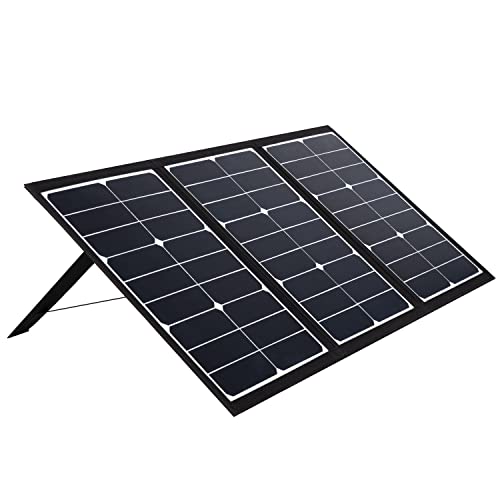
Cummins Portable 60W Solar Panel for Portable Power Stations
Small Cummins station charging
Our take Check price for Cummins Portable 60W Solar Panel for Portable Power Stations (opens in a new tab)

Best Trickle Panel
5W 12V Solar Panel Kit Monocrystalline Portable For Battery Charger With 300Cm Cable For Cars Boats RVs And Ou
Starter battery trickle
Our take Check price for 5W 12V Solar Panel Kit Monocrystalline Portable For Battery Charger With 300Cm Cable For Cars Boats RVs And Ou (opens in a new tab)
Why You Can Trust Danny’s Camping
At Danny’s Camping, we compare products based on campsite fit, verified specifications, usability, setup requirements, weight, durability, and real-world trade-offs. We do not rank products purely on marketing claims or commission rates.
We have not personally tested every product listed. Where hands-on testing is not available, recommendations are based on verified manufacturer specifications, product documentation, use-case fit, and comparative research.
Why Each Pick Made the Cut
Best Overall· 1 of 6
Anker SOLIX PS400 Bifacial Portable Solar Panel
Danny’s Take
A high-output, light 400W panel for RVers with a big station.
Best for
- Large power station recharging
Why it made the shortlist
The Anker SOLIX PS400 is a 400W bifacial foldable panel that weighs 22 lbs with its stand, about 10% lighter than the previous version. N-type cells rated 25% or higher, a dual-sided output claim of up to 10% more power and IP68 protection come with a five-year warranty.
It offers lower rated output than the 480W ZOUPW and a lower listed bifacial gain, in exchange for a named warranty and a lighter build. Against the Renogy 200W it doubles the output.
It suits RV owners who recharge a large power station from a parked rig. The box includes two 8.2 ft cables and a 1.6 ft XT-60i lead.
Key dimensions & specs
- 400W bifacial, N-type 25%+
- 22 lbs with stand
- IP68, 5-year warranty
Pros
- High 400W output from one panel
- Light for its size at 22 lbs
- Dual-sided power generation
Cons
- Priciest tier of this list
- Large panel needs space
The Catch
Bifacial gain depends on reflective ground such as snow or light concrete.
Best Maximum Output· 2 of 6
ZOUPW 480W Bifacial Portable Solar Panel N-Type 16BB for Power Station
Danny’s Take
The top-output panel for a big power station and a sunny pitch.
Best for
- High-output RV setups
Why it made the shortlist
The ZOUPW 480W panel uses N-type 16BB cells with a 25% conversion claim and a bifacial design with up to 30% extra gain. It weighs 22.5 lbs at a listed 21.3 W/lb density and uses a 42.5V high-voltage design for large power stations.
It lists 80W more than the Anker and a larger bifacial gain, which makes it the highest-output pick here. Compared with the Renogy 200W it more than doubles the wattage.
It suits RV owners with a large high-voltage power station and room to set a big panel. The IP68 rating covers wet camps.
Key dimensions & specs
- 480W bifacial, N-type 16BB
- 22.5 lbs, 21.3 W/lb
- 42.5V, IP68 rated
Pros
- Highest wattage in the list
- Up to 30% bifacial gain listed
- Composite build with no heavy glass
Cons
- High voltage must match the station input
- Priciest tier, tied with the Anker
The Catch
A 42.5V panel can exceed small station input limits, so check yours.
Best Mid-Size· 3 of 6
Renogy 200W Portable Solar Panel for Power Stations
Danny’s Take
A well-equipped 200W panel with direct device charging.
Best for
- Midsize station and device charging
Why it made the shortlist
The Renogy 200W uses 16BB N-type cells at 25% efficiency and weighs 13.89 lbs, folding to 23.72 by 22.99 by 1.97 inches with a magnetic closure. It adds a USB-C PD 45W port and two USB-A ports, MC4 output for stations and UL 61730 certification.
It is a step below the 400W panels in output and lighter at about 14 lbs. Next to the DOKIO 150W it uses MC4 output and has built-in USB charging.
It suits RV owners with a midsize power station and a need for phone and laptop charging at the panel. Four kickstands give 40, 50 and 60 degree angles.
Key dimensions & specs
- 200W, 25% N-type
- 13.89 lbs, magnetic fold
- USB-C PD 45W plus USB-A
Pros
- Charges devices directly through USB-C PD
- Magnetic closure for easy carry
- UL 61730 certification listed
- Four kickstands with set angles
Cons
- MC4 output only for stations
- 200W takes longer to fill a big station
The Catch
MC4 output means a separate cable may be needed for your station.
Best 12V House Battery· 4 of 6
DOKIO 150W Portable Foldable Solar Panel Kit with Charge Controller
Danny’s Take
The most affordable way to put real watts into a 12V RV battery.
Best for
- 12V house battery charging
Why it made the shortlist
The DOKIO 150W kit folds to 19.3 by 20.9 by 1.1 inches at 7.3 lbs and includes a standalone PWM controller for 12V batteries with reverse polarity, overcharge, overload and short-circuit protection. A 9.8 ft cable keeps the controller in shade, and USB ports offer emergency phone charging.
It is the one pick built to charge a 12V house battery directly, with a replaceable controller. Compared with the Renogy 200W it is lighter at 7.3 lbs and cheaper.
It suits RV owners who want to feed a 12V house or camper battery from a portable panel. The listing notes that some power stations cap solar input at 60 to 100W.
Key dimensions & specs
- 150W, PWM controller included
- 7.3 lbs, 1.1 inch fold
- 9.8 ft cable, USB ports
Pros
- Controller included for 12V batteries
- Light at 7.3 lbs
- Long cable for shade placement
- Replaceable standalone controller
Cons
- PWM controller wastes some panel energy
- 150W is capped by some stations
The Catch
Check your power station solar input cap before choosing a bigger panel.
Best Small Station Pairing· 5 of 6
Cummins Portable 60W Solar Panel for Portable Power Stations
Danny’s Take
A small panel that pairs with a Cummins station and charges devices directly.
Best for
- Small Cummins station charging
Why it made the shortlist
The Cummins 60W panel outputs up to 60W at 14.85V with USB-C at 27W, USB-A at 18W and a DC 5521 port at 60W. It names compatibility with Cummins PS160, PS200, PS300, PS600 and PS1000 stations.
It is the lightest power commitment here and one of the cheapest. The listing says you can parallel it with the SP100 for up to 160W.
It suits RV owners who carry a small Cummins station or phones and tablets. The USB-C port runs at 27W, enough for many tablets.
Key dimensions & specs
- 60W, 14.85V output
- USB-C 27W, USB-A 18W
- DC 5521 at 60W
Pros
- Named match with Cummins stations
- 27W USB-C charges tablets
- Can parallel with the SP100
Cons
- 60W is slow for RV loads
- Best matched to one brand of station
The Catch
Sixty watts will not keep up with a fridge, so treat it as a top-up.
Best Trickle Panel· 6 of 6
5W 12V Solar Panel Kit Monocrystalline Portable For Battery Charger With 300Cm Cable For Cars Boats RVs And Ou
Danny’s Take
A tiny panel for keeping a storage battery from draining.
Best for
- Starter battery trickle
Why it made the shortlist
The Drawup 5W is a 12V monocrystalline panel measuring 135 by 140 by 15 millimeters, with a 300 cm cable. It is listed for charging batteries in cars, boats and RVs, and for powering small DC devices and low-light conditions.
It is the smallest and cheapest panel here, with a small fraction of the Anker wattage. That makes it a maintainer and not a source of RV power.
It suits RV owners who want to keep a starter battery topped up during storage. A 300 cm cable lets it sit on a dash or sill.
Key dimensions & specs
- 5W 12V monocrystalline
- 135 by 140 by 15 mm
- 300 cm cable
Pros
- Compact enough for a dash
- Long 300 cm cable
- Works in low-light conditions
Cons
- Only 5W, a maintainer at best
- No controller or regulator is named
The Catch
Five watts cannot run RV loads, so use it only as a trickle charger.
How We Built This Shortlist
Each pick was assessed across 5 criteria weighted for real-world use.
- Wattage tier
- Listed watts from 5W up to 480W were sorted into maintainer, station and large-station tiers.
- Bifacial design
- Bifacial claims and the reflective ground they need were noted.
- Weight and fold
- Listed weight and folded size were weighed for RV storage.
- Battery fit
- Each panel was matched to a power station or a 12V house battery.
- Connectors
- MC4, XT60, DC5521 and alligator clips were compared for fit.
What Matters Before You Choose a Portable Solar Panel For Rvs
Key buying criteria so you get the right fit the first time.
Match panel to the battery
A power station has a built-in controller and takes MC4 or DC plugs, while a 12V house battery needs an external controller. Mixing them gives no charge or damage. Identify your battery type and input first.
Station solar input limits
Many power stations cap solar input at 100W to 600W and some at a voltage window. A bigger panel will not push past the cap. Check the station's input watts and voltage range.
Bifacial gain realism
Bifacial panels collect light from both sides and gain most over snow, sand or light concrete. On grass or dark ground the gain is small. Treat the listed percentage as a best case.
Weight and handling
A 22 lb panel is easy to move alone, while 60 lb suitcases are a two-person job. RV storage bays are tight, so check folded dimensions. Heavier panels need weighting in wind.
Voltage and series connection
High-voltage panels around 42V suit large stations but can exceed a small station's input limit. Wiring panels in series adds voltage, and in parallel adds amps. Check the input limits before combining.
Match a Portable Solar Panel For Rvs to Your Camp Setup
By Station Size
| Your situation | Recommended pick | Why |
|---|---|---|
| Large power station | Anker SOLIX PS400 | 400W with a five-year warranty. |
| Highest-output station | ZOUPW 480W Panel | 480W bifacial, 42.5V. |
| Midsize station with USB charging | Renogy 200W Panel | USB-C PD 45W and MC4. |
| 12V house battery | DOKIO 150W Kit | PWM controller included. |
| Small Cummins station | Cummins 60W Panel | Named station compatibility. |
| Starter battery trickle | Drawup 5W Maintainer | 5W with a 300 cm cable. |
Scroll sideways to see every column.
By Budget
| Budget | Recommended pick |
|---|---|
| $10 to $50 | Drawup 5W Maintainer or Cummins 60W Panel |
| $90 to $190 | DOKIO 150W Kit or Renogy 200W Panel |
| $590 to $600 | Anker SOLIX PS400 or ZOUPW 480W Panel |
Bifacial vs Single-Sided
- Bifacial
- The Anker SOLIX PS400 and ZOUPW 480W Panel collect from both sides and gain most over reflective ground.
- Single-sided
- The Renogy 200W Panel, DOKIO 150W Kit, Cummins 60W Panel and Drawup 5W Maintainer face the sun only.
Pick a bifacial like the Anker SOLIX PS400 for open, bright pitches and a single-sided panel for shady ones.
By Budget
| Budget | Recommended pick |
|---|---|
| Around $13 | Drawup 5W Maintainer |
| Around $50 | Cummins 60W Panel |
| Around $95 | DOKIO 150W Kit |
| Around $185 | Renogy 200W Panel |
| Around $600 | Anker SOLIX PS400 |
Boondocking in Open Country Specifically
- Look for
- Bifacial gain, a high wattage and a light carry.
- In this comparison
- The Anker SOLIX PS400 lists a dual-sided gain of up to 10% and 22 lbs, while the ZOUPW 480W Panel lists up to 30% bifacial gain.
When to Spend More
- Spend more if
- Spend more on the Anker SOLIX PS400 if you recharge a large station often, because the warranty and 400W output cut charging time.
- Save if
- Save with the DOKIO 150W Kit if you only charge a 12V house battery, since it includes a controller and weighs 7.3 lbs.
Before You Bring One Home
Can portable panels power an RV?
They can charge a power station or a house battery, but a full RV load needs a large bank. A 400W panel adds a useful boost on a sunny day. Roof solar remains the always-on option.
What mistake do RV owners make?
Buying a panel larger than the station accepts. The extra watts are wasted. Check the station's solar input cap first.
Is a 400W panel worth it over 200W?
If you run a fridge or air-conditioner-adjacent loads, yes. For lights and chargers, 200W is enough and easier to carry. Match panel to daily use.
How do I connect to a power station?
Match the plug, use the supplied cable and aim the panel at the sun. Confirm the station shows input watts. Keep cables out of walkways.
How do I care for the panel?
Wipe the surface, fold it dry and store it flat. Avoid dragging it across rough ground. Check connectors for corrosion.
Bottom Line
Best overall: Anker SOLIX PS400 Bifacial Portable Solar Panel — best overall pick in this roundup. See the full verdicts above for every pick, with pros, cons and who each one suits.
Browse all portable solar panels for rvs on Amazon — Prime-eligible options with current pricing.
Related Guides

About the author
Danny Walker
Founder & Lead Editor at Danny’s Camping
Danny covers camping gear, campsite setup, outdoor power, sleep systems, and practical camping advice, with a focus on helping campers make better gear decisions.