
Buying Guide
3 Best 600w Portable Solar Panels in 2026: A Practical Camping Guide
Best 600W portable solar panels compared on fold format, voltage, cable length and wiring, with a 480W bifacial step-down for lighter carry.

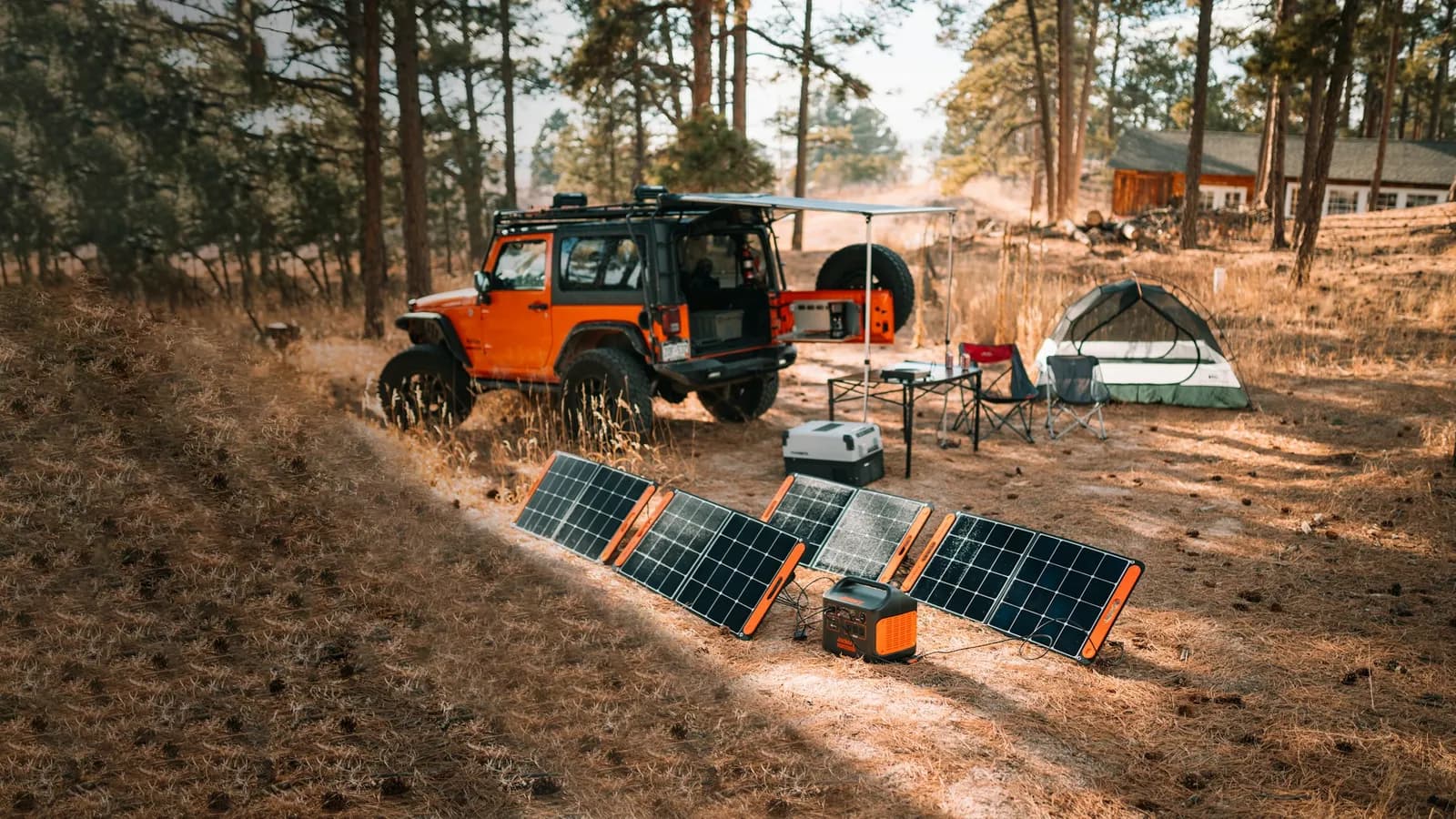
True 600W portable panels are rare, and the listings split into two camps: one book-style folding panel and one set of six flexible 100W modules. A 480W bifacial panel rounds out the list for buyers who want a lighter carry at the cost of 120 watts.
Three options were compared on stated wattage, voltage, weight, cable length, ingress rating and how each one gets power to a station or battery. A very low-priced 600W battery kit that lists a weight of only 15 ounces was left out as unrealistic.
Danny’s Camping field notes
The Campsite Fit Check
A quick way to connect the shortlist to the space, workload and ownership details that matter after the box arrives.
- Start with the job
- EYONGPV 600W Foldable Solar Panel leads this shortlist for Large station, full 600W. Use that fit as a reference point, then compare the alternatives against your own space and workload.
- Specs that separate the picks
- The first details to compare are 600W HPBC, up to 26%, Six 100W 18V ETFE panels, 480W bifacial N-type. Confirm the exact model and included components before ordering.
- Trade-off to plan for
- IP65 handles splashes, not immersion
The Practical Shortlist
A practical look at 3 options, organized around the job each one suits best.

Best Overall
EYONGPV 600W Foldable Solar Panel
Large station, full 600W
Our take Check price for EYONGPV 600W Foldable Solar Panel (opens in a new tab)

Best Flexible Set
DOKIO 600W Flexible Solar Panels
Budget roof array
Our take Check price for DOKIO 600W Flexible Solar Panels (opens in a new tab)

Best Light Step-Down
ZOUPW 480W Bifacial Portable Solar Panel N-Type 16BB for Power Station
IP68 protection and lighter carry
Our take Check price for ZOUPW 480W Bifacial Portable Solar Panel N-Type 16BB for Power Station (opens in a new tab)
| Pick | Best for | Key spec | Price |
|---|---|---|---|
| Large station, full 600W | 600W HPBC, up to 26% | Check price for EYONGPV 600W Foldable Solar Panel (opens in a new tab) |
| Budget roof array | Six 100W 18V ETFE panels | Check price for DOKIO 600W Flexible Solar Panels (opens in a new tab) |
| IP68 protection and lighter carry | 480W bifacial N-type | Check price for ZOUPW 480W Bifacial Portable Solar Panel N-Type 16BB for Power Station (opens in a new tab) |
Why You Can Trust Danny’s Camping
At Danny’s Camping, we compare products based on campsite fit, verified specifications, usability, setup requirements, weight, durability, and real-world trade-offs. We do not rank products purely on marketing claims or commission rates.
We have not personally tested every product listed. Where hands-on testing is not available, recommendations are based on verified manufacturer specifications, product documentation, use-case fit, and comparative research.
Why Each Pick Made the Cut
Best Overall· 1 of 3
EYONGPV 600W Foldable Solar Panel
Danny’s Take
The only single folding panel here at a true 600W, with a long cable.
Best for
- Large station, full 600W
Why it made the shortlist
The EYONGPV 600W has HPBC monocrystalline cells rated up to 26 percent in a book-style folding structure with a built-in handle. A 30A Anderson output and a 4.5 m extension cable carry power to stations and 12V systems, under an IP65 ETFE and EVA dual-layer lamination.
It suits campers with a large station who want 600W without building an array. The long cable keeps the station in shade.
Key dimensions & specs
- 600W HPBC, up to 26%
- 30A Anderson, 4.5 m cable
- IP65, book-style fold
Pros
- One folding unit at a full 600W
- 4.5 m extension cable included
- Up to 26 percent efficiency
- Unfolds in seconds
Cons
- IP65 handles splashes, not immersion
- Weight is not stated on the listing
The Catch
Weight and folded size are not on the listing, so allow plenty of storage room.
Best Flexible Set· 2 of 3
DOKIO 600W Flexible Solar Panels
Danny’s Take
A modular 600W at about half the price of the EYONGPV.
Best for
- Budget roof array
Why it made the shortlist
The DOKIO set is six 100W, 18V ETFE panels totaling 600W for 12V systems. The modules wire in series or parallel, bend through a 30 degree arc and are lighter than glass panels.
Compared with the EYONGPV, it costs about half as much and spreads the load over six small pieces that fit curved roofs. Against the ZOUPW 480W, it needs a controller and wiring where the ZOUPW plugs in directly.
It suits van, boat and trailer owners building a roof array on a budget. The listing asks for ventilation space behind the panels.
Key dimensions & specs
- Six 100W 18V ETFE panels
- Series or parallel wiring
- 30 degree bending arc
Pros
- Expand by wiring more modules
- Light enough to handle singly
- Fits curved surfaces
Cons
- Needs a charge controller and wiring
- Needs ventilation space behind the panels
The Catch
Separate controller, fuses and wire are needed, and installation is a project.
Best Light Step-Down· 3 of 3
ZOUPW 480W Bifacial Portable Solar Panel N-Type 16BB for Power Station
Danny’s Take
A lighter, IP68-rated bifacial panel when 480W is enough.
Best for
- IP68 protection and lighter carry
Why it made the shortlist
A composite build brings the weight to 22.5 lbs.
It trails the EYONGPV by 120 watts and costs a little more. Against the DOKIO, it unfolds in minutes where the DOKIO needs a build.
It suits station owners who value IP68 protection and a lighter carry. The high voltage matches large power stations.
Key dimensions & specs
- 480W bifacial N-type
- 42.5V, 22.5 lbs
- IP68, composite build
Pros
- Stated 22.5 lb weight
- Bifacial gain up to 30 percent
- Plug-and-play with large stations
Cons
- Rated 480W, not 600W
- Needs a high-voltage station input
The Catch
The 30 percent gain needs bright reflective ground.
How We Built This Shortlist
Each pick was assessed across 5 criteria weighted for real-world use.
- Stated wattage
- Listings were checked for a stated 600W total, and a 480W panel was labeled as the step-down.
- Format
- A single folding unit was separated from a multi-panel set.
- Voltage
- Panel voltage was compared with station and controller inputs.
- Cable and output
- Cable length and connector types were compared.
- Weather rating
- IP65, IP68 and ETFE claims were compared.
What Matters Before You Choose a 600w Portable Solar Panel
Key buying criteria so you get the right fit the first time.
Fold unit versus array
A single folding 600W unit sets up in minutes and goes in a trunk, while six modules take a build but fit curved roofs. Decide whether the panels will travel or stay. Check how the listing says it connects.
Voltage and controller
A 12V array of 18V panels needs a charge controller sized to the amps, and a 42.5V panel needs a station that accepts it. Read the station or controller input limit. Match them before ordering.
Real 600W output
Expect 360 to 480 watts in strong sun, less in heat. The station's solar input cap may be lower still. Choose a size that your station can use.
Cable length and connectors
A 4.5 m cable keeps the station in shade, and a 30A Anderson plug carries current well. Check the cable list. A short cable forces the station into the sun.
Weather and mounting
IP65 resists splashes, IP68 handles immersion, and flexible modules need airflow behind them. Do not mount on combustible materials without space. Read the installation notes.
Match a 600w Portable Solar Panel to Your Camp Setup
By Setup
| Your situation | Recommended pick | Why |
|---|---|---|
| Large station, one folding unit | EYONGPV 600W HPBC | True 600W, 4.5 m cable. |
| Budget van or trailer roof | DOKIO 600W Flexible Set | Six 100W modules at half the price. |
| Lighter carry, IP68 | ZOUPW 480W Bifacial | 22.5 lbs and bifacial. |
Scroll sideways to see every column.
By Budget
| Budget | Recommended pick |
|---|---|
| $280 to $290 | DOKIO 600W Flexible Set |
| $580 to $590 | EYONGPV 600W HPBC |
| $590 to $600 | ZOUPW 480W Bifacial |
Folding Unit vs Flexible Set
- Folding unit
- One panel unfolds and connects, which suits moving camps. The EYONGPV 600W HPBC and ZOUPW 480W Bifacial work this way.
- Flexible set
- Six modules wire together and mount on a roof. The DOKIO 600W Flexible Set works this way.
Most campers who move often should choose the EYONGPV 600W HPBC.
By Budget
| Budget | Recommended pick |
|---|---|
| Lowest budget | DOKIO 600W Flexible Set |
| Mid budget, full 600W | EYONGPV 600W HPBC |
| Higher budget, IP68 | ZOUPW 480W Bifacial |
Large Stations on Long Trips
- Look for
- A voltage window your station accepts, a cable long enough to reach shade, and a weather rating.
- In this comparison
- The EYONGPV 600W HPBC includes a 4.5 m cable, and the ZOUPW 480W Bifacial carries IP68.
When to Spend More
- Spend more if
- Spend more on the EYONGPV 600W HPBC if you want a full 600W in one folding unit.
- Save if
- Save with the DOKIO 600W Flexible Set if you can wire a roof array yourself.
Before You Bring One Home
Is 600W portable realistic?
It is for a large station. The EYONGPV 600W HPBC is one folding unit, though weight is not listed, so plan storage.
What is the biggest mistake with a 600W panel?
Ignoring the station's input limit. A panel above the voltage window can damage the station. Check the manual.
Is the flexible set worth it over the folding unit?
For a fixed roof build, yes, and it costs about half. For a moving camp, the EYONGPV 600W HPBC is easier.
How do I set up a 600W folding panel?
Unfold it facing the sun on level ground, secure the corners and connect the Anderson cable. Keep the cable clear of walkways. Re-aim every couple of hours.
Can the flexible panels be used while portable?
They can lie on the ground, though they are meant to be mounted with airflow. Do not leave them on combustible surfaces. Wire them with the right fuses.
Bottom Line
Best overall: EYONGPV 600W Foldable Solar Panel — best overall pick in this roundup. See the full verdicts above for every pick, with pros, cons and who each one suits.
Browse all 600w portable solar panels on Amazon — Prime-eligible options with current pricing.
Related Guides

About the author
Danny Walker
Founder & Lead Editor at Danny’s Camping
Danny covers camping gear, campsite setup, outdoor power, sleep systems, and practical camping advice, with a focus on helping campers make better gear decisions.