
Buying Guide
6 Best 220w Portable Solar Panels in 2026: A Practical Camping Guide
Best 220W portable solar panels compared on bifacial cells, voltage, IP ratings, USB ports and weight for high-capacity camp and RV power stations.

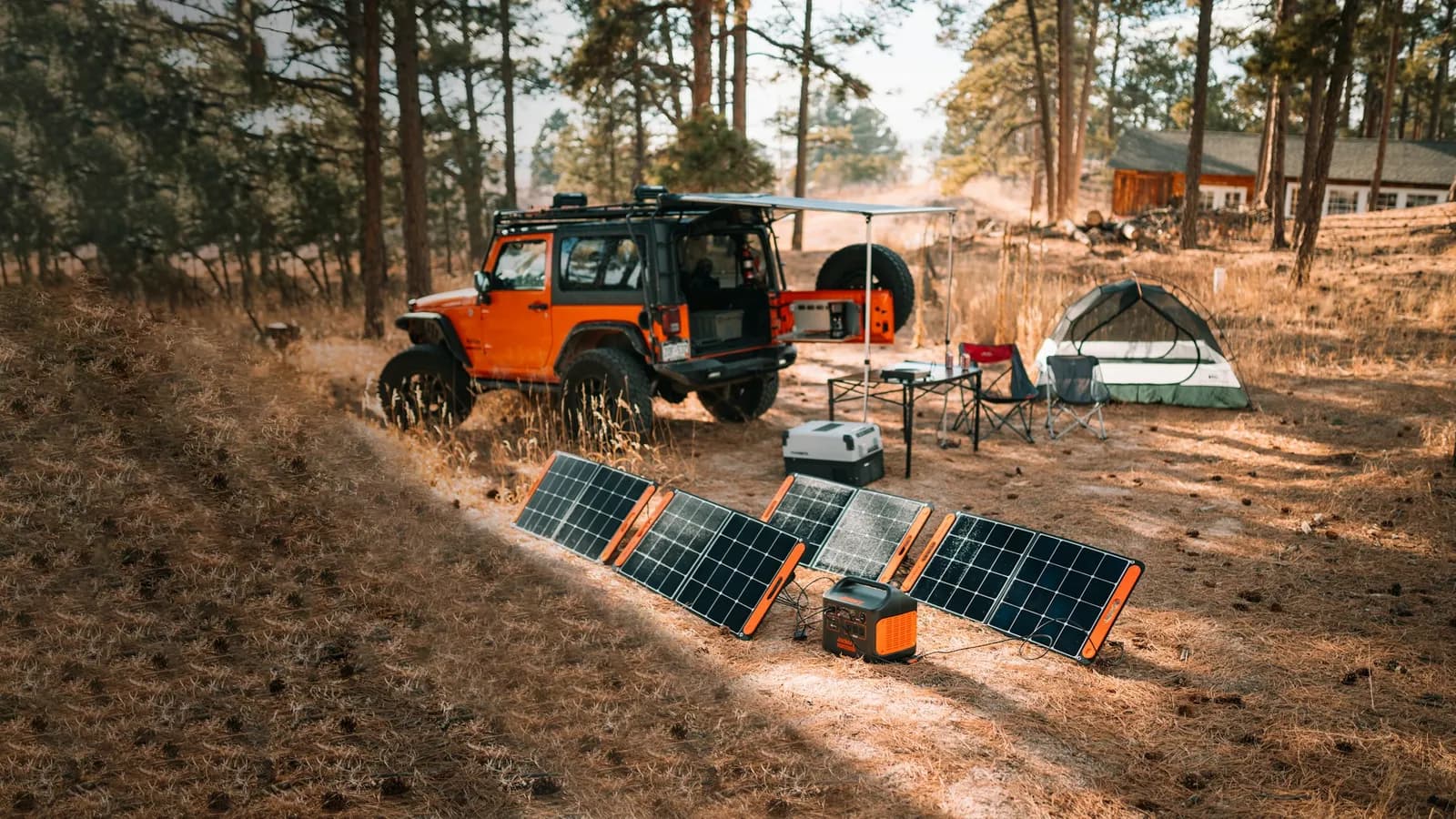
A 220W portable panel suits high-capacity stations that can take well over 200W of solar, and the picks here run from an EcoFlow bifacial to budget 40V panels. Voltage varies widely, so matching it to your station matters more than at lower wattages.
Six panels were compared on stated voltage, weight, folded size, IP rating and ports. Prices span roughly $180 to $400.
Danny’s Camping field notes
The Campsite Fit Check
A quick way to connect the shortlist to the space, workload and ownership details that matter after the box arrives.
- Start with the job
- 220W Portable Solar Panel for Power Station leads this shortlist for Port-hungry car campers. Use that fit as a reference point, then compare the alternatives against your own space and workload.
- Specs that separate the picks
- The first details to compare are 23.5%, 7.73 kg, 1.3 in folded, Bifacial 220W, IP68, 220W, named station list. Confirm the exact model and included components before ordering.
- Trade-off to plan for
- Weight is about 17 lbs
The Practical Shortlist
A practical look at 6 options, organized around the job each one suits best.
Best Overall
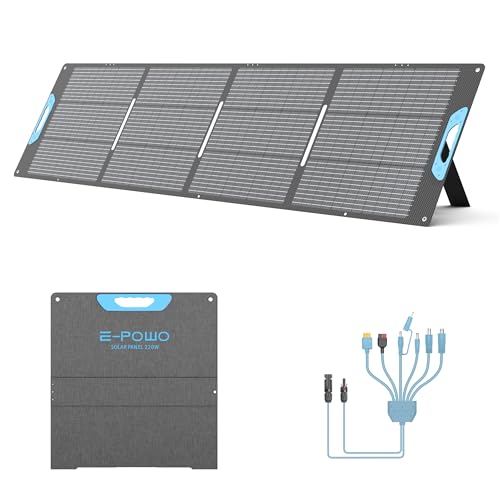
220W Portable Solar Panel for Power Station
Port-hungry car campers
Our take Check price for 220W Portable Solar Panel for Power Station (opens in a new tab)

Best Lightweight
220W Bifacial Portable Solar Panel for Power Station
Weight-conscious bifacial fans
Our take Check price for 220W Bifacial Portable Solar Panel for Power Station (opens in a new tab)

Best Brand Support
Renogy 220W Portable Solar Panel
Named-station owners
Our take Check price for Renogy 220W Portable Solar Panel (opens in a new tab)
Best Long Cable
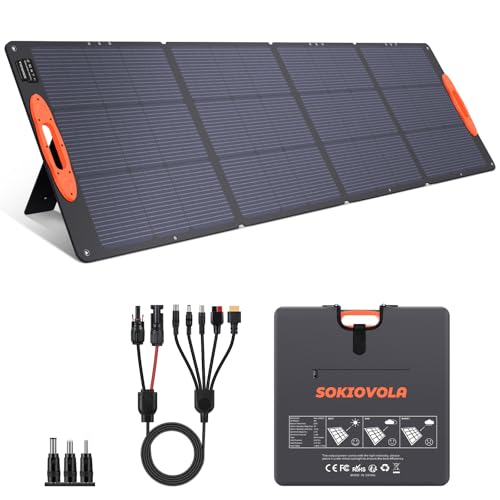
SOKIOVOLA N-Type 16BB 220W Portable Solar Panel for EF/Jackery/Bluetti/Anker Power Station
Distant station setups
Our take Check price for SOKIOVOLA N-Type 16BB 220W Portable Solar Panel for EF/Jackery/Bluetti/Anker Power Station (opens in a new tab)

Best High Voltage
MHPOWOS 220W Portable Solar Panel 40V Folding Solar Panel for Power Station
High-voltage station inputs
Our take Check price for MHPOWOS 220W Portable Solar Panel 40V Folding Solar Panel for Power Station (opens in a new tab)

Best EcoFlow Match
EF ECOFLOW 220W Portable Solar Panel
EcoFlow station owners
Our take Check price for EF ECOFLOW 220W Portable Solar Panel (opens in a new tab)
Why You Can Trust Danny’s Camping
At Danny’s Camping, we compare products based on campsite fit, verified specifications, usability, setup requirements, weight, durability, and real-world trade-offs. We do not rank products purely on marketing claims or commission rates.
We have not personally tested every product listed. Where hands-on testing is not available, recommendations are based on verified manufacturer specifications, product documentation, use-case fit, and comparative research.
Why Each Pick Made the Cut
Best Overall· 1 of 6
220W Portable Solar Panel for Power Station
Danny’s Take
A balanced 220W with ports and adapters.
Best for
- Port-hungry car campers
Why it made the shortlist
The E-POWO lists 23.5 percent cells, 7.73 kg (about 17 lbs) and a folded size of 24.09 x 23.23 x 1.3 inches. It offers 3 charging ports (USB-A, USB-C, QC3.0), a 7-in-1 solar adapter, IP67 ETFE and two kickstands with a built-in accessory pouch.
It has the most ports of the six and costs half the EcoFlow. It is about the same weight as the SOKIOVOLA.
It suits campers who want USB ports and a wide adapter set. The pouch keeps cables with the panel.
Key dimensions & specs
- 23.5%, 7.73 kg, 1.3 in folded
- 3 ports, 7-in-1 adapter
- IP67 ETFE, 2 kickstands
Pros
- Three charging ports built in
- Seven-in-one adapter
- IP67 ETFE coating
- Accessory pouch built in
Cons
- Weight is about 17 lbs
The Catch
No bifacial or N-type claims.
Best Lightweight· 2 of 6
220W Bifacial Portable Solar Panel for Power Station
Danny’s Take
The lightest 220W panel with an IP68 rating.
Best for
- Weight-conscious bifacial fans
Why it made the shortlist
The title cites 25.5 percent efficiency, while a bullet says 23.5 percent.
It weighs 6 lbs less than the E-POWO and 4 lbs less than the EcoFlow 220W, and costs half the EcoFlow.
It suits campers who want bifacial gains at low weight. The 7-in-1 cable covers many stations.
Key dimensions & specs
- Bifacial 220W, IP68
- 11 lbs, 26.7 x 34.6 in fold
- 7-in-1 cable included
Pros
- Lightest of the six
- Bifacial back side
- Seven-in-one cable
Cons
- Efficiency numbers differ between title and bullet
- No brand name
The Catch
The efficiency figure is stated two ways on the listing.
Best Brand Support· 3 of 6
Renogy 220W Portable Solar Panel
Danny’s Take
The safe match when your station is on the list.
Best for
- Named-station owners
Why it made the shortlist
The Renogy 220W is built for compatibility, with the listing naming the Jackery Explorer 1000 v2, EcoFlow DELTA 3, DELTA 3 Max and RIVER 3 Max and the Anker SOLIX S2000 among others.
It costs about $100 less than the EcoFlow and offers a longer named station list than any other pick. Other details are limited on the page.
It suits owners of the named stations who value brand support. The compatibility list removes guesswork.
Key dimensions & specs
- 220W, named station list
- Jackery, EcoFlow, Anker fit
- Premium materials claim
Pros
- Named station compatibility
- Renogy brand and support
- Aimed at large stations
Cons
- Few specs shown on the page
The Catch
Weight and folded size are not shown.
Best Long Cable· 4 of 6
SOKIOVOLA N-Type 16BB 220W Portable Solar Panel for EF/Jackery/Bluetti/Anker Power Station
Danny’s Take
A long-cable, wet-weather 220W.
Best for
- Distant station setups
Why it made the shortlist
The SOKIOVOLA lists N-type 16BB cells, 17.08 lbs, a folded size of 23 x 22.24 inches and an IP68 rating. It includes a 10.49 ft 5-in-1 cable for XT60, DC5521, Anderson and DC sizes.
It matches the E-POWO on weight and has a longer cable, with an IP68 rating above the E-POWO's IP67. It costs slightly more.
It suits campers who keep the station away from the panel. The five connector types fit many brands.
Key dimensions & specs
- N-type, 17.08 lbs
- 23 x 22.24 in folded
- IP68, 10.49 ft 5-in-1 cable
Pros
- Long 10.49 ft cable
- Five connector types
- N-type cells
Cons
- No USB ports are listed
- Similar weight to cheaper E-POWO
The Catch
No USB ports on the listing.
Best High Voltage· 5 of 6
MHPOWOS 220W Portable Solar Panel 40V Folding Solar Panel for Power Station
Danny’s Take
The cheapest 220W option for high-voltage stations.
Best for
- High-voltage station inputs
Why it made the shortlist
The MHPOWOS lists monocrystalline cells at 23.5 percent, a 40V output, IP67 and a weight of 8.5 kg (about 18.7 lbs). It is a plug-and-play panel for stations that accept high-voltage solar input.
It carries the lowest price here and has the highest stated voltage. It weighs more than the E-POWO and SOKIOVOLA.
It suits owners with a high-voltage input. The listing stresses easy install.
Key dimensions & specs
- 23.5%, 40V, IP67
- 8.5 kg
- Plug-and-play outputs
Pros
- 40V high-voltage output
- Plug-and-play outputs
Cons
- The 40V output needs a station that accepts it
- Heaviest panel on the list
The Catch
A station with a lower voltage limit could be damaged or refuse the input.
Best EcoFlow Match· 6 of 6
EF ECOFLOW 220W Portable Solar Panel
Danny’s Take
The premium choice for an EcoFlow station.
Best for
- EcoFlow station owners
Why it made the shortlist
The EcoFlow 220W lists N-type cells, bifacial design, IP68, a 30 to 60 degree bracket with an angle guide and 15.4 lbs. It is geared for maximum efficiency with an EcoFlow station.
It is the priciest pick here by a wide margin, and it weighs less than the E-POWO. It pairs best with EcoFlow stations.
It suits EcoFlow owners who want a matched panel. The angle guide helps with aiming.
Key dimensions & specs
- N-type bifacial, IP68
- 15.4 lbs
- 30 to 60 degree bracket
Pros
- Matched to EcoFlow stations
- Bifacial design
- Angle guide on the bracket
Cons
- Value is mostly for EcoFlow owners
The Catch
It costs far more than every other pick.
How We Built This Shortlist
Each pick was assessed across 5 criteria weighted for real-world use.
- Voltage
- We compared stated voltages.
- Weight
- We compared weights and folded sizes.
- Ports
- We compared USB ports and adapters.
- IP rating
- We compared IP ratings.
- Brand fit
- We compared named station lists.
What Matters Before You Choose a 220w Portable Solar Panel
Key buying criteria so you get the right fit the first time.
Check voltage window
A station's solar input takes a voltage range. A 40V panel can exceed that range and be refused, or damage the input. Read the input range.
Bifacial and N-type
Bifacial panels add rear-side power over bright ground. N-type cells raise efficiency. Look for both terms in the title.
Mixed efficiency claims
One listing here states 25.5 percent in the title and 23.5 percent in a bullet. Treat the lower figure as safer. Compare the numbers.
Weight versus size
Folded sizes vary from 24 inches square to 34 inches long. Check that it fits your vehicle. Compare folded dimensions.
Adapters
A 7-in-1 cable covers more stations than a 4-in-1 cable. Seven connector types reach older and odd ports. Check the connectors you need.
Brand lists
Brands name compatible stations. If yours is named, you can skip adapter guesswork. Look for the station name.
Match a 220w Portable Solar Panel to Your Camp Setup
By Priority
| Your situation | Recommended pick | Why |
|---|---|---|
| Ports and adapters | E-POWO 220W | 3 ports |
| Light and bifacial | Bifacial 220W 7-in-1 | 11 lbs and IP68 |
| Named station list | Renogy 220W | Compatibility list |
| Distant station | SOKIOVOLA 220W IP68 | 10.49 ft cable |
| High voltage input | MHPOWOS 220W 40V | 40V |
| EcoFlow owner | EcoFlow 220W Bifacial | Matched panel |
Scroll sideways to see every column.
By Budget
| Budget | Recommended pick |
|---|---|
| $170 to $190 | MHPOWOS 220W 40V or E-POWO 220W |
| $190 to $200 | SOKIOVOLA 220W IP68 or Bifacial 220W 7-in-1 |
| $280 to $400 | Renogy 220W or EcoFlow 220W Bifacial |
Bifacial vs Standard
- Bifacial
- Back-side power over bright ground. Bifacial 220W 7-in-1 and EcoFlow 220W Bifacial use it.
- Standard
- Lower cost, single-sided. E-POWO 220W, Renogy 220W, SOKIOVOLA 220W IP68 and MHPOWOS 220W 40V are standard.
Most buyers should choose the E-POWO 220W unless they camp over bright ground.
By Budget
| Preference | Recommended pick |
|---|---|
| Lowest cost | MHPOWOS 220W 40V |
| Mid price, ports | E-POWO 220W |
| Budget bifacial | Bifacial 220W 7-in-1 |
| Premium match | EcoFlow 220W Bifacial |
For High-Capacity Stations Specifically
- Look for
- A voltage inside the station's window and a connector that fits.
- In this comparison
- The Renogy 220W names Jackery, EcoFlow and Anker stations and the MHPOWOS 220W 40V lists 40V.
When to Spend More
- Spend more if
- Spend more if you own an EcoFlow station, which points to the EcoFlow 220W Bifacial.
- Save if
- Save if you do not need brand matching, since the MHPOWOS 220W 40V and E-POWO 220W cost far less.
Before You Bring One Home
Does the 40V output work with every station?
No, only with stations whose input accepts that voltage. Check the maximum solar input voltage in the manual before ordering.
What is a common mistake?
Ignoring voltage and connectors. Match both to the station.
Is the EcoFlow worth the price?
Only if you own an EcoFlow station. Otherwise the E-POWO 220W does a similar job.
How do I set up a 220W panel?
Unfold it in full sun and angle it. Connect to the station and watch the input.
How do I store it?
Fold along the seams and keep it dry. Store it flat in its bag away from heat.
Bottom Line
Best overall: 220W Portable Solar Panel for Power Station — best overall pick in this roundup. See the full verdicts above for every pick, with pros, cons and who each one suits.
Browse all 220w portable solar panels on Amazon — Prime-eligible options with current pricing.
Related Guides

About the author
Danny Walker
Founder & Lead Editor at Danny’s Camping
Danny covers camping gear, campsite setup, outdoor power, sleep systems, and practical camping advice, with a focus on helping campers make better gear decisions.