Practical Camping Guide
Propane vs Butane Camping Stove: Which Fuel Is Better?
Choose propane for cool-weather reliability, common campground-style appliances, larger meals, and fuel that is generally easy to replace in North America. Choose a cassette-style butane stove for compact, convenient tabletop cooking in mild weather when its specific fuel cans are available. For backpacking, do not confuse straight butane cassette cans with threaded isobutane-propane blends: they are different fuel systems with different valves and cold-weather behavior.
 By Danny WalkerUpdated 13 min read
Choose propane for cool-weather reliability, common campground-style appliances, larger meals, and fuel that is generally easy to replace in North America. Choose a cassette-style butane stove for compact, convenient tabletop cooking in mild weather when its specific fuel cans are available. For backpacking, do not confuse straight butane cassette cans with threaded isobutane-propane blends: they are different fuel systems with different valves and cold-weather behavior.
The fuel name is only half the decision. Stove design, regulator, canister orientation, cookware limit, ambient temperature, local availability, and manufacturer instructions determine how the system performs. Never attach a cylinder through an unapproved adapter, and operate either fuel outdoors only.
Quick Choice
- Family car camping in variable weather: propane is usually the more forgiving choice.
- Compact fair-weather tabletop cooking: butane offers a tidy single-burner package.
- Temperatures near or below freezing: propane has the physical advantage, but confirm the appliance's rated operating range.
- Air travel or remote resupply: choose only after confirming legal transport and compatible fuel at the destination.
- Wide pans or long cooking sessions: use the stove whose manual explicitly permits the pan size and duty cycle; fuel alone does not decide this.
- Backpacking: compare purpose-built backpacking systems, commonly using threaded blends, in camping stove vs backpacking stove.
Propane vs Butane at a Glance
| Factor | Propane stove | Butane cassette stove | Practical consequence |
|---|---|---|---|
| Cold behavior | Vaporizes at much lower temperatures | Pressure drops as temperature approaches freezing | Propane is generally more dependable in cold weather |
| Common container | Disposable small cylinder or refillable bulk cylinder with approved hose/regulator | Slim cassette can inserted into stove compartment | Butane package is compact; propane offers capacity options |
| Stove format | One- and two-burner camp stoves, grills, lantern systems | Commonly one-burner tabletop cassette stove | Propane better fits multi-burner group kitchens |
| Packed weight | Cylinder and regulator can be bulky | Stove and cans pack relatively flat | Butane suits short, vehicle-supported trips with limited space |
| Availability | Often broad in U.S. outdoor, hardware, and big-box retail | Common in many restaurant and Asian grocery markets; regional variation | Check destination stock rather than assuming |
| Heat control | Model-dependent; many camp stoves simmer well | Model-dependent; cassette stoves often offer familiar knob control | Compare the exact regulator and burner |
| Wind | Model and wind protection matter | Wide exposed tabletop burners can lose heat | Use only approved wind protection |
| Safety concern | Leaks, damaged valves, hose errors, cylinder heating | Canister compartment overheating, wrong pan size, incorrect insertion | Instructions and cookware limits are critical |
| Best fit | Cool conditions, group/base-camp cooking | Mild-weather, compact single-pan cooking | Trip conditions decide the winner |
Neither gas is automatically safer. Both are highly flammable liquefied petroleum gases stored under pressure. Safe performance comes from compatible components, intact seals, correct placement, outdoor ventilation, and keeping fuel containers away from heat.
Why Temperature Changes the Answer
Liquid fuel inside a cylinder must vaporize before the burner can use it. Propane maintains useful vapor pressure at far lower temperatures than normal butane. Normal butane's boiling point is around the freezing point of water, while propane's is far below typical winter camping temperatures. That is why a butane cassette stove may weaken or stop in cold conditions even though liquid remains in the can.
This does not mean every propane appliance works in every winter condition. Regulators can frost, pressure changes with temperature, and appliance manuals specify operating limits. Wind and a cold-soaked pot add load. Keep cylinders in the orientation required by the manufacturer; turning an upright vapor-feed cylinder on its side can send liquid fuel into a system not designed for it.
Never warm a sluggish canister with flame, hot water, a stove, an engine compartment, or direct concentrated heat. Do not place a windshield around a fuel container unless the stove maker supplies and approves that exact configuration. If conditions fall outside the manual, change the menu or equipment rather than improvising.
Fuel Containers and Compatibility
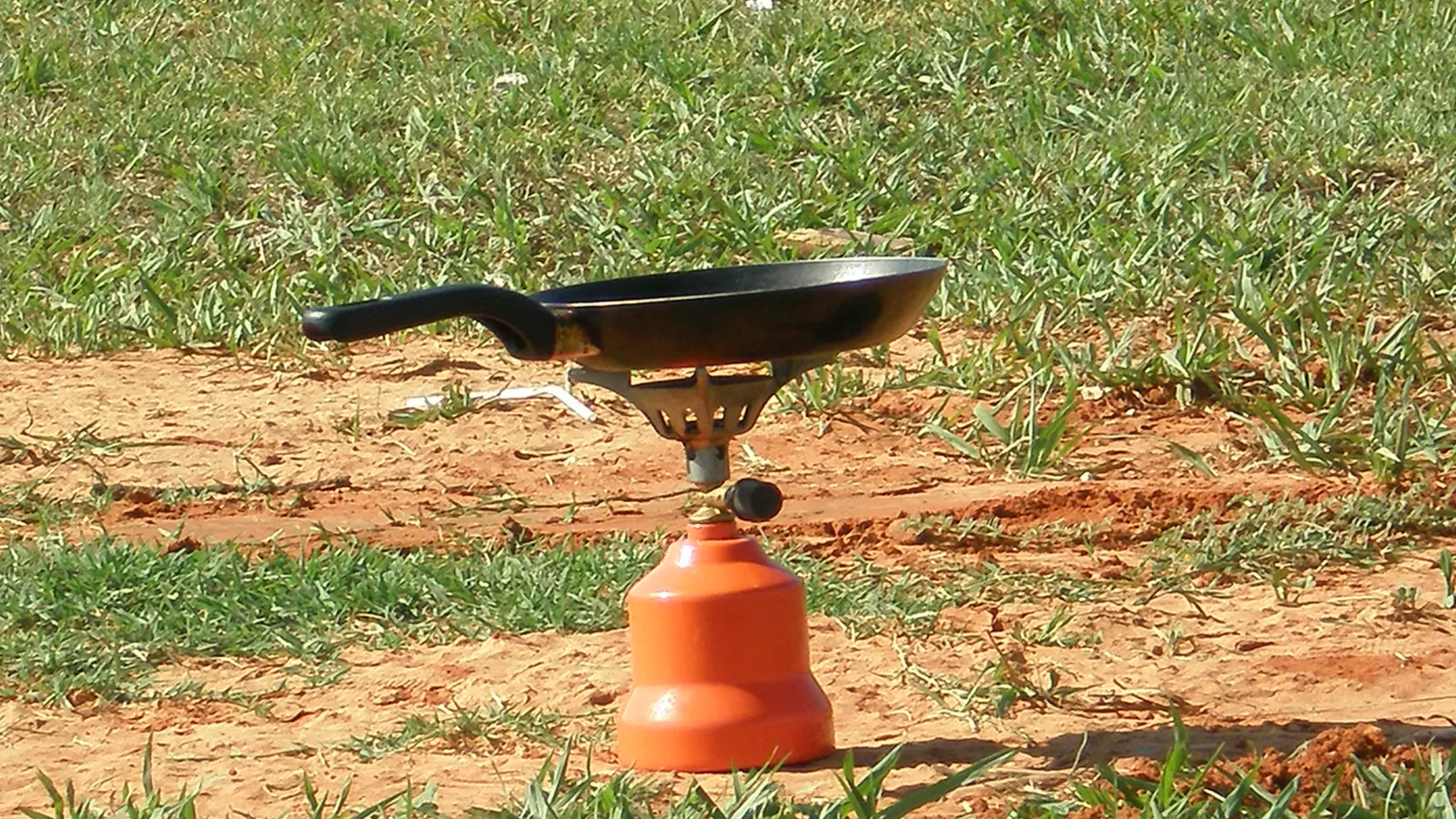
Propane camp stoves commonly connect to a small disposable cylinder or to a refillable cylinder through a model-approved hose and regulator. The connection, regulator pressure, and appliance rating must match. A fitting that physically screws together is not proof of compatibility.
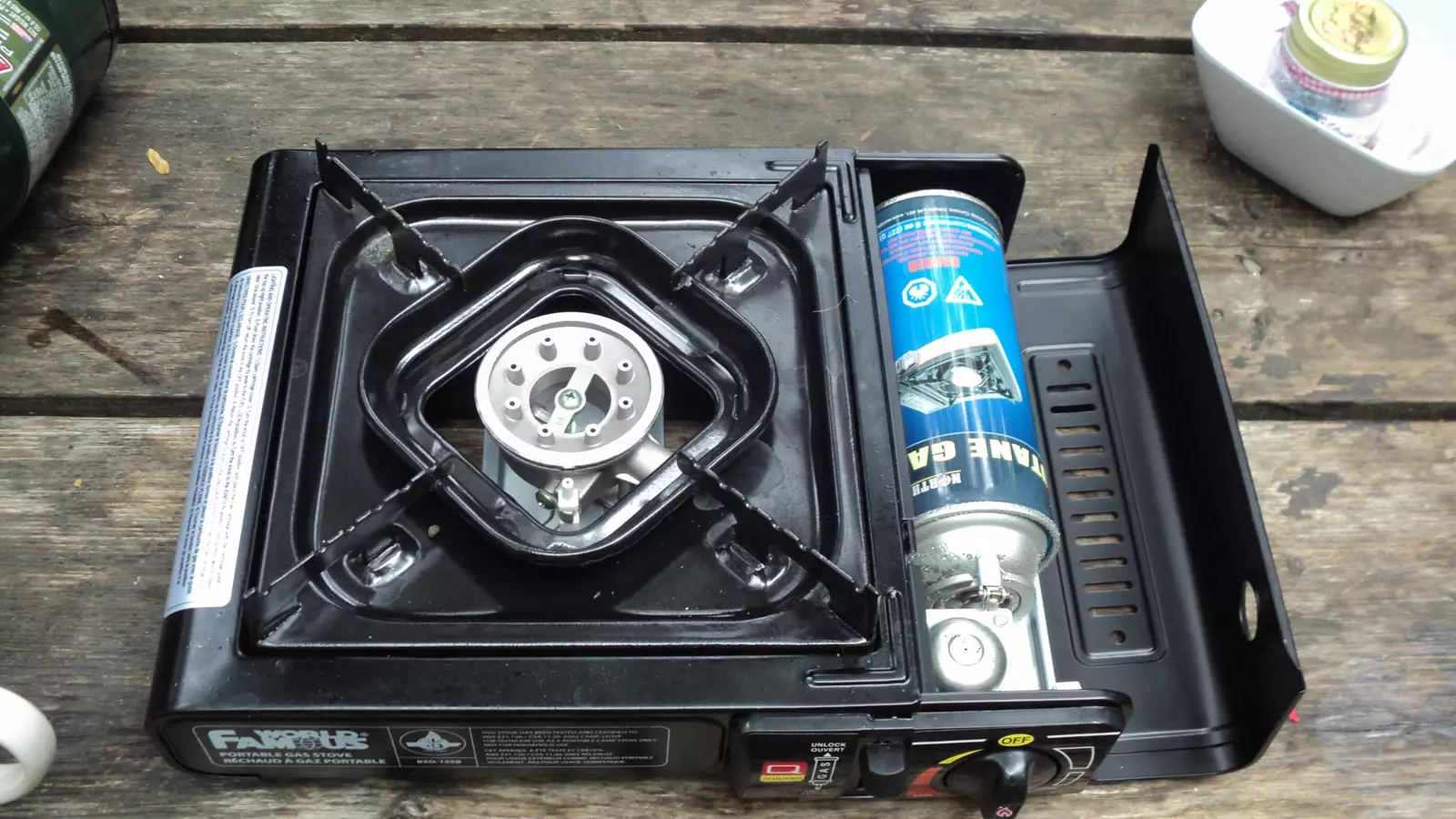
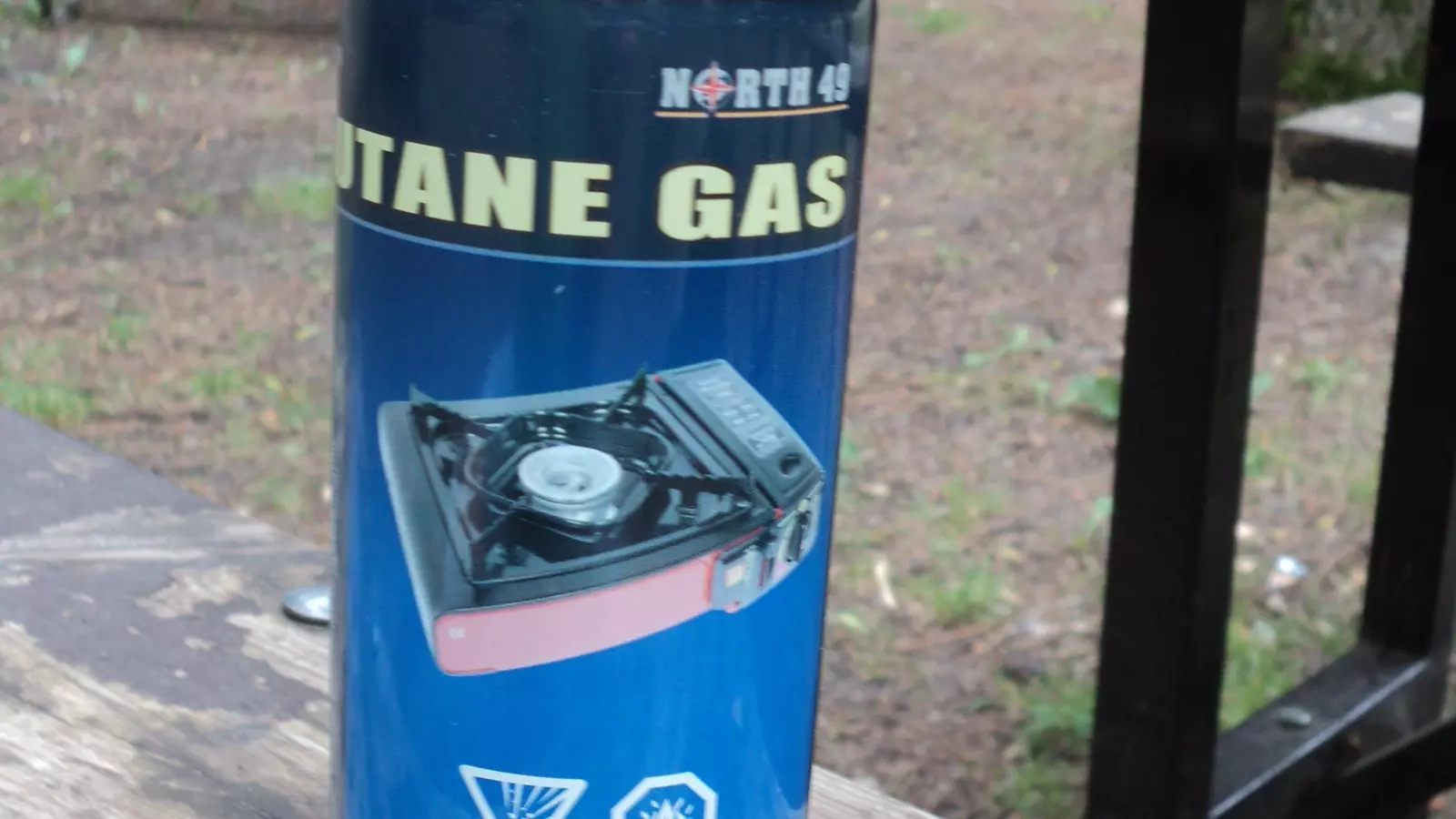
Butane cassette stoves typically use a bayonet-style can with a locating notch. The can must seat in the specified orientation and lock without force. Close the compartment as directed before ignition. If the lever resists, the seal looks damaged, or gas odor persists, disengage the can outdoors away from ignition sources and follow the manual.
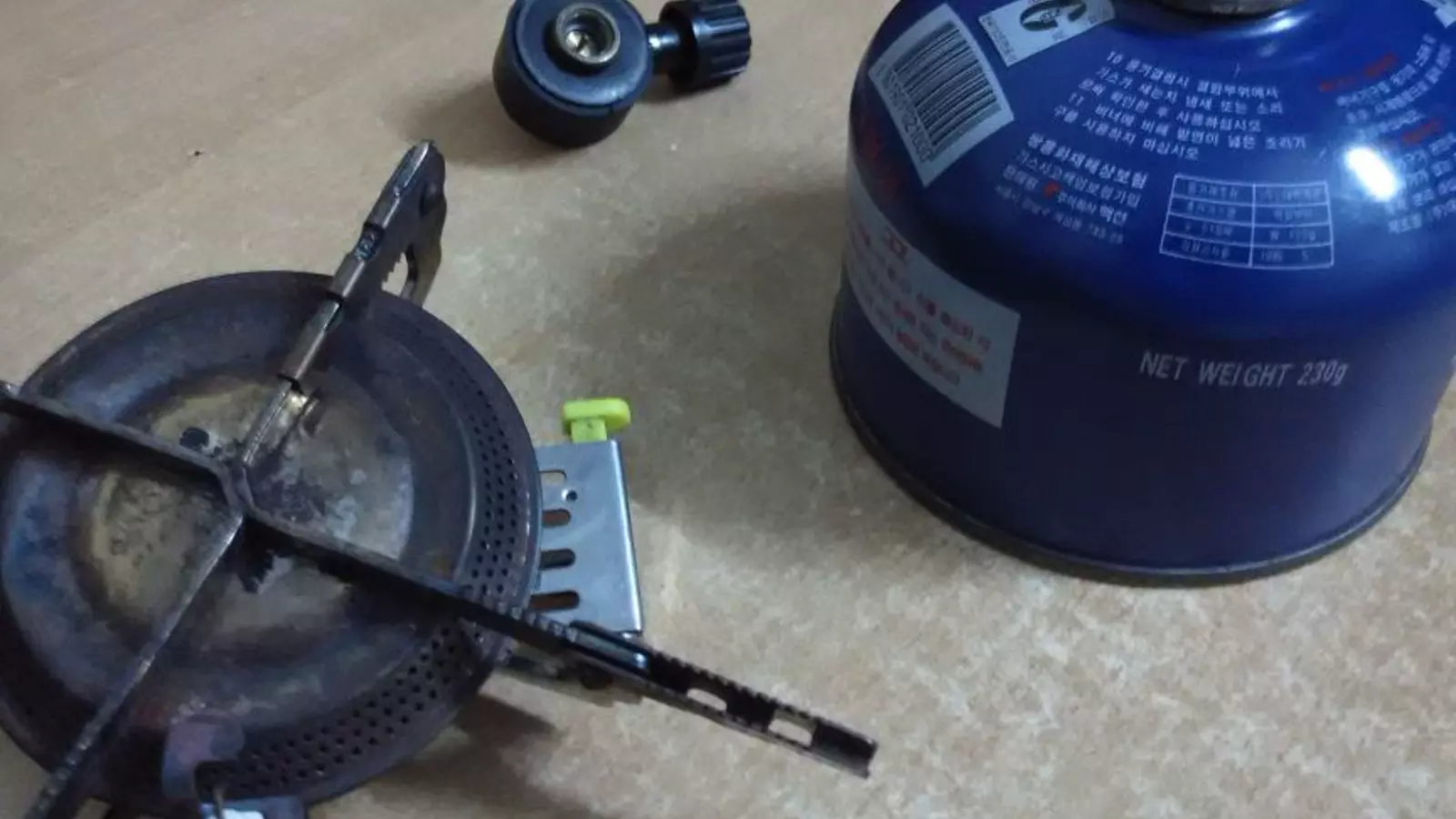
Threaded backpacking canisters often contain isobutane and propane blends. They are not generic substitutes for either propane cylinders or cassette cans. Adapters create additional joints, change container orientation, and may bypass the tested regulator arrangement. Use only fuels explicitly listed for the exact stove model.
Portability, Storage, and Resupply
A butane cassette stove is often compact enough for a picnic kit, balcony-sized storage area, or crowded vehicle bin, although it is still a car-camping appliance rather than a hiking stove. Its flat case protects controls, and slim cans are easy to count. The disadvantage is dependence on a specific can format.
Propane expands from portable single cylinders to refillable group-kitchen capacity. That makes it convenient for repeated meals, but hoses, regulators, and cylinders consume space and require secure transport. Keep cylinders upright when required, protected from rolling, impact, and excessive heat. Never leave pressurized fuel in a hot closed vehicle beyond the limits on its label.
Airlines generally prohibit camping stove fuel in passenger baggage, and used stoves may face special conditions even when empty. Carrier, ferry, tunnel, park, and jurisdiction rules vary. Verify them directly before travel. Mailing or discarding a cylinder without checking hazardous-material and local waste rules is not a solution.
Estimate meals before buying fuel. Use how much food to bring camping to count breakfasts, hot drinks, and dinners, then test the actual stove outdoors. Long simmering consumes more fuel than boil-and-soak meals. Carry a reasonable reserve, but do not accumulate rusty mystery cylinders.
Cooking Performance: Look Beyond the Gas
Both fuels can produce capable cooking heat. Real performance depends on burner diameter, regulator stability, valve range, pot, lid, wind, temperature, and fuel level. A powerful propane stove may support two broad pans; a compact butane stove may give intuitive low-flame adjustment for one skillet. Either can perform poorly behind an unsafe improvised windscreen.
For pancakes, eggs, fish, and sauces, test whether the flame remains stable at low settings. For water-heavy meals, compare time and fuel under realistic outdoor conditions. Burner output figures from different test methods should not be treated as directly comparable.
Cookware fit matters especially on cassette stoves. A pan that extends over the canister compartment can reflect heat toward the fuel and defeat safety design. Respect the manual's maximum diameter and weight. Do not cover ventilation slots or operate two units close together beneath one griddle unless the manufacturer expressly permits it.
Build simpler meals if the chosen stove has one burner. Easy camping meals for beginners reduce simultaneous tasks, while how to cook while camping helps sequence preparation, ignition, and cleanup.
Choice Matrix for Real Trips
| Scenario | Better starting point | Why | Verify before departure |
|---|---|---|---|
| Mild-weather solo car camp | Butane | Compact, familiar single burner | Fuel availability and pan-size limit |
| Family weekend, two cooked dishes | Propane | Multi-burner options and larger fuel supply | Table strength, hose routing, clearances |
| Fall trip with freezing nights | Propane | Better cold vaporization | Exact appliance temperature rating |
| Summer picnic and quick skillet lunch | Butane | Fast setup and compact case | Outdoor-only location and can seating |
| Weeklong base camp | Propane | Refillable-cylinder options may reduce swaps | Approved regulator/hose and legal storage |
| Fly-in trip | Neither until researched | Fuel transport restrictions dominate | Destination rental or local purchase |
| Trail travel | Neither typical car-camp format | Weight and pack volume are excessive | Purpose-built backpacking stove and legal fuel |
| Emergency outdoor cooking | Depends on stored fuel plan | Rotation and safe storage matter | Local codes, expiry/condition, outdoor space |
The matrix is a starting point, not permission to operate outside a product manual. If the forecast, elevation, or fire restrictions change, reconsider the plan. A no-cook menu can be the correct answer when open-flame appliances are restricted.
Safety: Both Stoves Stay Outdoors
Propane and butane combustion can produce carbon monoxide, a colorless, odorless gas that can cause sudden illness and death. Never run either stove inside a tent, vestibule, vehicle, camper, cabin, garage, or other enclosed or partially enclosed place. Opening a flap or window does not turn that space into a safe outdoor cooking area. NPS and CPSC guidance consistently emphasize outdoor use and manufacturer instructions.
Before each use:
- Read the current stove and fuel labels.
- Inspect the cylinder or can for rust, dents, bulging, valve damage, or leaks.
- Check seals, regulator, hose, latch, and burner for damage or debris.
- Place the stove level on a sturdy noncombustible surface with required clearances.
- Connect or insert fuel exactly as instructed, away from flames and sparks.
- Use the manufacturer's leak-check procedure. Never test with a flame.
- Light with face, hair, sleeves, children, and pets away from the burner.
- Supervise continuously and keep an appropriate extinguishing method nearby.
- Shut the valve, allow complete cooling, and disconnect fuel only as directed.
If you smell gas or hear leaking, do not ignite or operate switches. Extinguish ignition sources if safe, move people away, and follow the manufacturer and emergency-service guidance. A damaged or recalled stove should not be used. Search the U.S. Consumer Product Safety Commission recall database by brand and model, especially for secondhand equipment.
Prevent Canister Overheating
Heat reaching the fuel container is a critical hazard. Use only approved cookware dimensions. Keep the canister compartment and vents unobstructed. Do not surround the appliance with foil, rocks, or an aftermarket shield that traps heat. Never use a griddle across adjacent stoves unless their manufacturer approves that arrangement.
Keep spare fuel well outside the cooking zone and away from direct sun, fire rings, hot cookware, generators, and vehicle exhaust. Do not disconnect a container until the stove is off and cool. If a safety device trips, a flame behaves abnormally, or the canister becomes unexpectedly hot, turn the stove off if safe, move away, and follow the manual—do not defeat the mechanism.
Plan a defined cook zone through how to set up a camp kitchen. Stable placement, traffic control, and adequate clearance prevent more problems than a last-minute fuel preference can solve.
Environmental and Cost Trade-Offs
Fuel cost varies by region, container size, and how efficiently the stove transfers heat. A larger refillable propane cylinder may reduce cost and small-cylinder waste for frequent campers, but it adds up-front equipment and inspection responsibilities. A butane user may buy only a few compact cans for occasional mild-weather trips.
Never puncture, refill, or dispose of a single-use container unless its manufacturer and local waste authority explicitly provide that procedure. A cylinder that feels empty may still contain flammable vapor. Refillable cylinders must remain within inspection requirements and be filled by an authorized source.
Efficiency improvements are fuel-neutral: use a lid, match flame to the pot bottom, prepare ingredients before lighting, block wind only with an approved method, and turn the burner off promptly. A menu with fewer long simmers can save more fuel than changing gas type.
Common Buying Mistakes
- Choosing butane for a freezing trip based only on compact size.
- Choosing propane without accounting for cylinder and hose storage.
- Assuming every can labeled “camping gas” fits every stove.
- Using an online adapter to join systems not approved together.
- Ignoring the stove's cookware diameter and weight limits.
- Treating a built-in igniter as the only ignition method.
- Buying fuel at the destination without confirming stock.
- Planning to cook in a tent if the weather turns bad.
- Using output rating as a substitute for simmer and wind performance.
Frequently Asked Questions
Is propane hotter than butane?
That framing is not useful for choosing a camp stove. Burner and regulator design determine delivered cooking performance. Propane maintains pressure better in cold conditions, while either system can provide adequate heat in its designed environment.
Does butane work below freezing?
Normal butane loses useful vapor pressure around freezing, so performance may become weak or stop. Do not heat the can. Use equipment rated for forecast conditions and remember that isobutane-propane backpacking blends behave differently from cassette butane.
Can I use propane in a butane stove with an adapter?
Only if the stove manufacturer explicitly approves that exact fuel, adapter, regulator, and cylinder orientation. Otherwise, no. Physical connection does not establish safe operating pressure or thermal behavior.
Which fuel lasts longer?
Container mass alone cannot answer. Burn rate depends on stove output, meal, pot, wind, temperature, and technique. Compare usable fuel weight and measured consumption in the actual approved system.
Can either stove be used under a canopy?
Follow the manufacturer's overhead and side clearances and the shelter maker's fire rules. A tent, vestibule, vehicle, or enclosed canopy is unsafe. When in doubt, cook fully outdoors away from combustible fabric and never trade rain protection for CO or fire risk.
How should empty cylinders be discarded?
Follow the label and local household hazardous-waste or recycling authority. Requirements differ. Never assume “empty” means safe to place in trash or recycling, and never puncture a container unless an authorized procedure explicitly directs it.
Bottom Line
Propane is the stronger default for variable temperatures, group cooking, and established car-camp kitchens. Butane is compelling for compact, single-burner cooking in mild weather. Choose the complete approved stove-and-fuel system, not just a gas name. Verify weather, resupply, cookware, and local rules—and keep every fuel-burning stove outdoors.
Authoritative References
- U.S. Consumer Product Safety Commission, portable fuel container, gas-appliance, carbon monoxide, and product-recall guidance.
- U.S. National Park Service, camp-stove use, fire restrictions, and outdoor cooking safety guidance.
- U.S. Centers for Disease Control and Prevention, carbon monoxide poisoning prevention.
- The stove and fuel manufacturers' current manuals, fuel compatibility lists, temperature limits, clearances, and cookware restrictions.