
Practical Camping Guide
How to Set Up a Camp Kitchen
Set up a camp kitchen on a stable, durable outdoor surface with four distinct zones: food storage, preparation, cooking, and washing. Keep raw-food work moving in one direction toward the stove, and keep cooked food from returning to contaminated boards or plates. Place fuel-burning appliances outdoors, away from tents and dry vegetation, preserve a clear walking route, and store food, grease, trash, cookware, and scented toiletries exactly as local wildlife rules require.
By Danny WalkerUpdated 11 min read
Set up a camp kitchen on a stable, durable outdoor surface with four distinct zones: food storage, preparation, cooking, and washing. Keep raw-food work moving in one direction toward the stove, and keep cooked food from returning to contaminated boards or plates. Place fuel-burning appliances outdoors, away from tents and dry vegetation, preserve a clear walking route, and store food, grease, trash, cookware, and scented toiletries exactly as local wildlife rules require.
A good kitchen is not the biggest collection of bins and tables. It is a layout that prevents cross-contamination, tipping, burns, wildlife access, and unnecessary trips between hot cookware and the cooler. Build it around the campsite that actually exists, including its fire rules, potable-water status, food locker, wind, slope, and shared traffic.
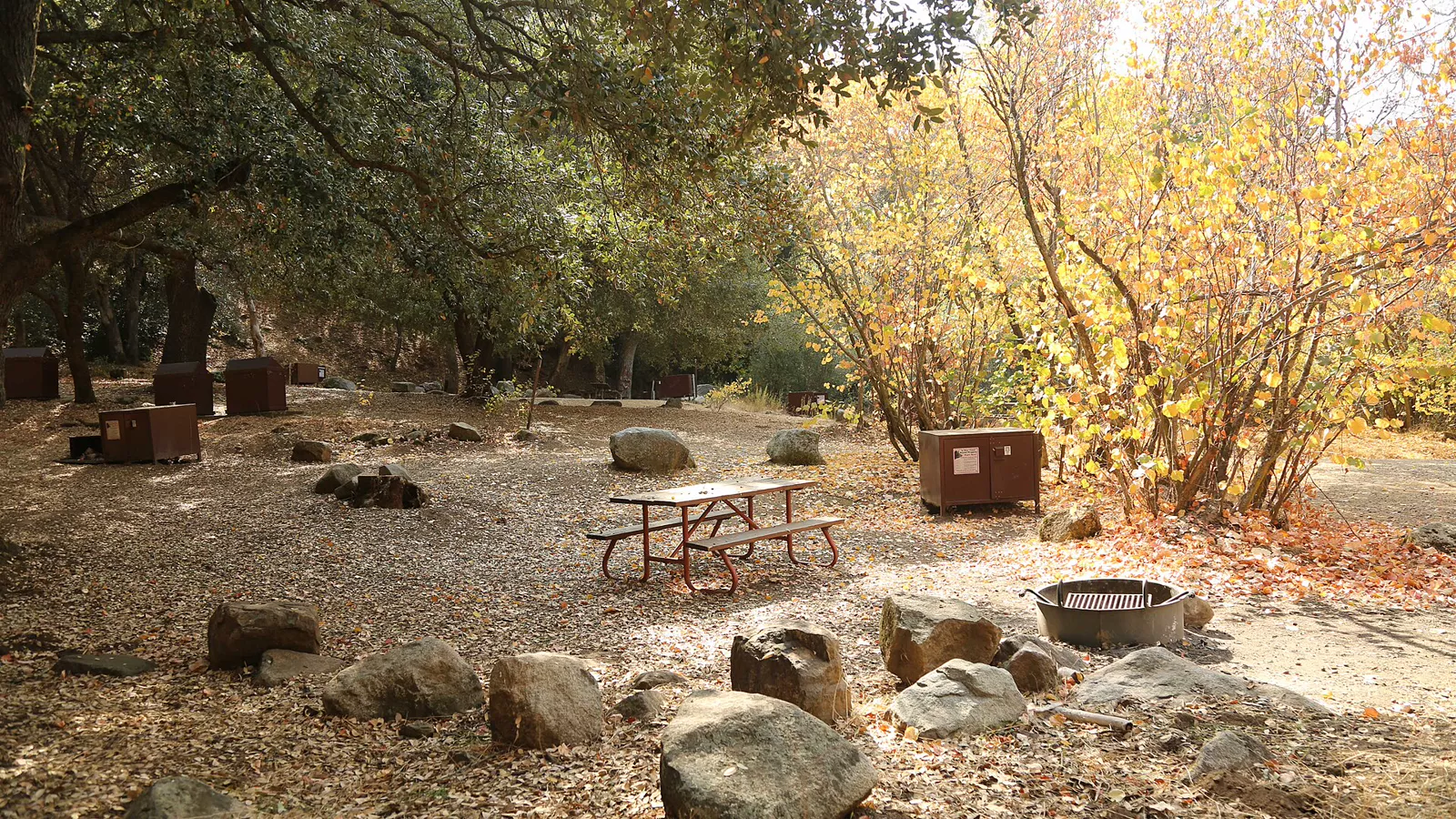
Camp Kitchen Zone Plan
| Zone | Put here | Keep away |
|---|---|---|
| Storage | Cooler, dry food, wildlife container | Sun, tent, unattended wildlife access |
| Preparation | Clean board, knife, ingredients, thermometer | Dirty dishes and raw-food packaging |
| Cooking | Stable stove, fuel, pots, hot-tool rest | Tent walls, children, dry grass, cooler |
| Serving | Clean plates, utensils, finished food | Raw meat tools and leaking packages |
| Washing | Handwash water, dish basins, strainer, soap | Drinking-water outlet and natural water |
| Waste | Closed trash and strained food scraps | Open tables, fire ring, sleeping area |
Zones can occupy sections of one picnic table rather than separate furniture. The essential feature is a visible workflow. A cook should not carry raw chicken across the serving area or reach over a flame for seasoning.
Inspect the Site Before Unpacking Food
Read the posted rules and campsite information first. Locate the potable-water tap, food locker, designated fire ring, trash or pack-out requirement, restrooms, and emergency contact information. Confirm current fire restrictions; a permanent ring does not prove fires are currently allowed.
Look for a level durable surface with enough open air for the stove. Avoid dead overhead limbs, drainage depressions, dry vegetation, and the doorway or main path. Do not move rocks, cut plants, dig drainage channels, or build new fire sites. Use established facilities wherever possible.
The kitchen should not be inside or immediately beside the sleeping shelter. In wildlife country, follow the land manager's required distance and storage method. General rules from another park never override local instructions. How to choose a campsite covers drainage, wind, shade, hazards, and traffic before gear placement.
Establish Storage First
Food should have a secure destination before the first package opens. This may be a provided locker, hard-sided vehicle, certified bear-resistant container, or another method required on site. Store coolers, dry food, cookware, grease, trash, toothpaste, pet food, and other scented items together according to those rules.
Use a dedicated food cooler with a thermometer and a separate drink cooler if frequent opening is expected. USDA advises keeping cold food at 40°F (4°C) or below. Place raw meat in sealed, leak-resistant containers low in the cooler, separate from produce and ready-to-eat food. Keep the cooler shaded and open it briefly.
Dry food belongs in sealed, labeled containers. Group each meal together so cooks do not unload every ingredient. Never treat a closed cooler as wildlife-proof unless the authority explicitly accepts it.
Design a One-Way Food Workflow
Arrange food storage at one end, clean preparation space in the middle, the stove beyond it, and clean serving items away from the raw-food section. Dirty cookware moves from the serving side to washing, not backward across the prep surface.
Use separate cutting boards or a strict clean-and-sanitize sequence for raw animal foods and ready-to-eat ingredients. Keep a clearly marked raw-food utensil until it is washed. Never put cooked food on the plate that held it raw. A food thermometer stays clean and accessible rather than buried under packaging.
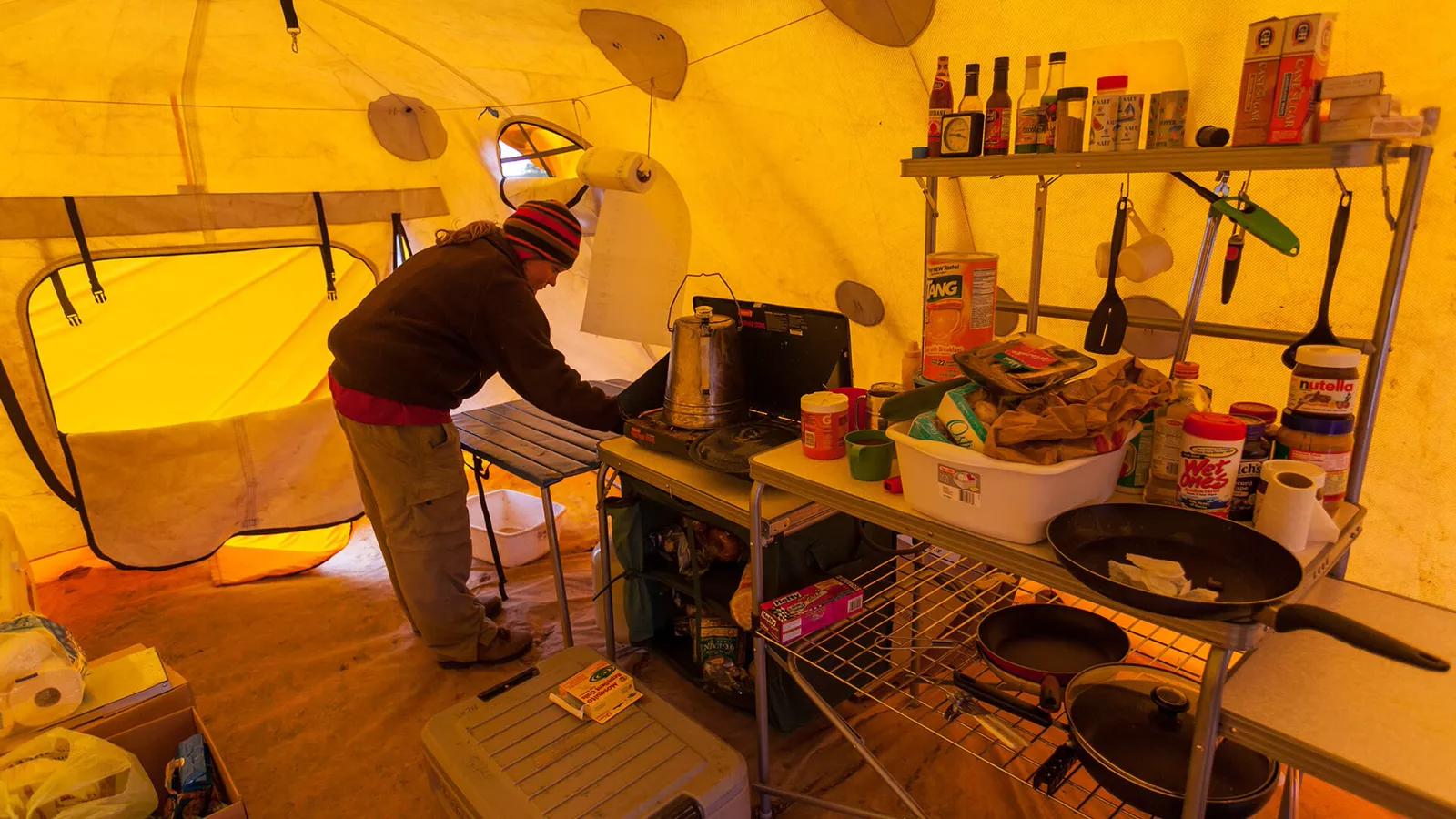
Prep ingredients at home to reduce raw-food handling, knife work, trash, and wash water. Label containers with both meal and day. Our guide to how to cook while camping connects this layout to stove and menu selection.
Place the Stove Safely
Use the stove outdoors on a stable, level, heat-tolerant surface approved by its manufacturer and the campground. Maintain required clearance from tents, canopies, branches, vehicles, and dry vegetation. Face controls toward the cook while keeping fuel lines and canisters away from hot surfaces.
Never operate a stove, grill, charcoal appliance, or other fuel-burning device inside a tent, vehicle, enclosed canopy, or poorly ventilated structure. Carbon monoxide has no color or odor. Opening a door or window does not make combustion in a sleeping shelter safe.
Test connections and ignition outdoors before the trip. If fuel odor or leakage appears, close valves, extinguish all ignition sources, move people clear, and follow the product's instructions. Do not improvise adapters or windscreens; some shields reflect heat toward a canister and create a dangerous pressure rise.
Create a no-entry boundary for children and pets. Turn pot handles inward without placing them above another burner. Keep a lid, water, or appropriate extinguisher accessible as applicable, and know how to shut the system down.
Build Handwashing Before Cooking
Handwashing is a core station, not an afterthought. Use safe running water, soap, and a catch basin or disposal plan that follows site rules. Position it where cooks can wash before touching food and immediately after raw meat, restroom use, trash, or pet handling.
Hand sanitizer can supplement washing when soap and water are unavailable, but it does not remove every hazard and works poorly on visibly dirty hands. Dry with clean disposable towels or a cloth that remains protected from raw-food splashes.
If campground water is unavailable or under an advisory, follow the land manager's notice. Clear stream water may contain microorganisms. How to camp without running water explains separate treated and untreated containers.
Set Up Dishwashing and Waste Flow
Scrape food scraps into trash first. Where appropriate, use wash, rinse, and sanitize basins, then air-dry equipment. Keep the dirty landing area separate from clean dishes. Use minimal biodegradable soap; “biodegradable” does not mean suitable for direct disposal in lakes or streams.
Strain wastewater and pack out the solids. Dispose of liquid according to local rules, away from water, trails, and camps when dispersal is permitted. Do not burn food, plastic, foil, cans, or trash. Store cleaned cookware with other scented items if wildlife guidance requires it.
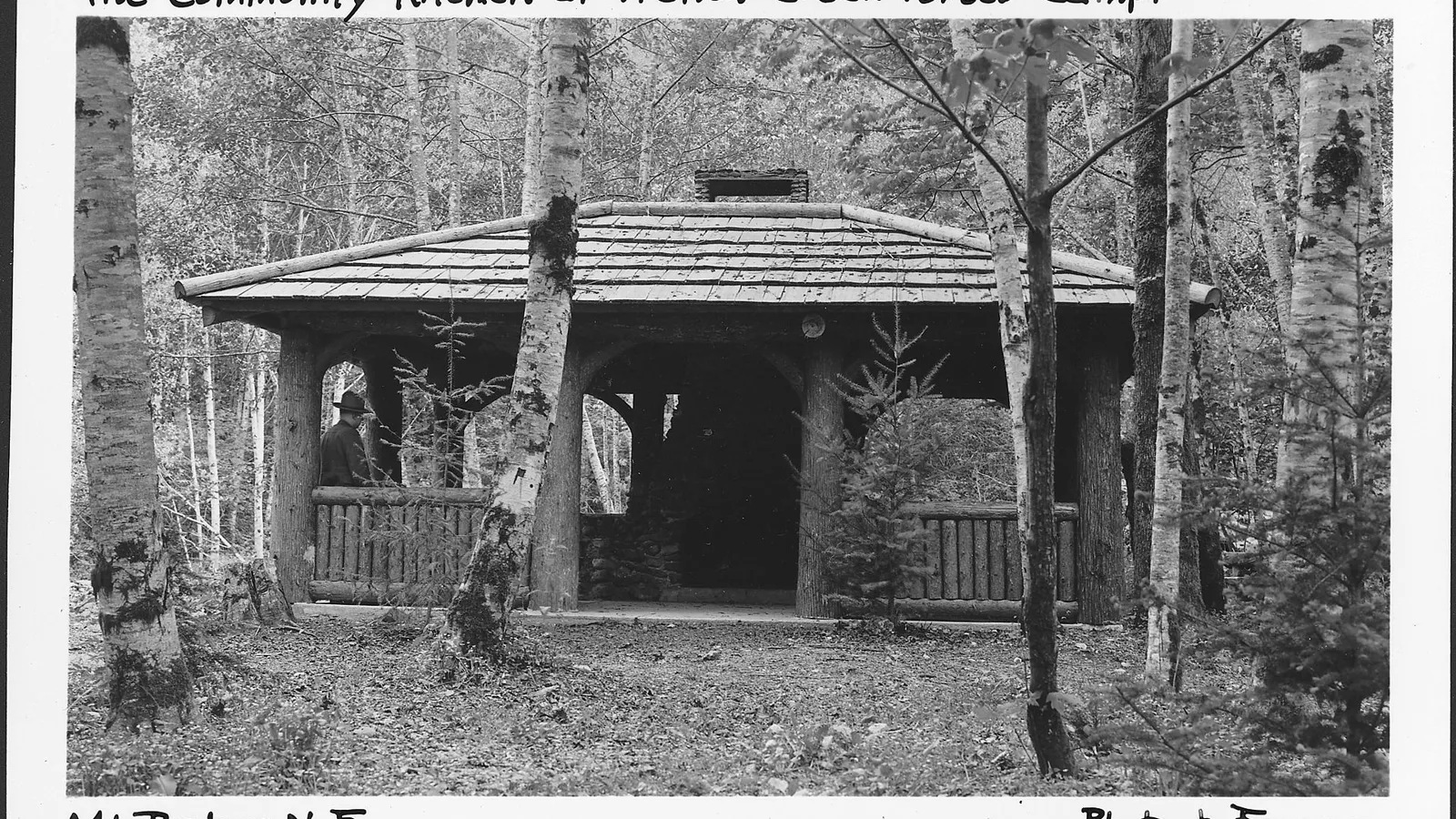
Pack a trash container that closes securely. Separate recyclables only if a confirmed facility accepts them; otherwise pack them out. How to leave a campsite better than you found it covers microtrash and final inspection.
Control Fire and Hot Equipment
Use a campfire only when permitted, in the designated ring, and never as the sole cooking plan. Keep it small and attended. Have enough water to extinguish it, then drown, stir, and repeat until every coal is cold to the touch.
Create a heat-safe landing place for hot lids and pots. Never set them on plastic tablecloths, dry grass, tent floors, or cooler lids. Announce “hot” before moving cookware and keep the route clear. Long utensils reduce reach over flame.
Purchase firewood locally when instructed so pests do not travel between forests. Do not cut live vegetation. Fire rules can change during the trip, so recheck notices rather than relying on a pre-trip screenshot.
Make the Kitchen Wildlife-Safe
Animals follow odor and opportunity, not whether humans call an item food. Secure grease, dishwater solids, cans, coolers, utensils, trash, soap, and scented toiletries. Never store them in a tent where prohibited and never feed wildlife.
Clean spills and crumbs immediately. Keep food within arm's reach while it is out. When the meal ends, complete cleanup and storage before relaxing elsewhere. How to keep animals away from your campsite explains behavior and storage without unreliable repellents.
Family Frontcountry Scenario
Use the picnic table as a linear station: sealed storage at one end, clean preparation next, stove at the far end, and serving on the opposite bench or a separate clean table. Put washing slightly downhill only where drainage and site rules permit, never where people walk through it.
Assign roles. One adult manages flame and hot pots; another supervises children or handles serving. Place drinks outside the cooking zone so people do not reach past burners. Use colored bins or labels to make clean, dirty, food, and nonfood gear obvious.
For late arrival, serve a no-cook meal. Establishing shelter and a complex kitchen in darkness multiplies mistakes. How to set up a campsite gives an arrival sequence.
Solo Car-Camping Scenario
A solo kitchen can occupy one end of a picnic table. Keep the stove within easy control, cooler below the shaded end only if wildlife rules allow, and one compact wash basin ready. Choose one-pot meals so the dirty zone stays small.
Do not relax standards because nobody else shares the site. A solo camper has no second person to notice a fuel leak, unstable pot, or food left out. Keep phone or emergency communication accessible, tell someone the itinerary, and finish cleanup before dark.
Backcountry Scenario
Backcountry kitchens are compact, but zones still exist. One clean groundsheet or durable surface holds unopened food; a separate area holds the stove; the eating utensil becomes the cleaned serving tool; and waste goes immediately into the designated odor-proof storage system.
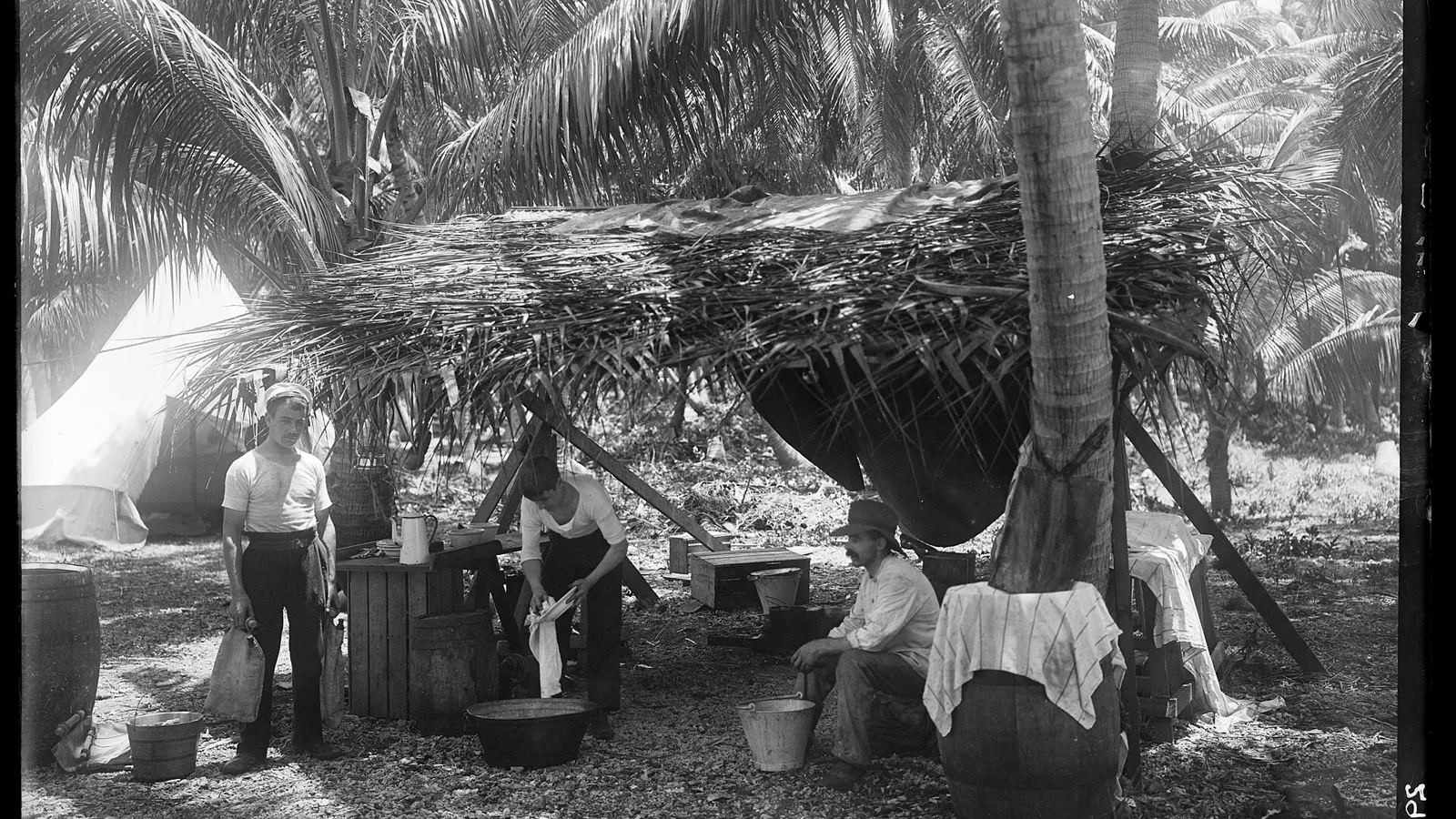
Cook and store food at the distances required locally. Use a stable stove base and only an approved windscreen. Carry treatment for all cooking water and a no-cook reserve in case the stove fails. Do not wash directly in natural water or scatter food particles.
Common Mistakes
Unpacking before choosing storage
Food ends up unattended while the locker or bear container is found. Establish secure storage first.
Putting the cooler beside the stove
Heat and repeated opening warm food. Place cold storage in shade outside the hot-work triangle.
Allowing clean and dirty paths to cross
Raw packaging and used plates should never pass over ready-to-eat food. Use a one-way flow.
Cooking beneath a canopy without clearance
Overhead fabric, poor ventilation, and trapped carbon monoxide create severe hazards. Follow stove and site rules; default to open outdoor air.
Treating potable water as unlimited
Remote taps can fail or be shut off. Carry capacity and a treatment backup.
Leaving washed cookware outside
It still carries food odors. Store it according to wildlife requirements.
Blocking the main campsite path
Hot pots and fuel should never sit between tents, vehicles, restrooms, and the picnic area.
Camp Kitchen Checklist
- Check fire, stove, water, food-storage, and wastewater rules.
- Locate durable cooking space, food locker, water, trash, and exit routes.
- Establish secure storage before opening food.
- Separate storage, clean prep, stove, serving, washing, and waste zones.
- Keep raw foods sealed, low in the cooler, and away from ready-to-eat food.
- Place the stove outdoors on a stable approved surface with full clearance.
- Set up handwashing before meal preparation.
- Keep a food thermometer and cooler thermometer accessible.
- Strain wastewater and pack out food particles.
- Store all food, trash, grease, cookware, and scented products after use.
- Extinguish permitted fires completely.
- Inspect for crumbs and microtrash before leaving.
Frequently Asked Questions
How far should a camp kitchen be from the tent?
Follow location-specific wildlife and campground rules; required distances vary. At minimum, keep all combustion outdoors and far enough from shelter fabric and dry vegetation to meet manufacturer and land-manager clearances.
Can I put a stove on a picnic table?
Only when the table is level, stable, heat-compatible, allowed by the campground, and consistent with stove instructions. Protect people from hot pots without using an unsafe improvised shield.
How do I organize one small table?
Move left to right from sealed ingredients to clean prep, stove, and serving. Put dirty items directly into a separate basin rather than back on the prep surface.
Where should the cooler go?
In shade, away from stove heat, with minimal opening, and in the approved wildlife-resistant storage location whenever unattended.
Can I cook in a tent vestibule when it rains?
No as a general setup. Fire, heat, fuel leaks, and carbon monoxide make enclosed shelter cooking dangerous. Use an allowed outdoor arrangement or a no-cook meal.
How should I dispose of dishwater?
Scrape and strain solids into trash, then follow the site's wastewater rule. Never pour soapy or food-contaminated water into lakes or streams.
Final Takeaway
A camp kitchen works when its layout makes the safe action the easy action. Establish storage first, create a one-way clean-to-cooked workflow, isolate heat and fuel, build handwashing before food preparation, and close every meal with wildlife-safe cleanup. Scale the same zones down for solo or backcountry travel rather than abandoning them.
Sources and Further Reading
- USDA Food Safety and Inspection Service, Food Safety While Hiking, Camping & Boating.
- USDA Food Safety and Inspection Service, Safe Minimum Internal Temperature Chart.
- U.S. National Park Service, campground food-storage and fire-safety guidance.
- U.S. Centers for Disease Control and Prevention, carbon monoxide poisoning prevention guidance.
- Leave No Trace Center for Outdoor Ethics, food, fire, and wastewater principles.