Practical Camping Guide
How to Cook While Camping: A Safe, Practical Guide
To cook while camping, plan simple meals before leaving, prep ingredients at home, carry a stable outdoor stove and enough approved fuel, separate raw food from ready-to-eat food, and use a food thermometer rather than appearance to judge doneness. Cook only outdoors in a ventilated area away from tents and dry vegetation. Store food, trash, cookware, and scented items exactly as the campground or land manager requires.
By Danny WalkerUpdated 13 min read
To cook while camping, plan simple meals before leaving, prep ingredients at home, carry a stable outdoor stove and enough approved fuel, separate raw food from ready-to-eat food, and use a food thermometer rather than appearance to judge doneness. Cook only outdoors in a ventilated area away from tents and dry vegetation. Store food, trash, cookware, and scented items exactly as the campground or land manager requires.
For most developed campgrounds, a two-burner propane stove gives the easiest control. For backpacking, use a compact stove compatible with the trip's fuel and conditions, and favor boil-based meals. A campfire should be optional—not the only cooking plan—because bans, rain, wind, or unavailable firewood can make it unusable.
Choose a Cooking Method
| Method | Best use | Main tradeoff | Safety priority |
|---|---|---|---|
| Two-burner propane stove | Frontcountry meals for families | Bulky stove and fuel | Level surface, outdoor ventilation, leak checks |
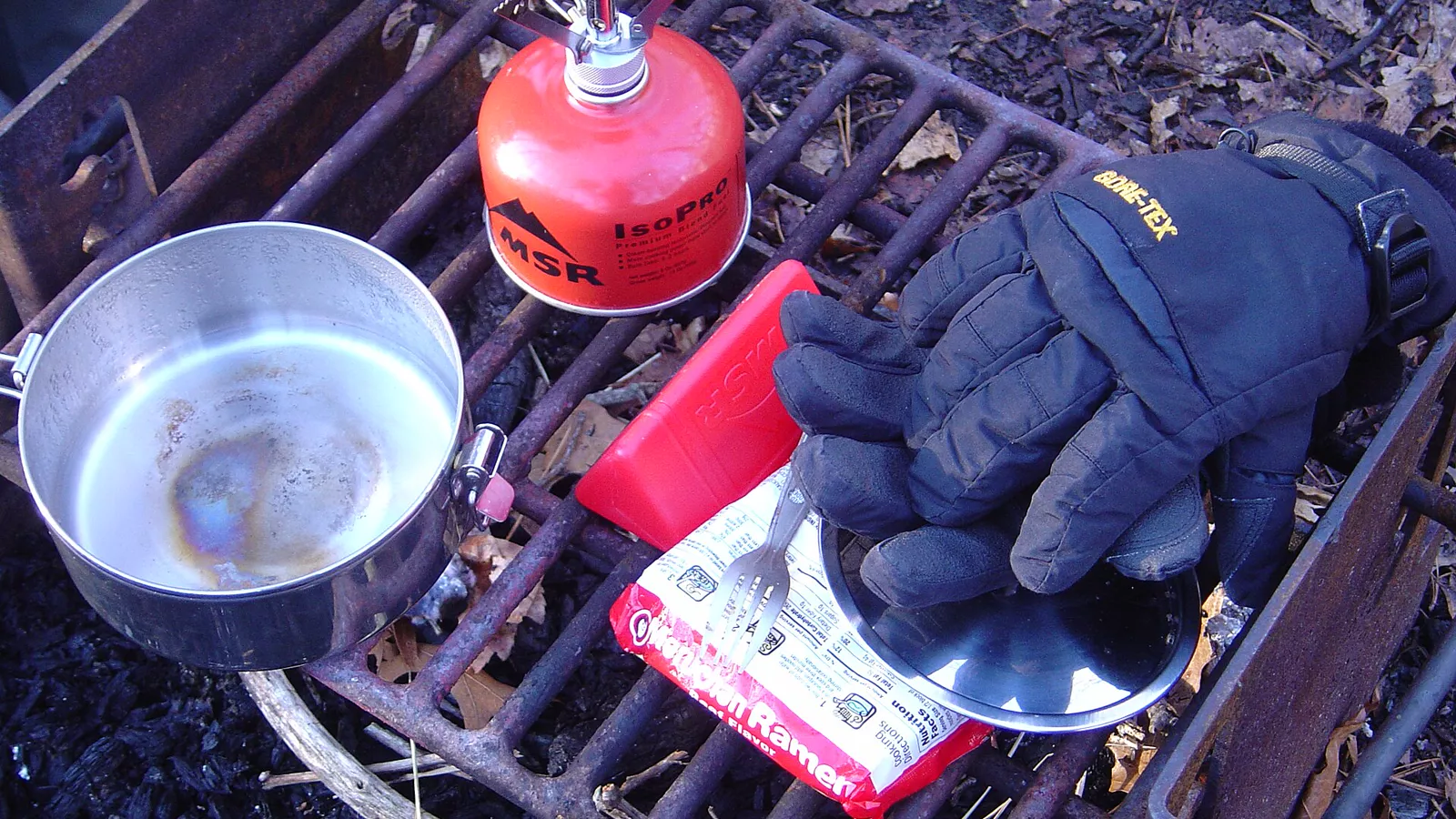
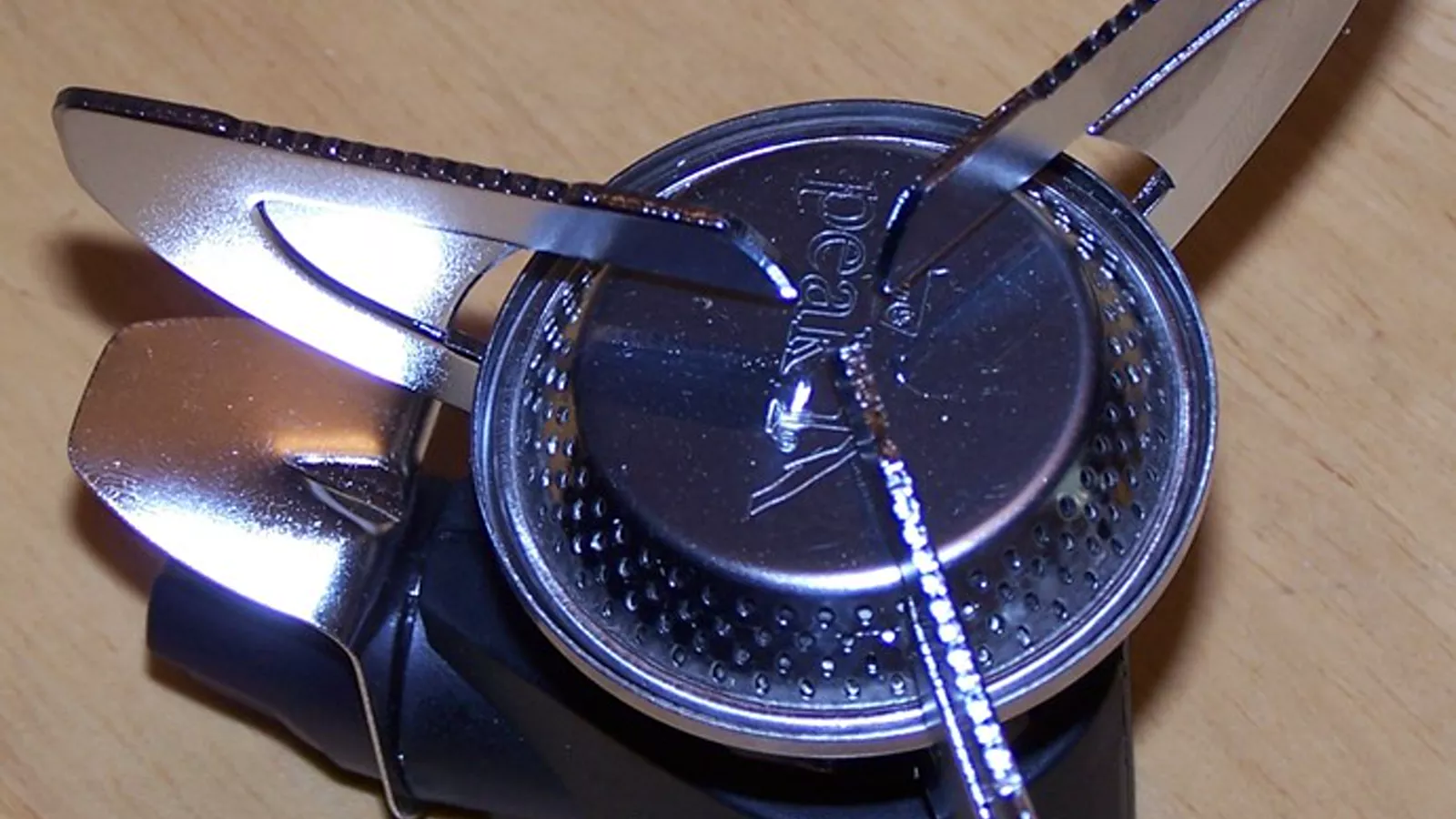
| Compact canister stove | Backpacking and boiling water | Less stable with large pots | Use compatible fuel and a stable base |
| Liquid-fuel stove | Cold weather or longer remote trips | More complex priming and maintenance | Practice outdoors before departure |
| Campfire grate | Permitted frontcountry fire cooking | Slow, weather-dependent heat | Follow restrictions; extinguish completely |
| No-cook meals | Fire bans, travel days, emergencies | Limited menu and texture | Maintain cold chain for perishables |
Choose the method before writing the menu. A large skillet dinner does not belong on a narrow ultralight burner, and a recipe requiring long simmering consumes unexpected fuel. Check current fire rules and campground equipment restrictions shortly before departure.
Plan the Menu Backward From the Trip
List each meal, snack, beverage, and ingredient by day. Then note which items require refrigeration, how much water they need, what pot or utensil they use, and how long the stove must burn. This exposes overloaded coolers and fuel shortages while you can still revise.
Use perishables early and shelf-stable foods later. For a short car-camping trip, the first dinner can use safely chilled meat and pre-cut vegetables; later meals can rely on sealed tuna, pasta, beans, dehydrated ingredients, or other stable choices. Backpackers should calculate portions by energy needs and carry food in packaging compatible with local wildlife rules.
Prep at home where clean water, lighting, refrigeration, and large work surfaces are available. Wash produce, measure spices, portion ingredients, and label bags. Do not partially cook meat at home for later finishing unless following validated food-safety guidance; partial cooking can allow harmful organisms to survive and grow.
Build a Safe Kitchen Zone
Use a designated cooking area when provided. Otherwise select a durable, level outdoor surface away from tents, dry grass, overhanging fuel, and foot traffic. Keep children and pets outside a clear stove zone. Position pot handles inward without placing them above another burner.
Never operate a stove, grill, charcoal appliance, or fuel-burning heater inside a tent, vehicle, enclosed canopy, or poorly ventilated shelter. Carbon monoxide is colorless and odorless and can incapacitate people before they recognize danger. “Cracking a window” does not make indoor combustion safe.
Keep water or an appropriate extinguisher accessible, but prevent it from becoming contaminated for drinking. Know how the stove shuts off before lighting it. If you smell fuel, close the valve, extinguish all flames, move people away, and follow the manufacturer’s leak procedure.
Pack the Cooking System, Not Random Utensils
For each menu item, identify its pot, lid, spoon, knife, board, bowl, and cleanup method. A lid reduces boil time and fuel consumption. One appropriately sized pot can handle boil-based backpacking meals, while frontcountry cooks may add a skillet and second pot.
Core equipment usually includes:
- Stove, compatible fuel, lighter, and waterproof backup ignition.
- Stable cookware with lids and insulated handles.
- Long spoon, tongs, can opener if needed, and a sharp knife with sheath.
- Separate cutting surfaces or a system that keeps raw animal foods away from ready-to-eat food.
- Food thermometer, biodegradable soap, wash basin, sponge, and drying cloth.
- Pot holder, trash bags, foil only where appropriate, and sealable food storage.
- Clean water containers and a treatment method when potable water is unavailable.
Do a complete test meal at home outdoors. Confirm the windscreen is permitted for that stove, the pot is stable, fuel connections do not leak, and every package can actually be opened.
Keep Cold Food Cold
USDA guidance uses 40°F (4°C) as the upper safe refrigerator temperature. Pack chilled or frozen food directly from the refrigerator or freezer into an insulated cooler with enough ice or frozen packs. A full cooler stays cold longer; fill safe empty space with additional cold packs.
Use a cooler thermometer. Keep drinks in a separate cooler if frequent opening would warm food. Store the food cooler in shade, open it briefly, and return ingredients promptly. Never assume lake, stream, or nighttime air is a safe refrigerator; temperatures vary and water can contaminate packaging.
Prevent raw meat juices from reaching produce, cheese, beverages, or cooked food. Use sealed, leak-resistant containers and place raw items low in the cooler. For a detailed workflow, use how to keep food safe while camping.
Cook to Safe Internal Temperatures
Color, firmness, and cooking time cannot reliably confirm that food is safe. Use a food thermometer in the thickest part, avoiding bone and the pan. USDA minimum internal-temperature guidance includes 165°F (74°C) for poultry and leftovers; 160°F (71°C) for ground meats; and 145°F (63°C) plus a three-minute rest for whole cuts of beef, pork, veal, and lamb. Verify current official guidance for the exact food.
Bring sauces and reheated foods to appropriate safe temperatures, and avoid placing cooked food on a plate that held raw meat. Serve promptly. The common “danger zone” is 40–140°F (4–60°C); discard perishable food left in that range longer than two hours, or one hour when ambient temperature is above 90°F (32°C).
When in doubt, discard the food. A remote campsite is a poor place to gamble on illness.
Use Safe Water for Cooking and Cleanup
Potable campground taps are the simplest source. If a notice says water is unavailable or requires boiling, follow the land manager's current instruction. Clear backcountry water can contain microorganisms. Use a treatment method appropriate to the location and contaminants; boiling, filtration, chemical treatment, and ultraviolet systems have different limits.
Carry enough capacity for drinking, cooking, and cleanup plus a contingency. How to camp without running water helps estimate storage and build a two-container system that keeps untreated water separate.
Do not rinse raw meat. Splashing spreads contamination. Wash hands with soap and safe water before food preparation, after handling raw animal food, after restroom use, and before eating. Hand sanitizer is useful when soap and water are unavailable, but it does not remove every contaminant or replace washing visibly dirty hands.
Cook With Fire Only When It Is Allowed
Check current restrictions, weather, and site rules. Use an established fire ring where required. A legal fire can still be a poor cooking choice in strong wind or dry conditions. Never leave it unattended, keep it small, and have enough water to extinguish it.
Use locally purchased firewood where rules allow; moving wood spreads forest pests. Do not cut live vegetation or strip campsites. When finished, drown the fire, stir, add more water, and confirm every coal is cold to the touch before leaving. Ash that looks gray can remain dangerously hot.
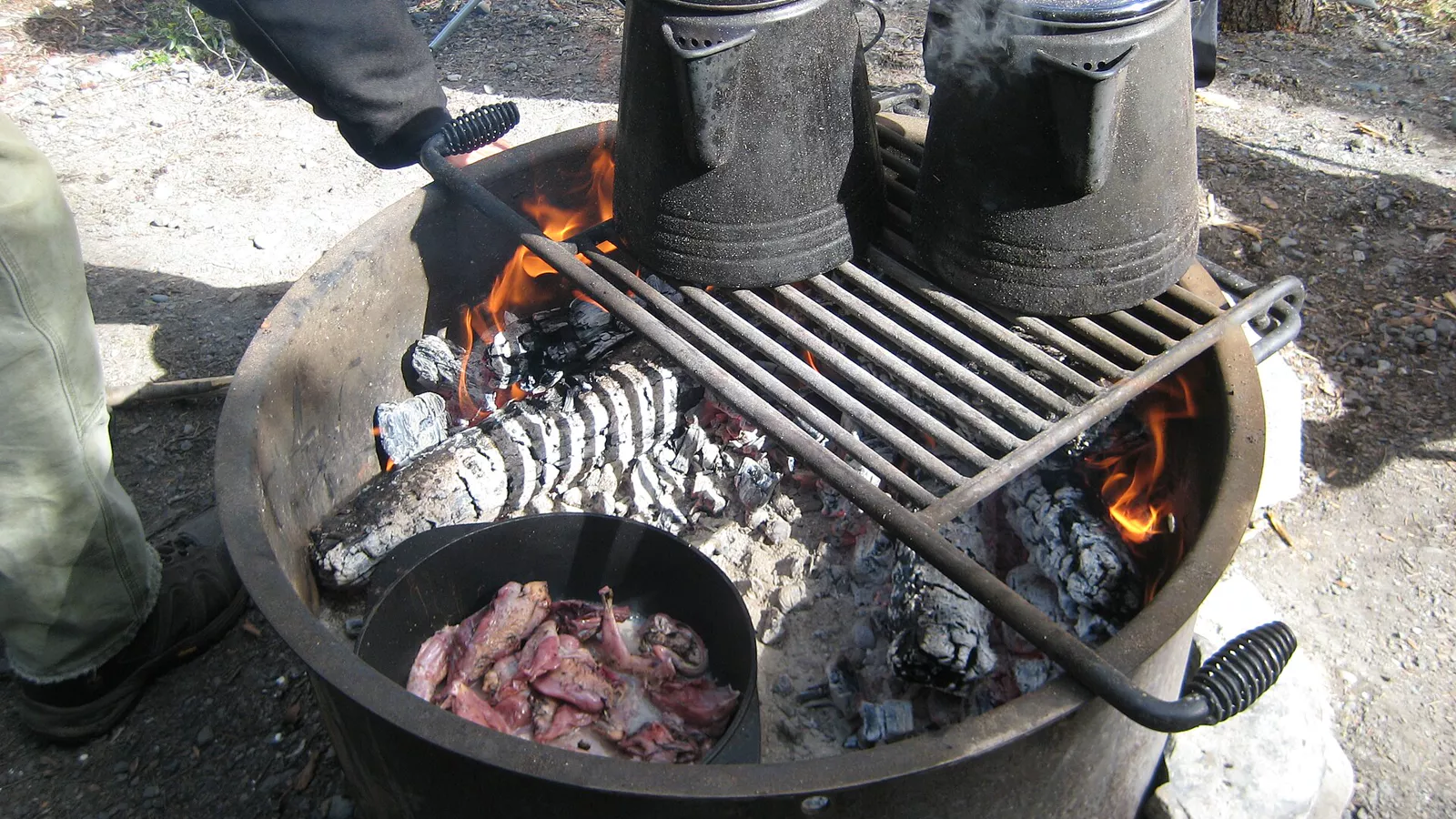
Fire heat is difficult to regulate. Cook over a stable coal bed or approved grate rather than tall flames. Wear fitted natural-fiber or heat-appropriate clothing, use long utensils, and never apply liquid fuel to a burning fire. Maintain a stove backup so dinner does not depend on lighting a fire.
Store Food and Scented Items Correctly
Wildlife-safe storage rules differ by location. Some areas require a hard-sided vehicle, food locker, certified bear-resistant container, or suspended storage. Follow the land manager's exact rule rather than copying another campground's routine.
Treat cookware, grease, trash, toothpaste, pet food, and other scented items like food. Never keep them in the tent in bear country or where rules prohibit it. Do not leave a cooler unattended simply because its lid is closed. How to keep animals away from your campsite explains storage, distance, and behavior without relying on ineffective scent tricks.
Never feed wildlife. It changes behavior, endangers animals and visitors, and may lead to the animal being killed. Clean crumbs immediately and supervise food whenever it is out.
Wash Dishes Without Polluting the Site
Scrape food particles into trash first. Use a small amount of biodegradable soap and strain wash water so solids can be packed out. Dispose of wastewater according to local rules, well away from water, camps, and trails when dispersal is permitted. “Biodegradable” does not mean safe to pour into a stream.
Separate washing, rinsing, and sanitizing as conditions require. Let cookware dry before storage. Do not burn foil, plastic, cans, food scraps, or trash; incomplete burning leaves residues and odors.
Organize the kitchen so clean tools never return to the raw-food zone. How to keep your campsite organized provides a practical zone system.
Frontcountry Scenario: Family Weekend
A two-burner stove offers stable pots and independent heat control. Plan one-pan breakfasts, sandwiches or no-cook lunches, and dinners with ingredients prepared at home. Use two coolers if possible: one for food, opened rarely, and one for drinks.
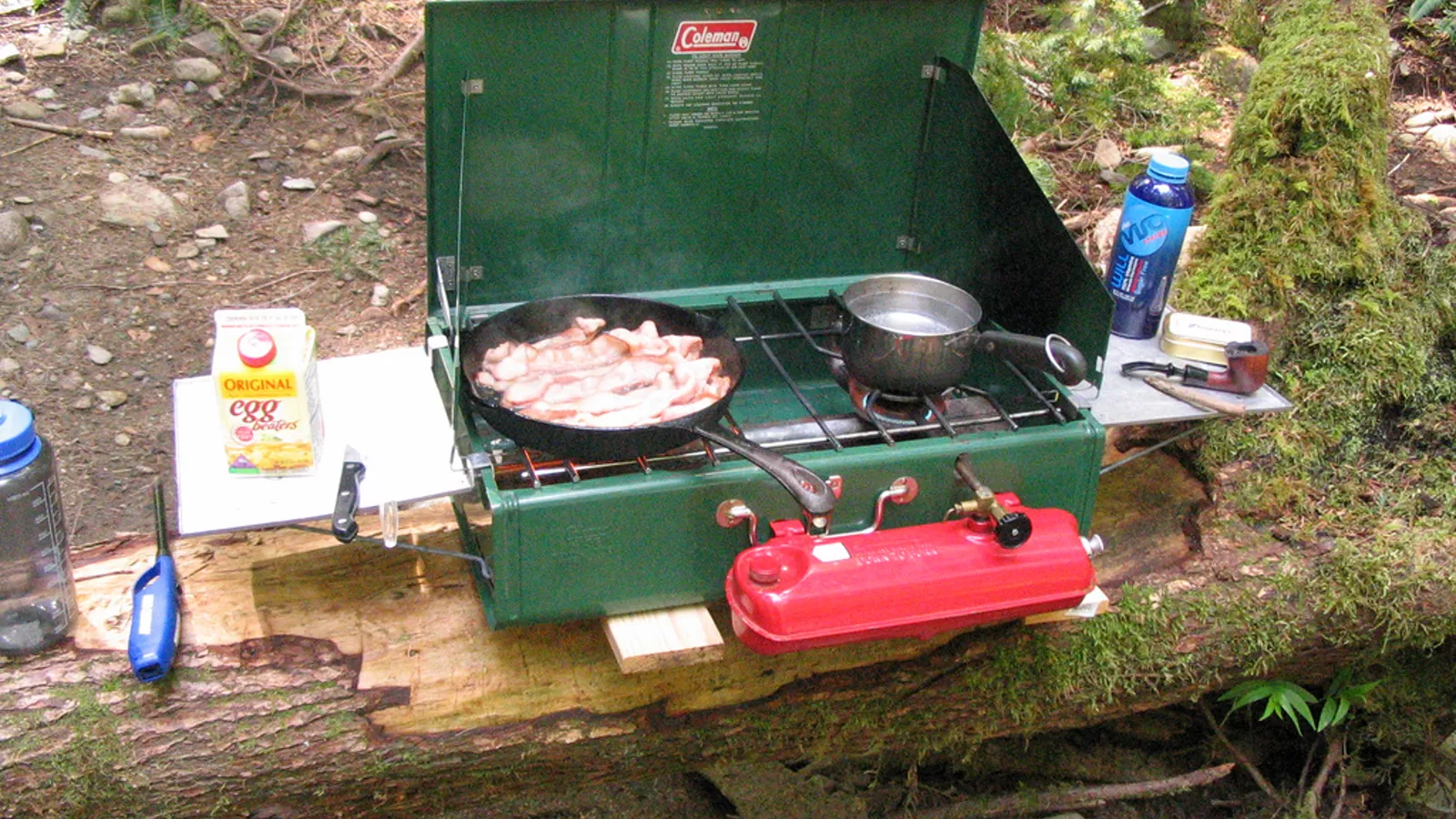
Set the stove on the designated table only if campground and manufacturer guidance permit it and the surface is stable. Keep the fuel connection away from heat. Assign adults clear roles for cooking, child supervision, and cleanup; a crowded table with knives and hot pots is not a social gathering point.
Bring a no-cook dinner for late arrival. Setting up tents and handling raw food in darkness creates avoidable errors. Review how to set up a campsite to establish shelter, food storage, and cooking zones in a safe order.
Backcountry Scenario: Lightweight Stove Meal
Favor food that needs only boiling water or a short simmer. Measure water and fuel at home, then carry a safe reserve. Set the stove on a stable durable surface outdoors, away from dry vegetation. Use only cookware and windscreens approved for that stove; enclosing a canister can overheat it.
Cook away from the sleeping area where local wildlife guidance directs, and store food immediately after eating. Pack out all packaging and strained food particles. In water-limited terrain, choose meals and cleanup methods that do not require excessive washing.
If the stove fails, the trip should still have edible food. Carry enough no-cook calories to reach the next safe exit rather than treating an ignition source as infallible.
Scenario: Rain or Fire Ban
A fire ban makes the campfire menu irrelevant and may also restrict certain stoves. Check which devices remain permitted. If an approved stove can operate, use it outdoors in an exposed but stable location—never move it into the tent. A properly managed tarp may create weather cover only when the stove manufacturer and land manager allow adequate height, ventilation, and clearance.
No-cook meals are often the safer answer: tortillas, shelf-stable spreads, packaged fish, crackers, hard cheese where temperature guidance permits, and dried foods. Keep every item appropriate to dietary and storage needs. How to camp without electricity helps remove dependence on powered coolers and appliances.
Common Mistakes
Depending on a campfire
Rain, wind, bans, and missing firewood can eliminate it. Carry an allowed stove or no-cook plan.
Cooking inside the tent
Flame and carbon monoxide can kill. All fuel-burning cooking belongs outdoors with required clearance and ventilation.
Guessing whether meat is done
Appearance is unreliable. Use a clean food thermometer and current USDA minimum temperatures.
Mixing raw and ready-to-eat tools
Separate boards, utensils, plates, and storage. Wash hands after handling raw foods.
Trusting the cooler without a thermometer
Ice remaining does not prove every area stayed at 40°F or below. Measure and minimize opening.
Leaving “only clean dishes” outside
Food odors remain on cookware. Store it with other attractants according to local rules.
Pouring wash water into vegetation or streams
Food particles and soap attract wildlife and pollute water. Strain and dispose as directed.
Packing complicated recipes
Long ingredient lists increase cold storage, cleanup, fuel, and cross-contamination opportunities. Simplify at home.
Pre-Trip Cooking Checklist
- Check fire bans, stove rules, potable-water status, and wildlife-storage requirements.
- Write a meal-by-meal menu and pack a no-cook contingency.
- Test stove, connectors, ignition, and approved cookware outdoors.
- Pack enough compatible fuel with a reasonable reserve.
- Chill perishables before loading and include a cooler thermometer.
- Separate raw food from produce and cooked food in leak-resistant containers.
- Pack a calibrated food thermometer and know current safe temperatures.
- Bring safe water capacity, treatment backup, soap, and handwashing supplies.
- Pack trash bags, a strainer, wash basin, and storage required for scents.
- Keep cooking outside and preserve clearance from tents and vegetation.
- Extinguish every fire completely and pack out all trash.
Frequently Asked Questions
What is the easiest food to cook while camping?
One-pot pasta, oatmeal, couscous, soup, tacos with prepped fillings, and boil-based dehydrated meals minimize utensils and fuel. Match the recipe to refrigeration and water availability.
Can I cook in a tent vestibule?
No as a general plan. Flame, heat, fuel leaks, and carbon monoxide create severe risk. Cook outdoors following stove and land-manager clearance requirements.
How much fuel should I bring?
Estimate from the stove maker's data, meal boil times, water temperature, wind, elevation, and group size, then add a reserve. Test the actual menu before travel.
How do I know food stayed cold enough?
Use a cooler thermometer and keep perishable food at 40°F (4°C) or below. If safe storage cannot be confirmed, discard it.
Can I wash dishes in a lake or stream?
No. Carry water away from the source, wash with minimal soap, strain particles, and dispose of wastewater according to local rules.
What if bears are not common at my campground?
Raccoons, rodents, birds, and other animals still learn from human food. Follow all storage rules and secure food, trash, and scented equipment.
Is campfire cooking better than a stove?
It can be enjoyable where permitted, but it is less controllable and more weather-dependent. A stove is usually faster, cleaner, and easier for food-temperature management.
Final Takeaway
Successful camp cooking starts before the trip: select the cooking method, simplify the menu, prep at home, and plan cold storage, water, fuel, and cleanup together. At camp, cook outdoors, measure food temperatures, separate raw and ready-to-eat foods, and secure every attractant. A compact no-cook backup protects the trip when weather, fire restrictions, or equipment change the plan.
Sources and Further Reading
- USDA Food Safety and Inspection Service, Food Safety While Hiking, Camping & Boating.
- USDA Food Safety and Inspection Service, Safe Minimum Internal Temperature Chart.
- U.S. National Park Service, Fire Safety and campground food-storage guidance.
- U.S. National Park Service, Bear Safety: Storing Food.
- U.S. Centers for Disease Control and Prevention, carbon monoxide poisoning prevention guidance.
- Leave No Trace Center for Outdoor Ethics, food, fire, and wastewater principles.