Practical Camping Guide
Camping Stove vs Backpacking Stove: Which One Fits Your Trip?
Choose a camping stove when you travel by vehicle, cook for two or more people, use frying pans, or want two burners and fine heat control. Choose a backpacking stove when every ounce and cubic inch must travel on your back and your meals mainly require boiled water or one small pot. Neither category is universally better: the useful question is whether cooking capability or carried weight is the harder constraint on this trip.
 By Danny WalkerUpdated 16 min read
Choose a camping stove when you travel by vehicle, cook for two or more people, use frying pans, or want two burners and fine heat control. Choose a backpacking stove when every ounce and cubic inch must travel on your back and your meals mainly require boiled water or one small pot. Neither category is universally better: the useful question is whether cooking capability or carried weight is the harder constraint on this trip.
A typical tabletop camping stove provides a broad, stable cooking platform and may run two pots independently. A backpacking stove reduces the burner, supports, and fuel system to a packable unit, often with one concentrated flame. Those designs produce different experiences even when their advertised heat output looks similar.
Quick Decision
- Car campground, family meals, real skillet cooking: camping stove.
- Human-powered travel, one or two people, boil-focused menu: backpacking stove.
- Base camp plus day trips: camping stove at the vehicle; a backpacking stove only if hot food travels away from base.
- Large group: multiple independently controlled camping burners, planned with redundancy.
- Emergency kit: select for the fuel you can store legally and rotate, not for the smallest catalog weight.
- Still split: build the menu first. The largest pot and most control-sensitive meal usually reveal the answer.
This choice belongs inside the wider process of how to set up a camp kitchen, because stove footprint, traffic, lighting, food storage, and a level noncombustible work surface interact.
Camping Stove vs Backpacking Stove Comparison
| Factor | Camping stove | Backpacking stove | What decides it |
|---|---|---|---|
| Burners | Commonly one or two; some systems expand | Usually one burner | Two simultaneous dishes favor camp stoves |
| Output | Often high total output across broad burners | Can be high, but often concentrated | Output alone does not equal fast real-world cooking |
| Fuel | Commonly propane, butane, or liquid fuel | Commonly threaded canister, liquid fuel, alcohol, or wood | Availability, temperature, rules, and trip length matter |
| System weight | Several pounds plus full-size fuel | Ounces to roughly a pound plus fuel | Human-powered mileage favors backpacking models |
| Pot stability | Wide grate and low center of gravity | Narrow supports; integrated systems vary | Wide, heavy pans need a stable platform |
| Simmer control | Usually easier and more forgiving | Excellent on some models, limited on others | Eggs, rice, sauces, and pancakes need control |
| Wind behavior | Windscreens may surround the cooking area | Small exposed burners can lose efficiency; remote systems vary | Design and safe windshield use matter more than claims |
| Group fit | Good for 2–6+ with suitable burners | Best for solo or pairs; several units needed for groups | Calculate meals and pot cycles, not headcount alone |
| Packability | Vehicle or base-camp equipment | Designed for a backpack | Measure packed system, including canister and pot |
| Best use | Developed campground and tailgate-style base camp | Trail, bikepacking, paddling with portages | Transportation mode is the first filter |
These are category tendencies, not guarantees. A compact one-burner tabletop unit may offer less control than a premium remote-canister stove, and a strong upright canister stove can boil faster than an underpowered camping burner. Compare the complete system and the manufacturer's operating limits.
The Difference Is More Than Size
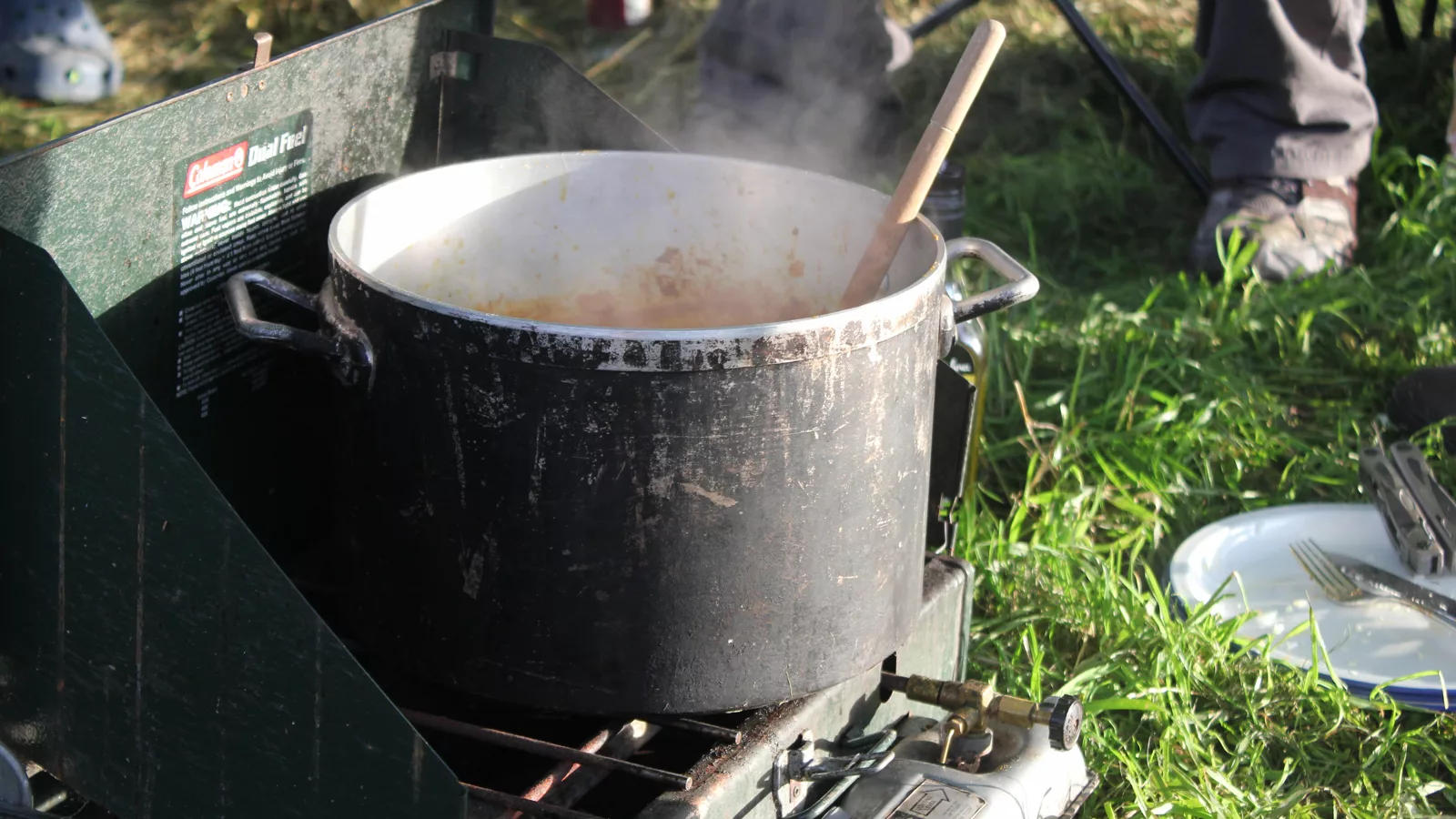
A camping stove is a work surface with a fuel appliance built around cookware. Its wider grate supports household-style pans, and a lid or side panels may provide some wind protection. Two-burner models let pasta water and sauce run at different settings. The trade-off is bulk, heavier fuel containers, and a larger safe operating zone.
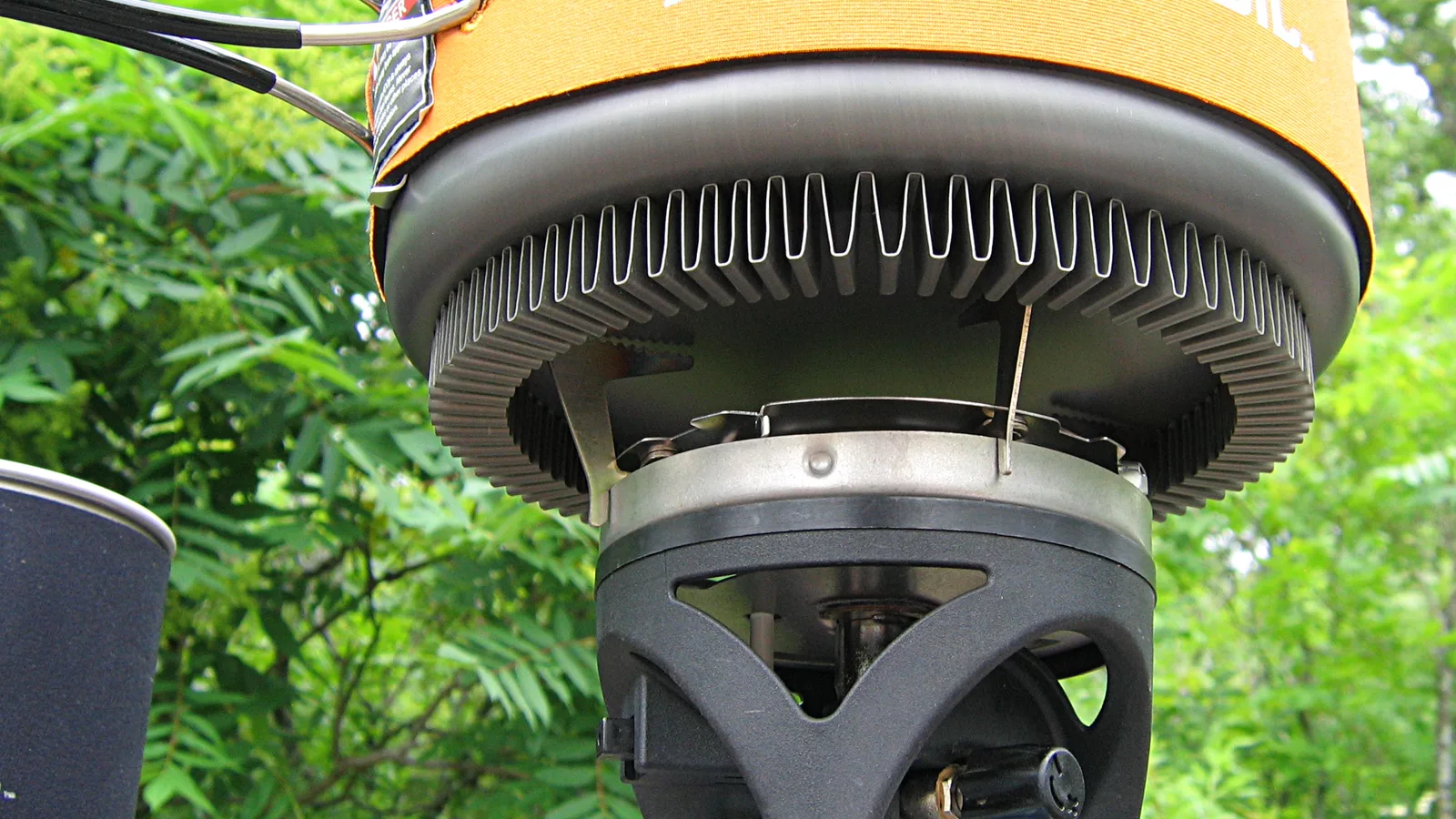
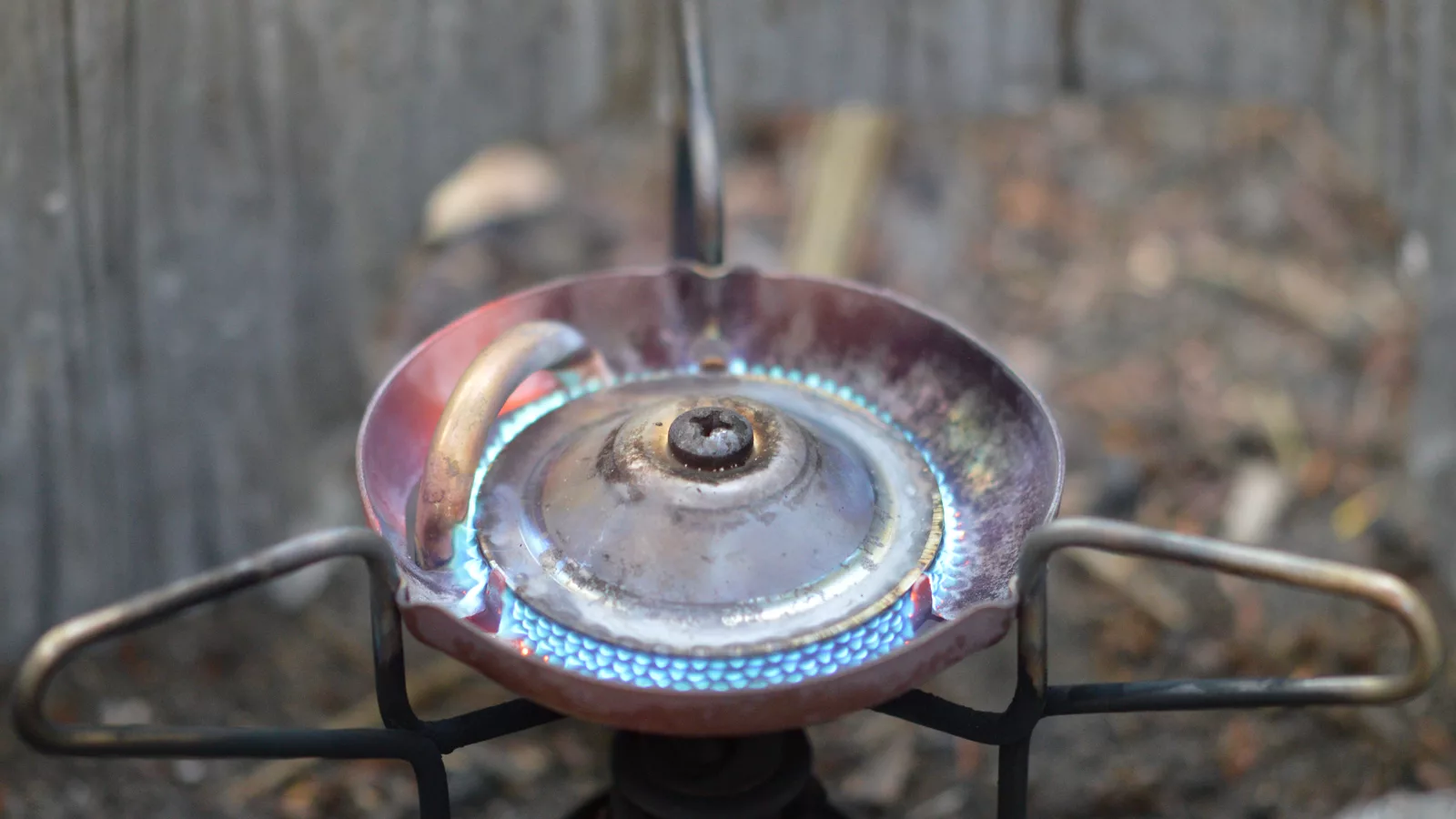
A backpacking stove is part of a carried cooking system. An upright canister model screws onto its fuel canister; a remote-canister or liquid-fuel model sits on the ground with a hose to the fuel; an integrated stove locks to a dedicated pot. Each saves space differently. Pot, windscreen, base, igniter, repair parts, and fuel all count toward real packed weight.
Do not compare only burner BTUs or watts. Boil time depends on pot geometry, lid use, ambient temperature, starting water temperature, wind, elevation, fuel pressure, and user technique. A powerful flame spilling around a small pot can waste fuel. A lower flame protected by an approved design may deliver more heat to the water.
Burners, Output, and Cooking Capacity
One burner is enough when the meal sequence is boil, steep, and eat. It becomes a bottleneck when four people want hot drinks while breakfast cooks. A two-burner camp stove reduces serial waiting and lets one pan simmer while the second receives higher heat.
For group planning, list each heat task and its duration. A dinner requiring rice for twenty minutes, sautéed vegetables for ten, and a sauce held warm occupies more burner-minutes than freeze-dried meals. Use how to cook while camping to simplify the workflow before buying more hardware.
Heat output is useful only alongside burner shape and adjustment range. Broad burners spread heat across a skillet; a narrow torch-like flame creates a center hot spot. Maximum output helps boil large volumes, while a valve that stays steady near low flame matters more for simmering. Published ratings are not a standardized promise of meal speed across different pots and weather.
Fuel: Match It to Conditions and Logistics
Fuel choice can overturn an otherwise obvious decision.
- Propane cylinders are common for campground appliances and convenient for repeated group cooking, but cylinders and hoses add bulk. Inspect connections and follow transport, storage, and disposal rules.
- Threaded isobutane-propane canisters are compact and simple for backpacking. Cold reduces vapor pressure, and canisters become less predictable near empty. Use only manufacturer-approved fuel and configurations.
- Liquid-fuel stoves can suit long, cold, or remote journeys and refillable bottles, but priming, maintenance, and spill control demand skill.
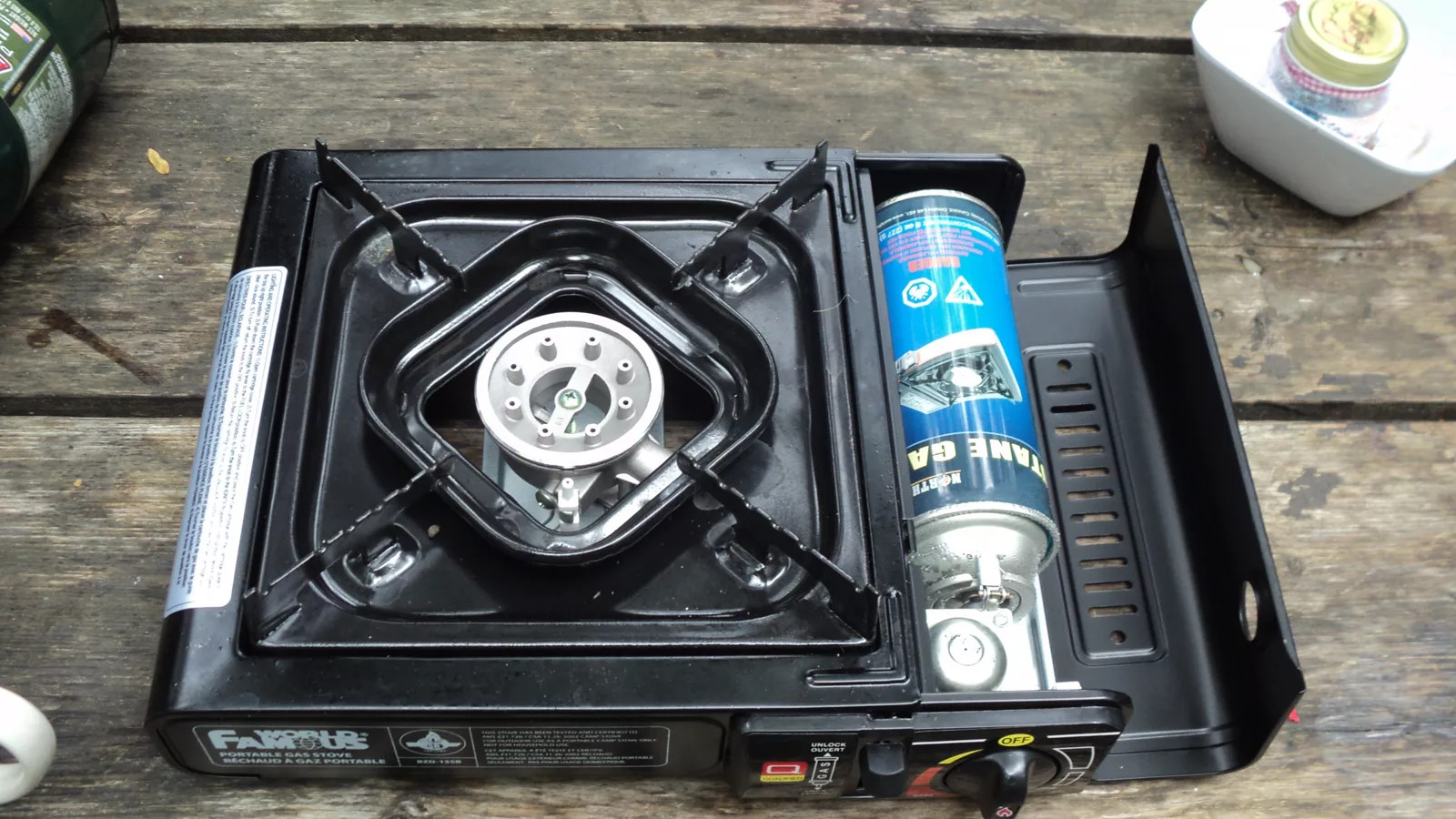
- Butane cassette stoves offer a familiar tabletop format, yet model-specific temperature, ventilation, pan-size, and canister-position limits are critical.
- Alcohol and wood-burning stoves may be light, but fire restrictions, poor flame control, slower cooking, and fuel availability can make them unacceptable. A wood stove is still a fire and may be prohibited when gas stoves with shutoff valves are allowed.
Check current land-manager fire rules shortly before departure. Never assume a stove is allowed because it has no visible campfire ring, and never improvise an adapter between incompatible valves. Carry fuel outside occupied passenger space as the manufacturer and local law require, protected from excessive heat and physical damage.
Weight and Packability: Count the Entire System
Marketing weight may omit the pot, windscreen, stabilizer, pump, fuel bottle, canister, case, or ignition backup. Weigh the trip-ready kit. For a short solo outing, a light canister stove and small pot usually beat even the smallest tabletop stove. For a large group, two tiny burners plus multiple canisters and extra pots may not be simpler than one stable camp-stove system.
Fuel efficiency changes the crossover on longer trips. Estimate water boils and cooking time, then include a conservative reserve without carrying duplicate half-empty containers blindly. Practice at home outdoors so you learn actual consumption with your pot and normal flame setting.
Packability also means shape. A compact stove that nests inside a pot protects parts and uses dead space. A camping stove's flat case slides into a vehicle well but needs separation from food and impact protection. Keep fuel detached during transport unless the instructions expressly state otherwise.
Stability and Cookware Fit
Stability is a safety feature. The stove must sit level on a firm, noncombustible surface, with all legs or supports fully deployed. The pot must remain within the maker's diameter and weight limits. Oversized cookware can tip narrow backpacking supports, reflect heat toward a canister, or cover a cassette-stove compartment—all dangerous failure modes.
Camping-stove grates better accommodate skillets and medium stockpots, but that does not authorize restaurant-size pans. A heavy pot can make a folding table flex or place the handle into a traffic lane. Turn handles inward without positioning them above another burner.
Upright canister stoves have a tall center of gravity. A compatible canister stabilizer helps on approved models, but it does not make loose soil or a tilted rock safe. Remote-canister stoves generally sit lower and may support pots more confidently. Integrated systems can connect pot to burner, though they still need stable ground and strict manufacturer use.
Simmer Control and Wind Performance
If the menu includes oatmeal, eggs, pancakes, rice, or a thick sauce, evaluate the low end of the valve rather than only the headline output. Good simmer control means the flame remains even and adjustable without repeatedly going out. Two camp-stove burners also allow a low zone and a boil zone. Some backpacking stoves simmer very well; integrated boil systems and minimalist burners may prioritize speed instead.
Wind removes heat and can deflect flame toward equipment. Start with the stove's built-in or manufacturer-approved protection and orient the cooking station according to its manual. Never wrap a generic windscreen tightly around an upright canister stove: reflected heat can overheat the fuel container. Do not build a foil enclosure around hoses, valves, or cylinders.
A sheltered location is not an enclosed location. Use terrain or an appropriately placed freestanding barrier while maintaining the clearances and airflow required by the stove maker. If gusts make the flame unstable, extinguish it and wait or relocate. Do not keep opening the valve to overpower unsafe conditions.
Choice Matrix by Trip Style
Score each row that describes the actual trip, then look for the dominant side. Safety limits override the score.
| Trip requirement | Camping stove points | Backpacking stove points |
|---|---|---|
| Vehicle remains at the campsite | +2 | 0 |
| Gear carried more than one mile | 0 | +3 |
| Three or more diners | +2 | 0 |
| Mostly boil-only meals | 0 | +2 |
| Two dishes must cook together | +3 | 0 |
| Wide skillet or heavy pot | +2 | 0 |
| Strict pack-volume limit | 0 | +2 |
| Fine simmer is essential | +1 | +1 only for a proven simmering model |
| Severe cold or remote fuel resupply | Depends on fuel system | Depends on fuel system |
| Frequent fire restrictions | Choose a compliant shutoff model | Choose a compliant shutoff model |
A tie means the category label is not enough. Compare two specific systems using total packed weight, approved pot size, fuel availability, cold-weather limits, and the meal plan. A compact remote-canister stove may bridge both roles for two people, while a single-burner tabletop stove may suit a solo car camper who wants pan stability.
Practical Campsite Scenarios
Two adults at a drive-in campground
They plan coffee, eggs, vegetables, and one-pot dinners. A two-burner camping stove wins because it supports a skillet, makes parallel breakfast possible, and imposes little transport penalty. A backpacking stove could serve as backup, but purchasing one solely to save trunk space adds complexity without much benefit.
Solo hiker eating dehydrated meals
The cook needs about one small pot of hot water morning and evening. A simple backpacking stove, compatible canister, wind-conscious technique, and ignition backup fit the job. A two-burner camping stove offers unused capacity at a severe weight cost. Meal quantities can be planned with how much food to bring camping.
Family of five cooking for a weekend
The menu uses a griddle, saucepan, and kettle. A stable camp stove with two independently controlled burners is the better core. The family should verify the maximum pot size, place the stove where children cannot enter the cooking zone, and prep ingredients before ignition. Easy camping meals for beginners can reduce long burn times and crowded cookware.
Two paddlers with several portages
They have more volume than hikers but still carry every load between lakes. A robust backpacking stove or compact remote-fuel system may balance portability, pot stability, and weather performance. Fuel must be protected from water and transported under applicable rules. The decision changes if their route has no portages and a large group kitchen rides in the boat.
Base camp with day hikes
Use a camping stove for meals at the established site. Carry a backpacking stove only when the day's route and rules justify hot cooking; a cold lunch eliminates weight and fire exposure. This is often the best two-system case because each tool has a distinct location rather than duplicating every meal.
Cold, windy shoulder-season trip
Do not choose from category reputation. Read the exact stove and fuel instructions for low-temperature operation, use only approved configurations, and test outdoors in comparable conditions. Liquid fuel or certain remote-canister designs may be appropriate for trained users, but no stove should be moved into a tent to escape weather.
Stove Safety and Carbon Monoxide
Fuel-burning camp and backpacking stoves belong outdoors. Never operate one in a tent, vehicle, camper, cabin, garage, or other enclosed or partially enclosed space—even with a door or flap open. Carbon monoxide is colorless and odorless; ventilation that feels adequate is not proof of safety. CDC guidance specifically warns against portable camping stoves in tents and campers.
If anyone near combustion develops headache, dizziness, weakness, nausea, vomiting, chest pain, or confusion, move everyone to fresh air, extinguish the appliance only if that can be done without exposure, and seek emergency medical help. Do not re-enter a suspect space to retrieve gear.
For every use:
- Read the stove and fuel instructions before the trip.
- Inspect seals, hose, valve, threads, supports, and canister or bottle for damage.
- Place the stove outdoors on a level, stable, noncombustible surface away from dry vegetation and traffic.
- Keep the fuel in its required orientation and connect it without forcing threads.
- Check for leaks by the manufacturer-approved method; never search with a flame.
- Light with face and loose clothing away from the burner. Keep a suitable extinguishing method ready.
- Supervise continuously. Keep children, pets, and combustible gear outside the cooking zone.
- Turn off the stove, let it cool fully, then disconnect or pack it as instructed.
Refuel only after extinguishing and cooling, in a well-ventilated outdoor location away from ignition sources. Never heat a fuel canister, use a windscreen configuration the manufacturer forbids, or use a stove as a heater. Check land-manager restrictions and weather conditions each day.
Mistakes That Lead to the Wrong Stove
- Buying the highest output number: ignores burner shape, control, pot, and wind.
- Comparing stove-only weight: omits fuel, pump, case, stabilizer, and cookware.
- Planning around one giant pan: may exceed grate limits or overheat a canister compartment.
- Assuming all canisters connect: valve standards and approved fuels differ.
- Treating ignition as guaranteed: piezo igniters can fail; carry a safe backup method.
- Testing for the first time at camp: unfamiliar priming or assembly increases spill and flare risk.
- Cooking inside during rain: exchanges inconvenience for fire and fatal CO risk.
- Ignoring cleanup: elaborate pan meals demand water, time, and wildlife-safe waste handling. Coordinate the menu with how much water you need for camping.
Pre-Purchase Checklist
- Travel mode and maximum carried weight defined
- Number of diners and burner-minutes calculated
- Largest pot within the stove's documented limits
- Simmering versus boiling needs identified
- Complete system weight and packed volume compared
- Fuel available and legal at destination and during transport
- Expected temperature and wind within manufacturer limits
- Replacement seals, maintenance, and ignition backup understood
- Outdoor cooking space and clearance requirements available
- Local fire restrictions checked near departure
Before departure, rehearse one complete meal outdoors using the actual cookware. Time the sequence, observe stability, and measure fuel used. This is a workflow check, not a claim that one stove wins every performance test.
Frequently Asked Questions
Can I use a backpacking stove for car camping?
Yes, if its approved cookware capacity, stability, and single-burner workflow match the meal. It is often ideal for one person or boil-only food. It becomes frustrating or unsafe when asked to support oversized pans or feed a group faster than its design permits.
Can I take a camping stove backpacking?
Technically possible, but usually inefficient because of stove size, fuel container, and cookware. A short approach to a group base camp can be an exception. Calculate the complete divided load rather than assuming one person will carry the kitchen.
Which stove works better in wind?
There is no category-wide winner. Burner design, approved windshield, pot integration, and placement determine performance. Follow the exact manual; a makeshift enclosure can trap heat around fuel and create a hazard.
Is propane better than an isobutane canister?
Propane is convenient for many campground stoves and generally maintains pressure better in cold conditions, while threaded backpacking canisters are lighter and more compact. Compatibility, temperature rating, transport, availability, and meal demand matter more than a universal ranking.
How many burners do four campers need?
Two burners are convenient for varied cooked meals, but one can work with a boil-only or carefully sequenced menu. Count simultaneous dishes and pot cycles. More burners also require more table space, clearance, fuel planning, and supervision.
Is it safe to cook in a tent vestibule?
No. A vestibule is part of an enclosed or partially enclosed shelter and adds fire, burn, and carbon-monoxide hazards. Cook outdoors at the clearances specified by the stove manufacturer, even in poor weather.
Bottom Line
For vehicle-based meals, a camping stove's stability, broad cookware support, multiple burners, and controllable heat usually matter more than weight. For travel under your own power, a backpacking stove's compact system and low carried mass usually win. Let the menu, party size, pot, fuel logistics, and conditions make the choice—and treat outdoor-only operation as non-negotiable.
Authoritative References
- U.S. Centers for Disease Control and Prevention, carbon monoxide poisoning prevention and portable camp-stove warnings.
- U.S. National Park Service, Cooking in Camp and local fire-safety guidance.
- U.S. Consumer Product Safety Commission, carbon monoxide and portable fuel-burning product safety guidance.
- The stove and fuel manufacturers' current manuals, warnings, cookware limits, and maintenance instructions.